
Durga: The Goddess of Power, Protection and Victory
On this page
Durga is one of the most important forms of the Goddess in Hindu traditions. She is worshipped as a powerful protector, as the warrior who defeats forces that threaten cosmic order, as a compassionate mother, and in many Shakta traditions as an expression of the supreme divine reality itself.
Her best-known story is her battle against Mahishasura, the buffalo demon. The narrative receives one of its most influential expressions in the Devi Mahatmya, a Sanskrit text embedded in the Markandeya Purana. There the gods, unable to defeat their adversaries, witness the appearance of an extraordinary Goddess whose power exceeds their individual capacities. Armed with their weapons and riding into battle, she destroys Mahishasura and restores order. Scholars regard the Devi Mahatmya as an especially important early articulation of the Great Goddess as an independent and supreme divine power rather than merely the companion of a male deity.
Yet Durga cannot be understood through the image of a warrior alone. In worship, poetry, festival traditions and theology, devotees encounter her as Maa Durga (Mother Durga): formidable toward forces of disorder, but protective and benevolent toward those who seek her refuge.
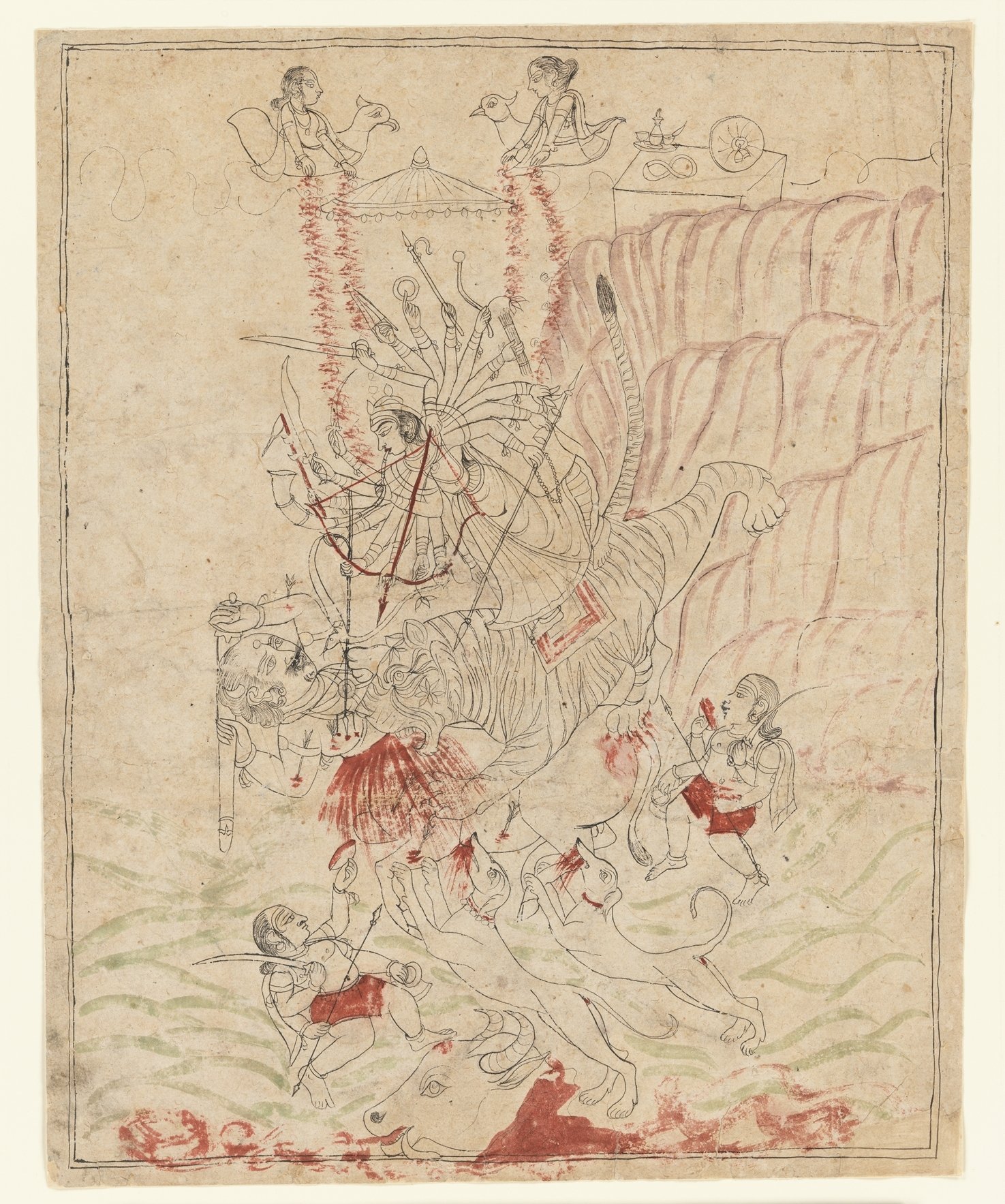
Who Is Durga?
Durga belongs to the broader sacred world of Devi, the Goddess, and Shakti, divine power.
Exactly how these terms relate depends on the text or tradition being considered. Durga may be approached as a distinct goddess, as a form of Parvati, as an expression of Mahadevi or the Great Goddess, or as the supreme Goddess herself. These understandings coexist within Hindu traditions rather than fitting neatly into a single hierarchy.
This is why statements such as “Durga is simply another form of Parvati” or “all Hindu goddesses are forms of Durga” can be too broad when presented without context. They may express the theology of a particular tradition but do not adequately describe every Hindu textual or devotional framework.
The Devi Mahatmya gives the Goddess an especially elevated position. Its narratives portray Devi as the power who appears when cosmic order is endangered, while its hymns move beyond the immediate battlefield to praise her as a presence operating throughout existence. The text has remained important not only as literature but also as living liturgy, especially in Goddess worship and during Navratri and Durga Puja traditions.
Durga and the Devi Mahatmya
The Devi Mahatmya, often known in devotional settings as the Durga Saptashati or Chandi Path, consists of thirteen chapters within the Markandeya Purana. Scholars date its composition broadly to the first millennium CE, with estimates commonly falling between approximately the fifth and seventh centuries.
Rather than telling only one story, the work presents three major cycles of the Goddess’s victories over destructive forces. Different names appear throughout the text, including Devi, Ambika and Chandika, reflecting the text’s presentation of a Goddess who assumes different manifestations according to what the situation requires.
The Mahishasura episode is the best known of these narratives.
When the gods are defeated and driven from their positions by Mahishasura, their anger and divine energies converge. From this radiance emerges the Goddess. The gods equip her with their weapons, while the lord of the mountains gives her a lion. She then confronts Mahishasura’s armies and ultimately Mahishasura himself.
The importance of the episode extends beyond a simple story of one deity defeating one demon. Within the theology of the Devi Mahatmya, the Goddess possesses a power that cannot be reduced to the individual gods who contribute their weapons. She is presented as the decisive force capable of restoring cosmic balance.
The Devi Mahatmya continues to be recited independently from the larger Markandeya Purana, particularly in Goddess temples, household worship and festival observances.
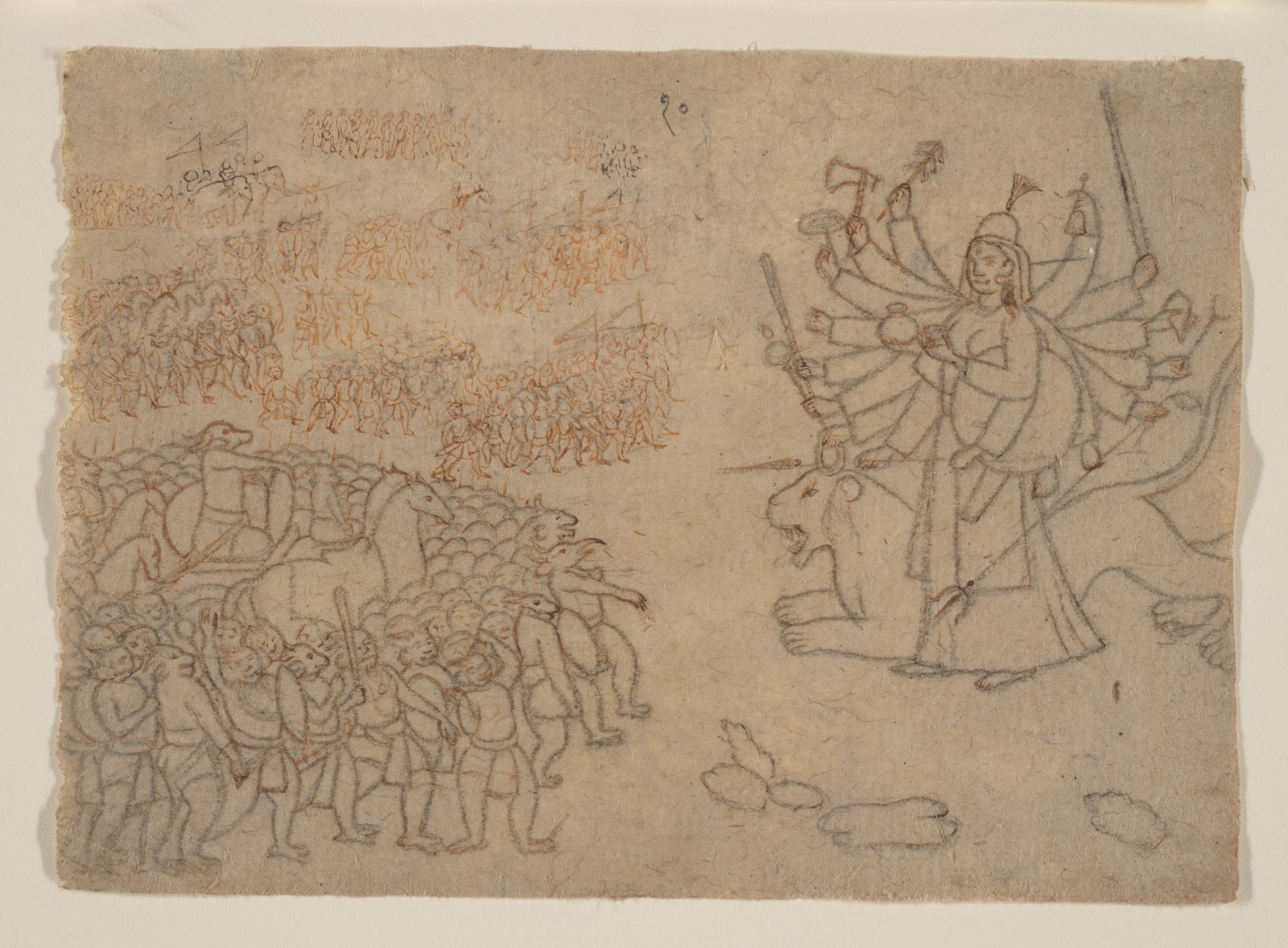
Durga and Mahishasura
Mahishasura is usually represented as a demon associated with the form of a buffalo. His ability to move between buffalo and human forms became central to both the written narrative and centuries of Hindu art.
Durga’s victory gives her the well-known title:
Mahishasuramardini
Mahīṣāsuramardinī
“Slayer of the buffalo demon Mahisha.”
Artists developed several ways of representing the climactic battle. In some sculptures Durga stands over the buffalo. In others, Mahishasura emerges in human form from the neck of the slain animal while the Goddess attacks him with a spear or trident. Her lion may also participate in the battle.
Images of Mahishasuramardini appear across many regions and historical periods, including India and Southeast Asia, demonstrating how widely the narrative circulated. Museum collections preserve examples from Bihar, Rajasthan, South India, Java and other regions, with significant differences in the number of arms, weapons, posture and treatment of Mahishasura.
The basic story remained recognizable even as artists and communities interpreted it through different visual traditions.
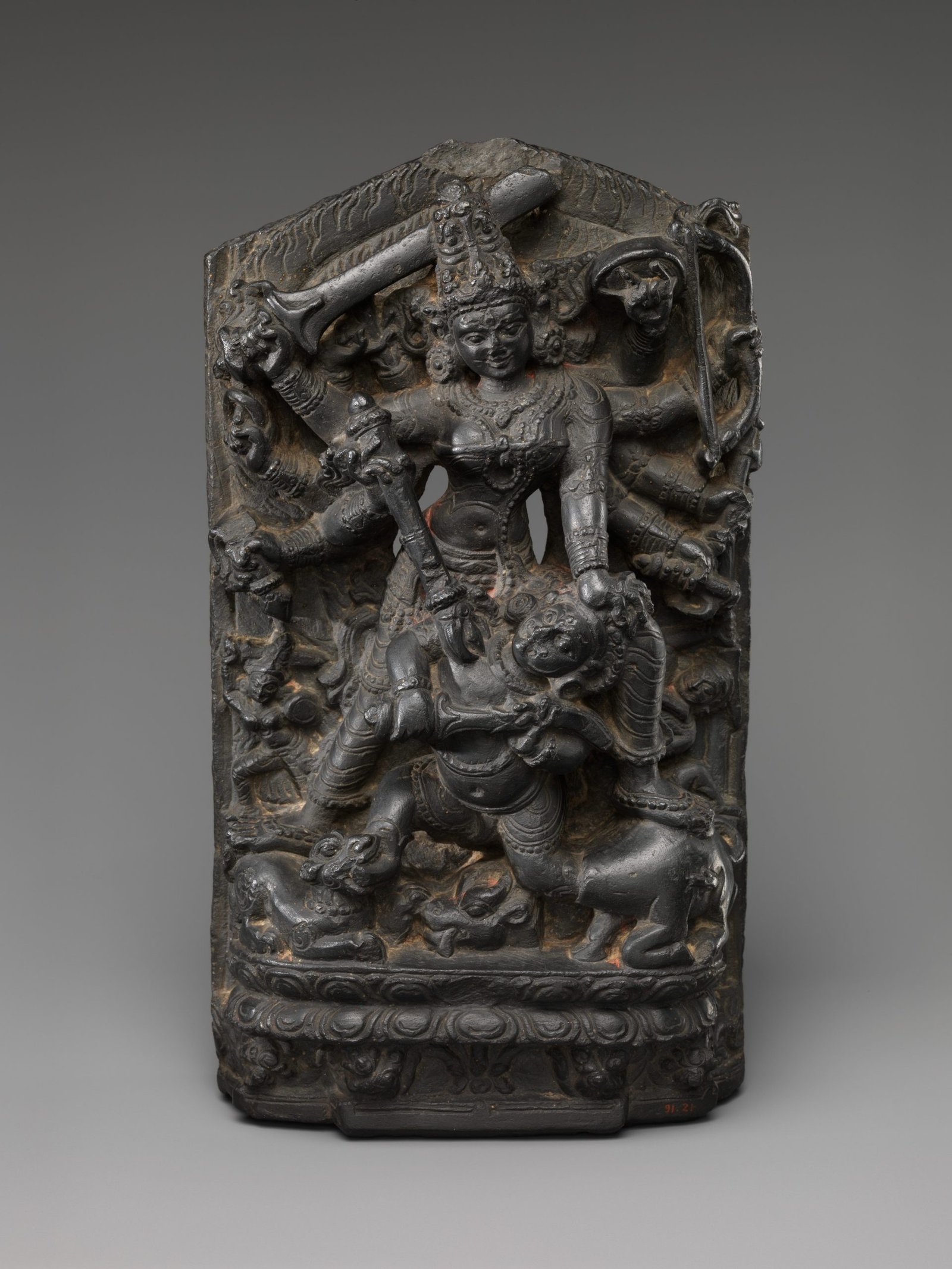
Why Does Durga Have Many Arms?
Durga is frequently depicted with multiple arms, although the number is not fixed across every image or tradition.
Her many hands allow artists to show the array of divine weapons associated with her. In the Devi Mahatmya, different gods furnish the Goddess with their weapons and other objects before battle. This becomes an important element of her iconography.
Among the objects associated with Durga are:
- Shiva’s trident
- Vishnu’s discus
- a sword
- bow and arrows
- spear
- conch
- thunderbolt
- bell
- noose
- shield
- other weapons or sacred objects depending on the representation
Individual artworks should therefore not be treated like a fixed diagram in which Durga must always have exactly the same number of arms or hold precisely the same objects.
The variations tell us something important: Hindu iconography develops through texts, regional artistic traditions, ritual requirements and historical periods rather than through a single standardized image.
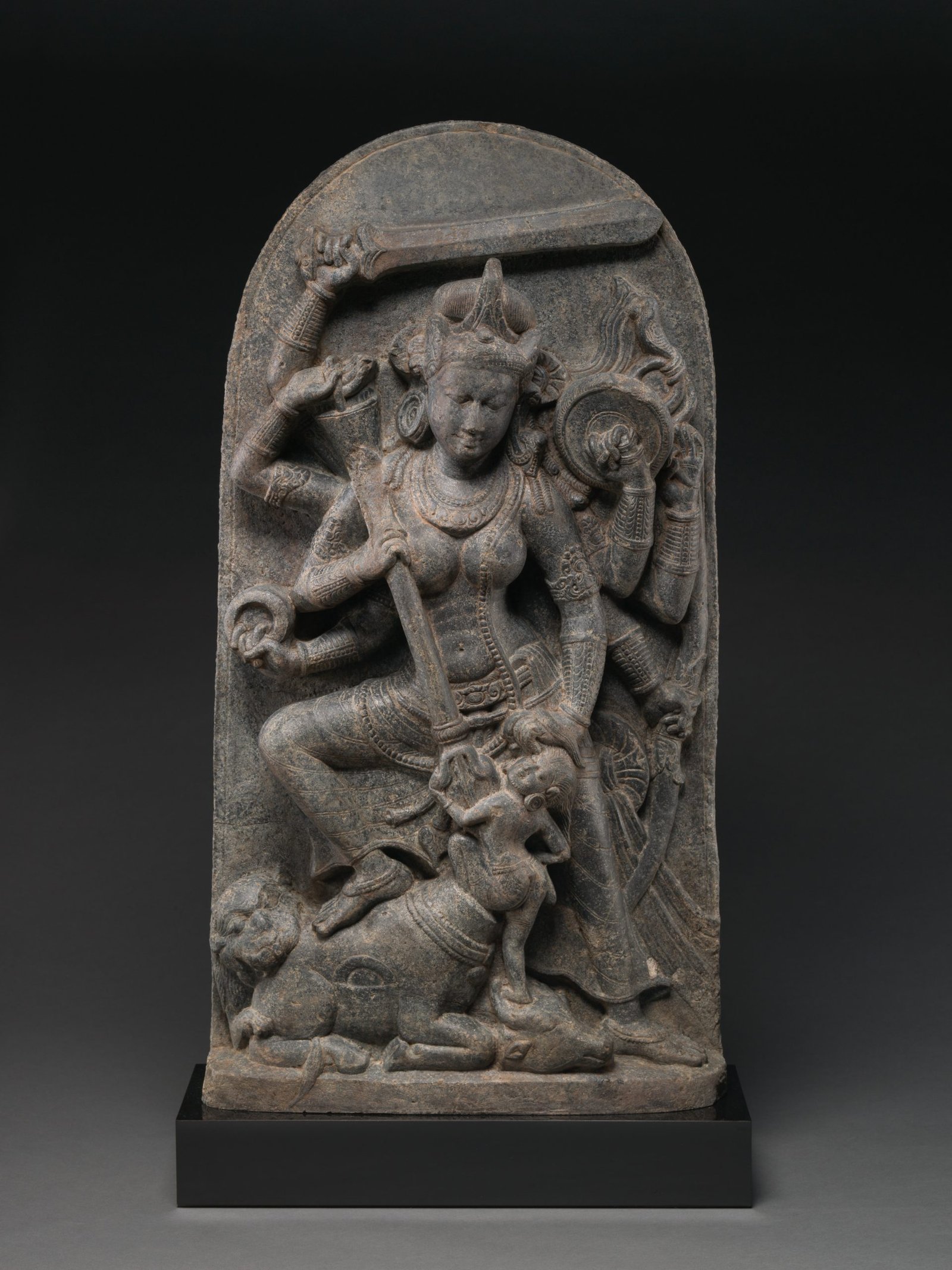
What Do Durga’s Weapons Mean?
Modern explanations sometimes assign a simple spiritual lesson to every one of Durga’s weapons: a sword representing one quality, a bow another, a discus another. Some of these interpretations may be meaningful within particular devotional or teaching traditions, but they should not automatically be presented as ancient scriptural definitions.
The earlier textual and artistic context is more concrete.
The weapons identify the powers contributed by the gods and visually communicate Durga’s extraordinary capacity. Shiva’s trident, Vishnu’s discus and other divine weapons appear together in her hands because the Goddess embodies a force capable of accomplishing what the gods separately could not.
For a viewer familiar with Hindu iconography, the weapons also connect Durga with the larger divine world.
Over time, teachers, devotees and philosophical traditions have interpreted these objects symbolically as well. DurgaShakti identifies those interpretations as traditional or later symbolic readings where appropriate rather than presenting every modern symbolism list as though it came directly from the Devi Mahatmya.
Why Does Durga Ride a Lion?
The lion is one of Durga’s most recognizable attributes.
In the Mahishasura narrative, the Goddess receives a lion before entering battle, and the animal becomes part of the visual drama of her victory. Sculptures and paintings frequently show the lion beside her, beneath her or actively attacking the buffalo demon.
As a visual companion to the Goddess, the lion communicates strength, sovereignty and martial power. Later devotional interpretations may add further symbolic meanings.
Durga is also represented with a tiger in some modern and regional devotional imagery. Because iconographic traditions vary, it is better to recognize this variation than to insist that every representation must use the same animal. When discussing a specific sculpture, painting or text, DurgaShakti identifies the animal represented in that particular source.
Durga as Warrior and Mother
The apparent contrast between Durga’s martial imagery and her identity as mother is central to her devotional character.
She can be shown surrounded by weapons and engaged in violent battle while simultaneously being addressed lovingly as Maa, mother. These are not necessarily contradictory qualities within Goddess traditions. Her capacity to destroy dangerous forces can itself be understood as protective.
This combination helps explain why artistic representations of Durga are often remarkably composed. Even in images of Mahishasura’s defeat, her face may appear serene rather than consumed by rage.
The Goddess is powerful because the situation requires power.
For devotees, that power can be approached as protection rather than aggression for its own sake.
Is Durga the Same as Parvati?
There is no single answer that describes every Hindu tradition.
Durga is frequently understood in relation to Parvati, Shiva’s consort, and later artistic and devotional sources may explicitly present Durga as a martial form of Parvati. Museum descriptions of later works sometimes use this identification.
At the same time, the Devi Mahatmya develops a theology in which the Great Goddess has an independent cosmic status that cannot adequately be described merely as “Shiva’s wife.”
Shakta traditions may go further, regarding Devi herself as supreme reality, with other gods and goddesses understood through her power.
It is therefore more accurate to ask:
How does this particular text or tradition understand Durga?
That question preserves the differences among Hindu traditions instead of forcing them into one modern family tree.
Durga, Devi and Shakti
Three words often appear together:
Devi
Devī means “goddess” and can refer to a particular goddess or to the Goddess as supreme divine reality, depending on context.
Shakti
Śakti refers fundamentally to power or capacity and develops profound theological meanings in Hindu traditions. In Shakta thought, Shakti can refer to divine power as ultimate reality itself.
Durga
Durga is one of the most important names and forms through which the Goddess is worshipped.
These terms overlap, but they are not always interchangeable.
Understanding their relationship is one of the keys to understanding Hindu Goddess traditions.
Durga and the Forms of the Goddess
Durga’s relationship with other goddesses changes according to textual and theological context.
The wider Devi tradition includes figures such as:
The Devi Mahatmya itself contains an important theology of multiple Goddess manifestations. In later traditions, additional systems organize forms of Devi in different ways.
These include the Navadurga, worshipped especially in connection with Navratri, and the Mahavidyas, prominent in particular Tantric and Shakta traditions.
These systems should not be collapsed together. “Nine forms of Durga,” “ten Mahavidyas,” “forms of Parvati” and lists of regional goddesses belong to different textual and ritual frameworks.
Durga and Navratri
Durga is closely associated with Navratri, the festival of “nine nights,” although the form of the celebration varies considerably by region and community.
In many North Indian devotional traditions, the nine nights are associated with the Navadurga, nine forms of the Goddess worshipped in sequence.
In Gujarat, Navratri is strongly associated with Garba and Dandiya traditions.
In parts of southern India, household displays such as Golu or Kolu form an important part of the season.
In Bengal and Bengali communities, the period is closely associated with Durga Puja, which develops its own elaborate ritual, artistic and social traditions.
These practices should be understood as regional expressions rather than interchangeable versions of one standardized celebration.

Durga Puja
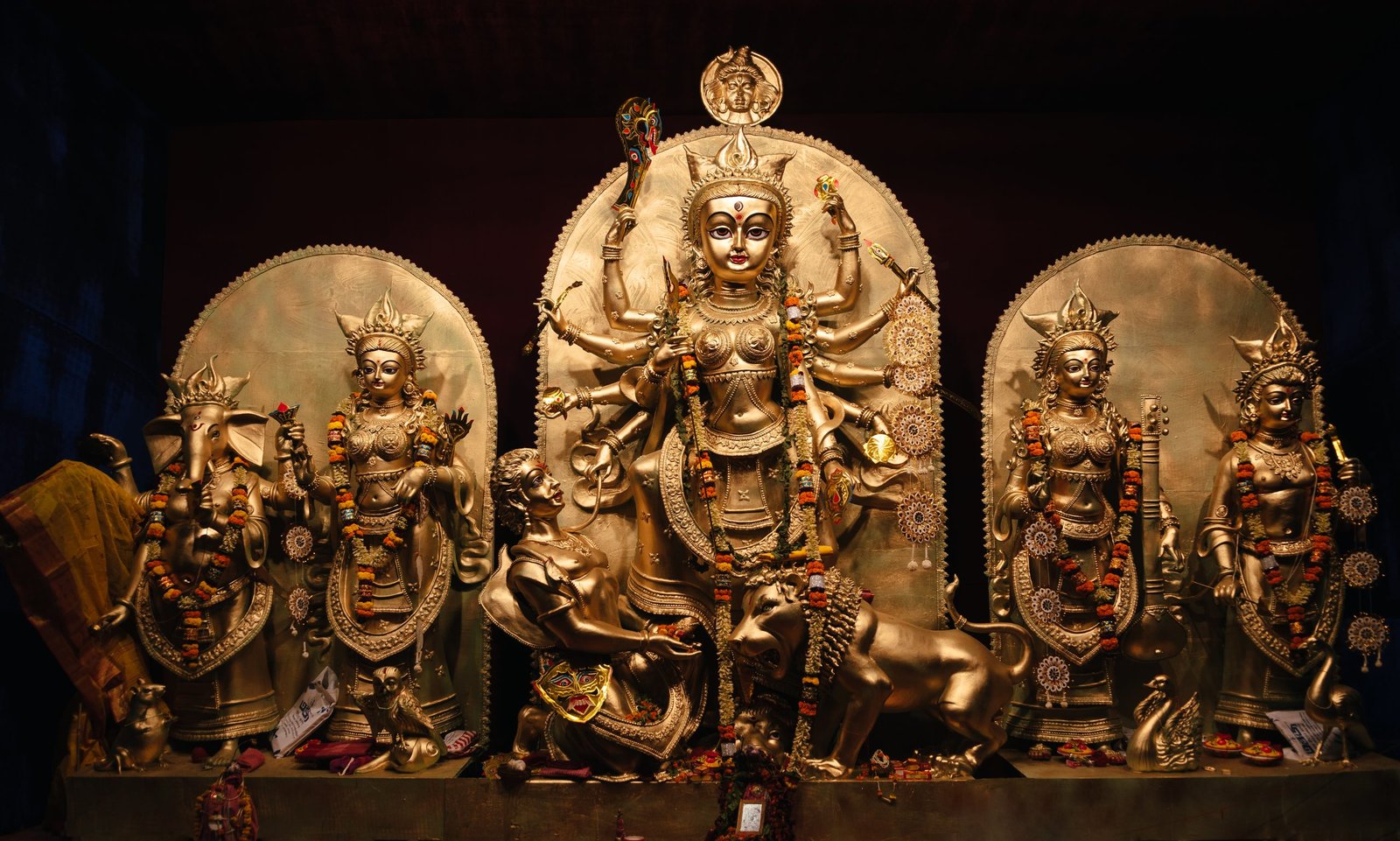
Durga Puja is one of the most elaborate living traditions centered on the Goddess.
It is especially important in West Bengal and Bengali communities, although it is celebrated well beyond Bengal. Clay images commonly show Durga defeating Mahishasura while Lakshmi, Saraswati, Ganesha and Kartikeya appear within the wider tableau.
The festival combines ritual worship with sculpture, painting, architecture, music, neighborhood organization and public participation. In Kolkata, enormous temporary structures known as pandals become spaces for both worship and artistic experimentation.
In 2021, UNESCO inscribed Durga Puja in Kolkata on the Representative List of the Intangible Cultural Heritage of Humanity, recognizing the festival as a significant living tradition involving artisans, worshippers, organizers, performers and communities.

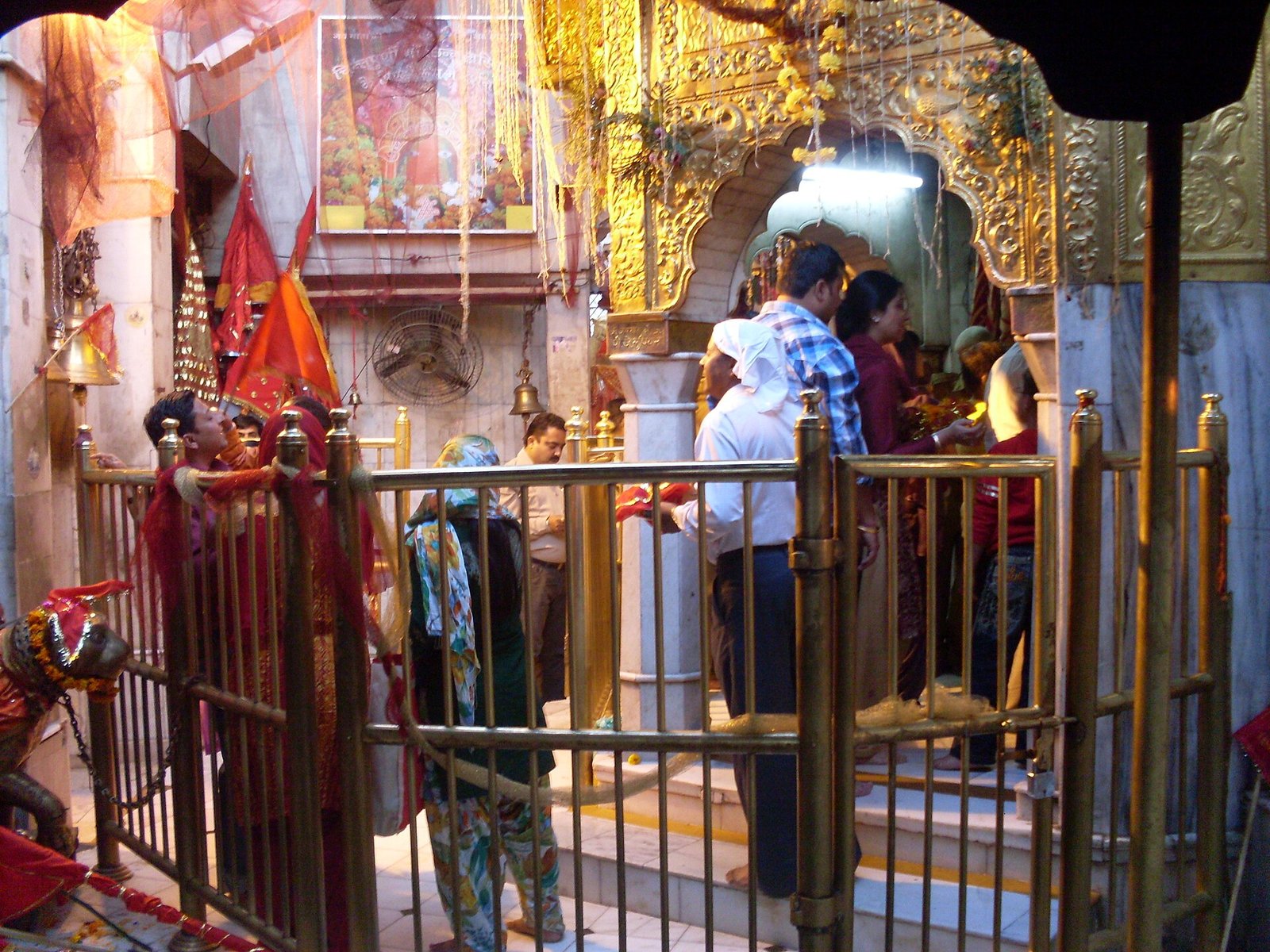
Mantras and Prayers to Durga
Durga is praised through many different forms of sacred speech, including mantra, hymn, recitation and liturgical text.
These should not all be treated as though they come from the same scripture or follow identical practice rules.
What Does Durga Represent?
There is no need to reduce Durga to a single modern slogan.
Within her traditions she can represent protection, divine sovereignty, maternal care, victory over forces that disturb order, and the power of the Goddess herself.
The Mahishasura story has also inspired many later interpretations. Readers may understand the demon psychologically, ethically or spiritually, as ego, ignorance or uncontrolled impulses, for example. Such interpretations can be meaningful, but they are interpretations of the story, not necessarily definitions stated by the earliest text.
DurgaShakti therefore distinguishes between the narrative itself and the meanings later communities, teachers and individuals draw from it.
That distinction does not diminish devotional interpretation. It helps us see how a sacred story continues to live.
Why Durga Remains So Important
Durga exists simultaneously in scripture, sculpture, household worship, temples, festivals, music, recitation and public art.
A stone Mahishasuramardini made more than a thousand years ago, a family reciting the Durga Saptashati, an artisan shaping a clay image in Bengal, and a devotee addressing the Goddess as Maa Durga all participate in traditions that have developed across very different times and places.
Those traditions are connected, but they are not identical.
To study Durga carefully is therefore to encounter something larger than the biography of a single goddess. It is an entry into Hindu ideas about divine power, the many ways the Goddess can manifest, the relationship between protection and destruction, and the continuing interaction between sacred text and living practice.
Continue Exploring Durga
Stories & Scriptures
- Scriptures & Sacred Texts →
- Devi Mahatmya
Festivals
Goddess Traditions
Practice
Sources & Further Reading
This page should be supported primarily by the following source types.
Primary / Sacred Text
Devi Mahatmya, within the Markandeya Purana.
Use a reputable scholarly translation when final verse-level citations are added.
Important sections for this page include:
- manifestation of the Goddess
- presentation of divine weapons
- Mahishasura battle
- hymns praising Devi
- theological passages concerning the Goddess’s cosmic role
Academic scholarship
Raj Balkaran — “Devī Māhātmya,” Oxford Bibliographies in Hinduism, Oxford University Press.
Use especially for:
- composition/context of the Devi Mahatmya
- its place within the Markandeya Purana
- its theological importance
- continuing liturgical use
- scholarly dating range
Raj Balkaran — “Visions and Revisions of the Hindu Goddess: Sound, Structure, and Artful Ambivalence in the Devī Māhātmya,” Religions (2019).
Useful for theological and literary treatment of the text.
Museum / Cultural Institution Sources
Smithsonian National Museum of Asian Art — Durga, Goddess Who Slays the Buffalo Demon.
Useful for:
- Devi Mahatmya narrative
- Durga/Mahisha iconography
- Great Goddess interpretation
Smithsonian National Museum of Asian Art — Devi: The Great Goddess.
Useful for:
- historical Goddess iconography
- Devi Mahatmya
- Durga’s weapons
- Great Goddess traditions
The Metropolitan Museum of Art — Goddess Durga Slaying the Demon Mahisha, Bihar, second half of the ninth century.
Useful for:
- weapons
- multi-armed iconography
- Mahishasura imagery
- connection with the Devi Mahatmya
The Metropolitan Museum of Art — Durga Mahishasuramardini, Mysore, ca. 1884.
Useful for:
- later regional representation
- Durga/Parvati relationship in a specific artwork
- Mahishasura iconography
UNESCO — Durga Puja in Kolkata.
Useful specifically for the living festival tradition and its 2021 intangible-cultural-heritage inscription.