
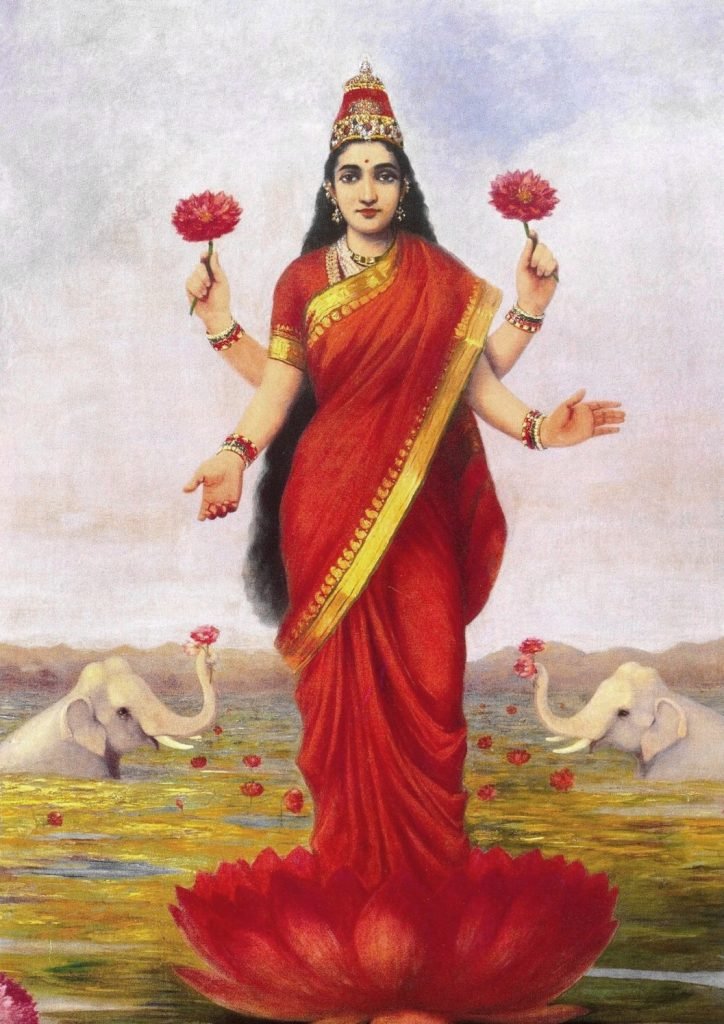

- Alternate names
- Shri; Sri; Shri Lakshmi; Mahalakshmi; Padma; Kamala
- Traditions / lineages
- Vaishnava; Sri Vaishnava where specifically relevant; Household Lakshmi worship; Broader Devi traditions
- Scriptural associations
- Shri Sukta; Puranic literature; Pancharatra and Sri Vaishnava literature where appropriate
- Festivals
- Diwali / Lakshmi Puja, with regional qualification
On this page
Lakshmi is one of the most widely worshipped goddesses in Hindu traditions. She is associated with prosperity, good fortune, abundance, beauty and well-being, but reducing her to a “goddess of money” misses much of her older and broader religious meaning.
Her history is closely connected with the idea of Shri, an ancient Sanskrit term associated with prosperity, radiance, majesty, auspiciousness and flourishing. Over time, Shri and Lakshmi became closely identified, producing the familiar theological identity of Shri Lakshmi.
Lakshmi is also deeply connected with Vishnu. Within Vaishnava traditions she is his divine consort and participates in his cosmic and theological role. In household worship, however, she may be approached very personally as the Goddess whose presence is sought in a home through cleanliness, hospitality, generosity, auspicious conduct and ritual devotion.
Her importance stretches from early Indian literature and sculpture to temple traditions, household shrines, regional festivals and the widespread worship of Lakshmi during Diwali. Academic scholarship describes Shri/Lakshmi as a Goddess of plenitude, stability and prosperity whose religious history includes Vedic, Puranic, Vaishnava, Shakta and domestic contexts.
What Does the Name Lakshmi Mean?
The name Lakshmi, Sanskrit Lakṣmī, has a long history and cannot be explained through one modern English word.
She is closely associated with Shri, Sanskrit Śrī, a term whose range includes prosperity, splendor, abundance, auspiciousness, majesty and well-being.
Before Shri became fully personified as a Goddess, the word could refer to desirable qualities of flourishing and royal or sacred prosperity. Scholarship on Shri-Lakshmi traces the development from these ideas into the personal Goddess worshipped in later Hindu traditions.
Formal transliteration:
Lakṣmī
Devanagari:
लक्ष्मी
The common spelling Lakshmi remains appropriate for ordinary reader-facing text.
Shri and Lakshmi
The names Shri and Lakshmi are now often used together, but their histories are worth noticing.
Early Sanskrit literature uses śrī for qualities such as radiance, prosperity, majesty and auspicious fortune. In the development of Hindu Goddess traditions, these qualities became increasingly personified.
The Shri Sukta, a hymn associated with the Rigvedic tradition, offers an important early portrait of Shri-Lakshmi. The Goddess is connected with abundance, gold, cattle, food, royal imagery, elephants and especially the lotus. These themes remained remarkably persistent in later Lakshmi iconography.
This history helps explain why Lakshmi’s prosperity is much broader than personal wealth. She represents conditions in which life can flourish.
What Does Lakshmi Represent?
Lakshmi is commonly associated with:
- prosperity
- abundance
- auspiciousness
- fertility and flourishing
- beauty
- good fortune
- nourishment
- household well-being
- royal prosperity
- stability
Money can be one expression of material prosperity, but Lakshmi’s traditional associations are wider.
A prosperous household in religious imagination involves food, health, social harmony, generosity, fertility, good conduct and the ability to care for others. Agricultural abundance, animals, land and royal stability have also belonged to the larger historical language of Shri.
The Oxford history of Hindu Goddess traditions describes Shri-Lakshmi through the concept of plenitude, a useful term because it encompasses material prosperity without reducing her identity to currency or financial success.
Lakshmi and the Lotus
Few symbols are as closely associated with Lakshmi as the lotus.
She may stand or sit upon one, hold lotuses in her hands, or appear surrounded by lotus imagery. Names such as Padma and Kamala also connect her with the flower.
The association is ancient. Early Indian art represents Shri-Lakshmi with lotuses, and the Shri Sukta repeatedly uses lotus imagery in descriptions of the Goddess.
The lotus became an especially powerful visual expression of abundance, beauty and auspicious life emerging from water.
Modern spiritual writing often adds psychological meanings such as “remaining pure despite living in the world.” Such interpretations are familiar and may be meaningful in particular teaching traditions, but the historical association between Lakshmi and the lotus is older and more extensive than any one symbolic explanation.
Gaja Lakshmi and the Elephants
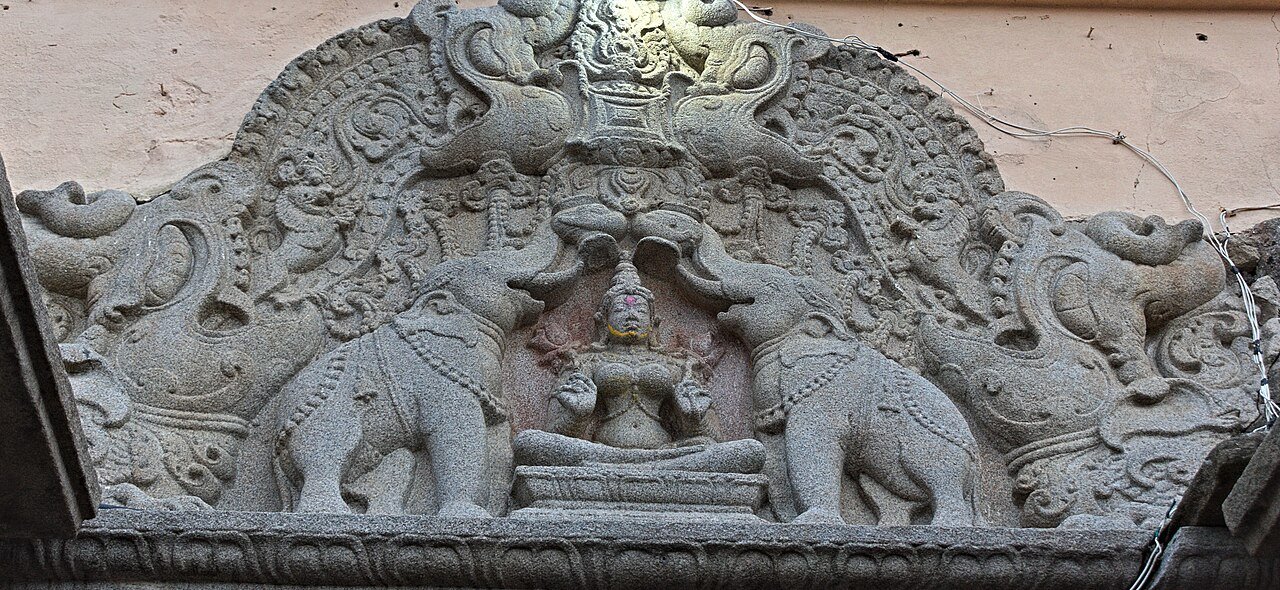
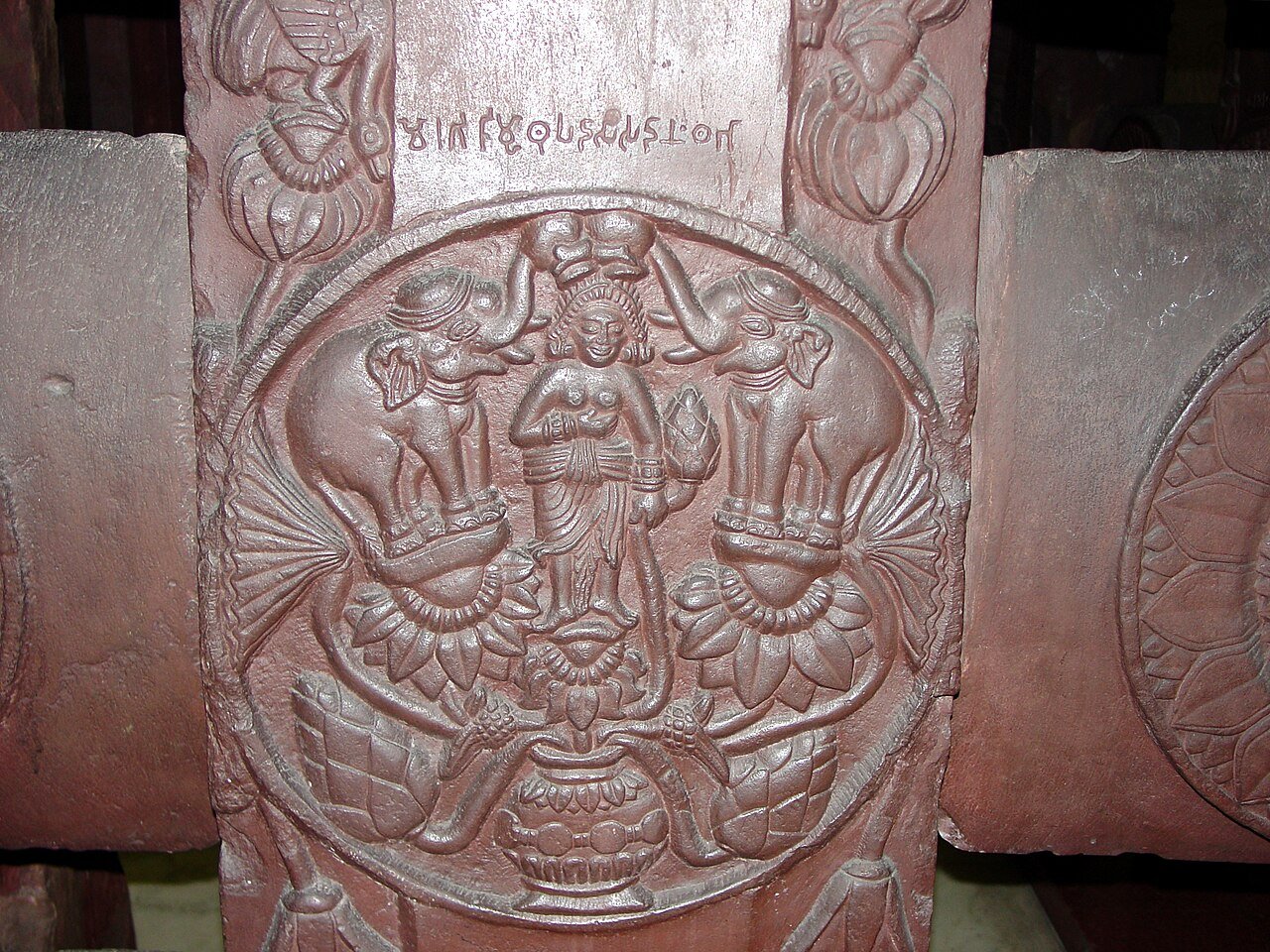
Another ancient form is Gaja Lakshmi, Lakshmi accompanied by elephants.
In this iconography, one or more elephants flank the Goddess and may pour water over her from vessels. Lakshmi herself is often seated or standing upon a lotus.
The motif appears very early in Indian art and became associated with fertility, prosperity, abundance, sovereignty and auspiciousness. IGNCA documentation notes representations of Shri or Lakshmi with elephants in early Indian monuments and links the image with descriptions preserved in Sanskrit literature.
The National Museum in New Delhi preserves Gaja Lakshmi works in several media, including a fifteenth-century bronze and an eighteenth or nineteenth-century Tanjore painting. This longevity illustrates how the visual form remained meaningful across very different artistic periods.
Gaja Lakshmi is therefore more than a decorative image of a Goddess with elephants. It belongs to a long South Asian visual vocabulary of auspicious abundance.

Lakshmi and Vishnu
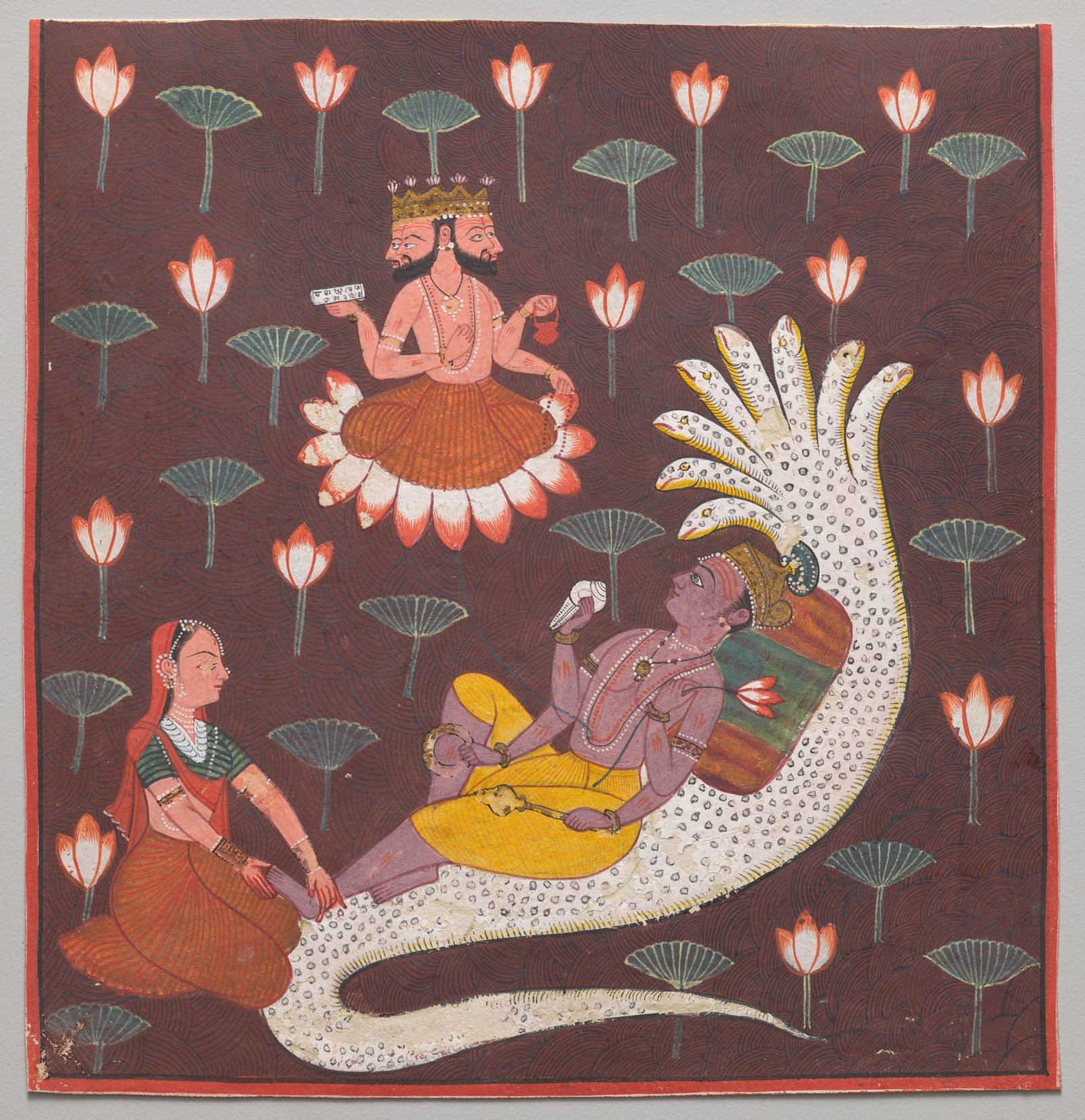
Lakshmi is closely associated with Vishnu, particularly within Vaishnava traditions.
Images may show her seated beside Vishnu, accompanying him in celestial settings, or serving him in intimate devotional scenes. The National Museum preserves several Pahari paintings depicting Lakshmi and Narayana together, including works in which the divine couple sit upon a lotus.
Their relationship has substantial theological importance.
Within some Vaishnava traditions, Lakshmi is far more than a secondary consort. She may participate in divine grace, intercession, cosmic order and the relationship between Vishnu and his devotees.
This becomes especially developed within Sri Vaishnavism, where Shri occupies an important theological place alongside Narayana. Scholarly treatments of Lakshmi specifically identify Pancharatra and Sri Vaishnava thought as major areas in the development of her theology.
Lakshmi and the Churning of the Ocean
One of Lakshmi’s best-known Puranic narratives connects her with the churning of the ocean of milk, or Samudra Manthana.
In versions of the story, gods and asuras churn the cosmic ocean in search of amrita, the nectar of immortality. A series of extraordinary beings and treasures emerge from the ocean.
Lakshmi appears among them.
Her emergence expresses her relationship with beauty, fortune and cosmic abundance. Vishnu ultimately becomes her chosen divine companion.
The story became one of the major explanations for Lakshmi’s appearance within later Hindu mythology, although her religious history is considerably older than the Puranic ocean-churning narrative.
That distinction matters. The Puranic story explains Lakshmi’s manifestation within a particular mythological framework; it does not represent the chronological beginning of Shri or Lakshmi in Indian religion.
Lakshmi as an Independent Goddess
Lakshmi’s close relationship with Vishnu sometimes leads modern summaries to present her primarily as “Vishnu’s wife.”
Historical evidence shows a more complex picture.
The National Museum’s early second-century image of Sri Lakshmi from Mathura presents an independent Goddess surrounded by lotus imagery and a full vessel associated with life and abundance. The museum identifies it as an important early representation of Sri Devi and connects the image with fertility and prosperity.
Likewise, Gaja Lakshmi imagery developed as a powerful auspicious motif in its own right.
This does not diminish Lakshmi’s Vaishnava identity. It shows that her history includes both independent Goddess traditions and theological relationships with Vishnu.
Lakshmi, Devi and Shakti
Lakshmi also belongs to the wider world of Devi and Shakti.
In Goddess-centered theological frameworks, Lakshmi can be understood as an expression of divine feminine power. The Oxford history of Hindu Goddesses describes Shri-Lakshmi as a form through which primordial Shakti may be understood, while also tracing her distinctive history as Goddess of abundance and Vishnu’s consort.
The context matters because Lakshmi’s identity is not identical in every tradition.
A Vaishnava theological discussion, a Shakta interpretation and a household Lakshmi Puja may emphasize different dimensions of the Goddess.
Lakshmi and Diwali
For millions of Hindus, Lakshmi is closely associated with Diwali, the festival of lights.
Diwali is celebrated through varied regional and religious traditions, so it should not be described as though every community observes the same ritual sequence. Lakshmi Puja is especially prominent in many parts of northern and western India, where families and businesses worship Lakshmi during the festival period.
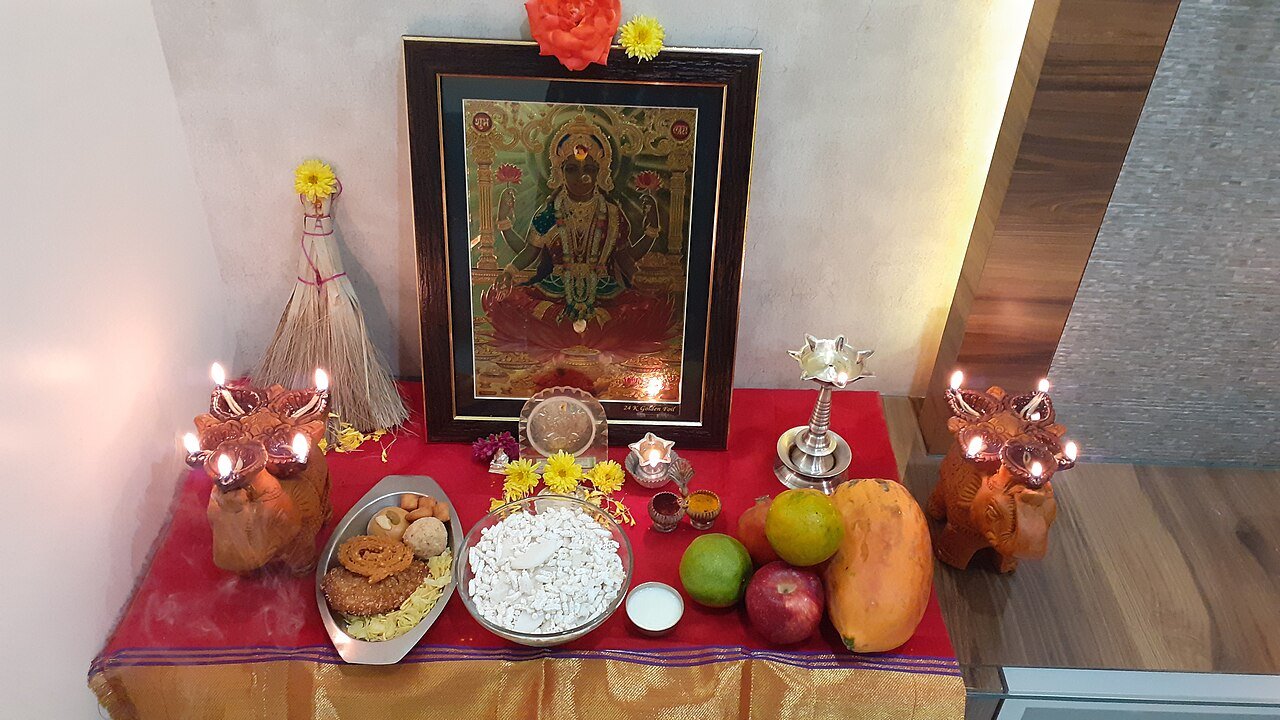
Homes may be cleaned and decorated, lamps lit, rangoli made, doors and thresholds ornamented, and offerings prepared for the Goddess.
The relationship between Lakshmi and the household is especially visible here. Preparing a clean, illuminated and welcoming space expresses the desire to receive auspiciousness and prosperity into the home.
Academic scholarship on Shri-Lakshmi identifies Diwali as one of her most prominent public festival contexts while also emphasizing that regular Lakshmi worship takes place in many homes throughout the year.
Lakshmi Puja and Diwali practices vary regionally; one local custom does not establish a universal ritual instruction.
Lakshmi in Household Worship
Lakshmi’s place in domestic religious life is especially significant.
She may be worshipped daily, weekly, during seasonal observances or at moments connected with household prosperity and well-being.
This domestic setting helps explain why ideas surrounding Lakshmi often involve conduct as well as ritual.
Cleanliness, order, hospitality, generosity and responsible use of resources can all appear in devotional teachings associated with welcoming Lakshmi. These ideas differ by family and region and should not be turned into one rigid list of rules.
The larger theme is easier to understand: prosperity is treated as something that should be maintained responsibly, not merely acquired.
The Goddess associated with abundance therefore also becomes associated with the conditions that allow abundance to remain.

Is Lakshmi Only the Goddess of Money?
Lakshmi’s modern popular image is often narrowed to financial wealth.
That association is real, particularly in business worship and modern household practice, but it represents only one part of a much older religious vocabulary.
Shri historically encompassed qualities such as:
- prosperity
- majesty
- beauty
- auspiciousness
- abundance
- flourishing
- social and household stability
The Goddess can therefore be relevant to a farmer seeking a good harvest, a household praying for well-being, a ruler seeking prosperity for a kingdom, or a merchant beginning a new financial year.
To describe Lakshmi only as a “money goddess” strips these contexts away.
Lakshmi, Fortune and Alakshmi
The concept of auspicious prosperity also has an opposite.
Early texts associated Shri-Lakshmi with the removal or absence of alakshmi, a term connected with misfortune, want or inauspiciousness.
This contrast helps clarify what Lakshmi’s presence means. Prosperity is not simply the possession of valuable objects. It is the presence of conditions associated with nourishment, health, fertility, order and flourishing.
Later traditions developed Alakshmi more fully in mythology and folklore, sometimes personifying misfortune as a separate being.
Those later narratives should be distinguished from the earlier textual use of the concept rather than combined into one story.
Lakshmi in Art
Lakshmi has one of the longest visual histories among Hindu goddesses.
Her imagery appears in:
- early stone sculpture
- temple gateways
- bronze
- miniature painting
- Tanjore painting
- manuscripts
- popular prints
- household images
- modern calendar art
The National Museum’s early Mathura Sri Lakshmi, its Gaja Lakshmi bronze, its Tanjore Gaja Lakshmi painting and its Pahari depictions of Lakshmi with Narayana together span many centuries and artistic traditions.
The National Gallery of Modern Art also holds a Lakshmi painting by Sunayani Devi, showing how artists in modern India continued to reinterpret familiar sacred subjects through new visual languages.
This variety makes Lakshmi especially useful for understanding how Hindu sacred imagery moves between temple, court, household and modern artistic contexts.

What Do Lakshmi’s Symbols Mean?
Several visual elements recur in Lakshmi imagery:
Lotus
The lotus is among her oldest and most persistent attributes, associated historically with Shri, abundance and auspiciousness.
Elephants
In Gaja Lakshmi imagery, elephants pour water over or attend the Goddess. The motif is linked with fertility, royal abundance and auspicious power.
Water
Lotus pools, vessels and elephant lustration connect Lakshmi with life-giving abundance.
Full Vessel
The purna-ghata, or full vessel, is an old Indian symbol of plenty and fertility. The early Mathura Sri Lakshmi in the National Museum rises amid lotuses from such a vessel.
Gold and Ornament
Gold, jewelry and richly ornamented clothing visually communicate prosperity and splendor.
Specific meanings can vary across texts and artistic traditions. These attributes should be studied historically before assigning each one a fixed modern spiritual lesson.
Ashta Lakshmi
A popular devotional grouping known as Ashta Lakshmi, or the eight Lakshmis, presents the Goddess through eight forms associated with different kinds of abundance.
Lists and names can vary, but modern devotional traditions commonly include forms associated with prosperity, grain, courage, offspring, victory, knowledge and other dimensions of flourishing.
This grouping is popular today, particularly in parts of South India.
It deserves separate treatment rather than being presented here as an ancient universal classification of Lakshmi.
The history, names, iconography and regional worship of Ashta Lakshmi require sources specific to those traditions.
Lakshmi as a Living Goddess
Lakshmi’s presence in Hindu life is unusually broad.
She appears in elaborate temple theology and in small household shrines.
She is represented in ancient stone sculpture and mass-produced festival images.
She is associated with Vishnu in major Vaishnava traditions and worshipped directly during Lakshmi Puja.
Her images may be placed near entrances, in business premises, in temples or within domestic worship spaces.
Across these contexts, the central language of Shri remains recognizable. Lakshmi is associated with conditions under which life can flourish.
That makes prosperity in Lakshmi traditions both material and relational. It includes what is possessed, but also whether a home, community or sacred order is capable of sustaining life, generosity and well-being.
Continue Exploring
Goddess traditions
Relationships and texts
Living practice
Related festivals
Sources & Further Reading
Academic scholarship
Mandakranta Bose, “Śrī/Lakṣmī: Goddess of Plenitude and Ideal of Womanhood,” in The Oxford History of Hinduism: The Goddess.
Primary academic reference for this profile.
Useful for:
- development of Shri and Lakshmi
- prosperity and stability
- early religious history
- Lakshmi as Devi/Shakti
- Pancharatra and Sri Vaishnava theology
- household worship
- Diwali
Constantina Rhodes Bailly, “Sri-Laksmi: Majesty of the Hindu King,” in Goddesses Who Rule.
Useful for:
- early meanings of Shri
- prosperity and majesty
- royal associations
- auspiciousness and abundance
P. Pratap Kumar, The Goddess Lakshmi: The Divine Consort in South Indian Vaishnava Tradition.
Useful for later detailed work on:
- South Indian Vaishnavism
- Lakshmi as divine consort
- theological roles of Shri
Indian cultural and museum sources
National Museum, New Delhi, Sri Lakshmi, Mathura, early second century CE.
Important for:
- early independent Lakshmi imagery
- lotus and purna-ghata
- fertility and abundance
- Mathura art
National Museum, New Delhi, Gaja-Lakshmi, fifteenth century.
Useful for:
- elephant lustration
- lotus imagery
- purna-kalasha
- continuity of Gaja Lakshmi iconography
National Museum, New Delhi, Gaja Lakshmi, Tanjore painting, eighteenth to nineteenth century.
Useful for regional painting traditions and visual variety.
National Museum, New Delhi, Lakshmi and Narayana, late eighteenth-century Pahari painting.
Useful for Lakshmi’s relationship with Vishnu.
National Gallery of Modern Art, New Delhi, Lakshmi by Sunayani Devi.
Useful for modern Indian artistic interpretation of the Goddess.
Indian art and textual research
Indira Gandhi National Centre for the Arts
Useful for:
- Shri Sukta
- Gaja Lakshmi
- early doorway imagery
- lotus and elephant iconography
- Indian temple art traditions