
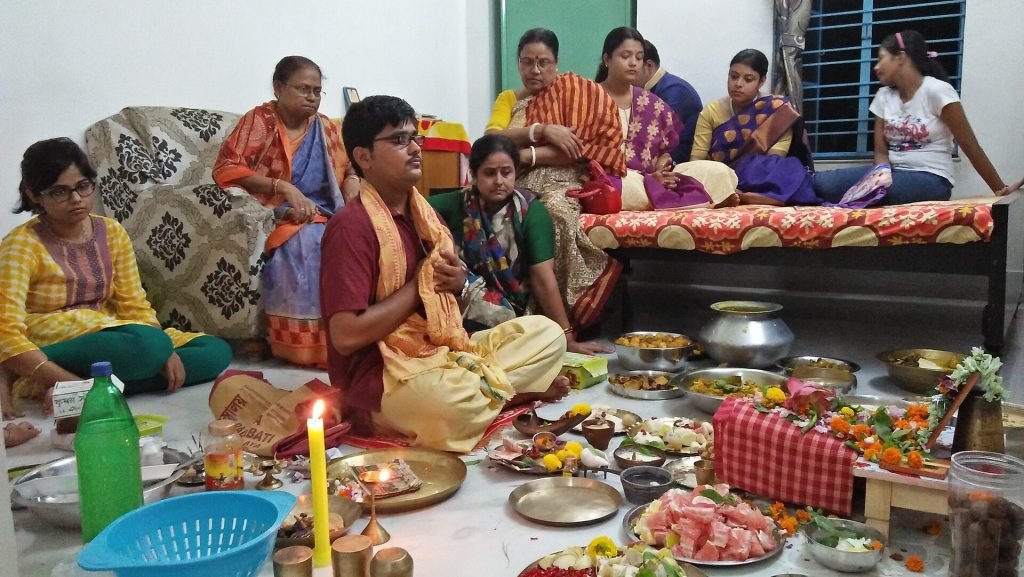

Lakshmi Puja 2026: Two Important Dates
In 2026, two major Lakshmi Puja observances fall on different dates.
Kojagari Lakshmi Puja
- Bengal: Sunday, October 25, 2026. Autumn full moon after Durga Puja.
- Washington, DC; New York; Chicago: Sunday, October 25. U.S. location-specific calendars.
- Dallas; San Francisco; Los Angeles: Saturday, October 24. U.S. location-specific calendars.
Diwali Lakshmi Puja
- India: Sunday, November 8, 2026.
- All six reviewed U.S. cities: Sunday, November 8.
The Government of West Bengal lists Lakshmi Puja on October 25, 2026. The official festival calendar of the Positional Astronomy Centre, Kolkata identifies the same date specifically as Kojagari Lakshmi Puja in Bengal.
The Government of India calendar lists Diwali on November 8, 2026, when Lakshmi Puja is a central observance for many households and communities.
Exact ritual timings depend on the lunar tithi and location. For Kojagari, the reviewed calendars place Washington, DC, New York and Chicago on October 25, and Dallas, San Francisco and Los Angeles on October 24. The listed night-worship windows can extend past midnight into the following civil day. Use the local calendar’s named observance date and confirm the temple or household timing rather than inferring it from a full-moon date alone.
The Purnima interval runs from early October 25 to just after midnight October 26 in Eastern Daylight Time, from early to late October 25 in Central Daylight Time, and from late October 24 to the evening of October 25 in Pacific Daylight Time. Dallas and Chicago have different listed observance dates despite sharing a time zone. Diwali Lakshmi Puja falls on November 8 in all six reviewed cities; its local Amavasya and evening puja windows differ.
References checked October 8, 2026: Washington, DC: Kojagari, Diwali; New York: Kojagari, Diwali; Chicago: Kojagari, Diwali; Dallas: Kojagari, Diwali; San Francisco: Kojagari, Diwali; Los Angeles: Kojagari, Diwali.
Community schedules are separate. Sanhoti in Tustin, California announces its Lakshmi Puja for October 24, 2026, while New York State’s civic Diwali event is also on October 24, ahead of the November religious date. Confirm attendance details with organizers. Annual dates and local timings should be verified each year.
- Associated deities
- Lakshmi
- Traditions
- Bengali Kojagari household worship; Diwali Lakshmi worship in regional household and business traditions
- Calendar basis
- Distinct regional lunar observances: Kojagari full moon and Diwali new moon
- Lunar month
- Ashwin full moon for Kojagari; Kartik new moon in northern Diwali calendars, with regional naming differences
- Paksha
- Shukla paksha for Kojagari; Krishna paksha for Diwali Lakshmi Puja
- Tithi / range
- Purnima for Kojagari; Amavasya for Diwali Lakshmi Puja
- Typical Gregorian period
- October–November
- Duration
- An evening or night observance within distinct regional festival calendars
- Calendar and local-date guidance
- Local tithi and temple or household tradition determine ritual timing. Community event dates may differ. See the verified annual section.
On this page
Lakshmi Puja is the worship of Goddess Lakshmi, the Hindu Goddess associated with Shri, prosperity, auspiciousness, abundance, beauty and well-being.
The name does not refer to only one festival day.
Across Hindu traditions, Lakshmi is worshipped on several occasions, but two autumn observances are especially prominent:
- Kojagari Lakshmi Puja, celebrated particularly in Bengal on the full moon following Durga Puja
- Diwali Lakshmi Puja, observed by many Hindu households on the new moon night of Diwali
These festivals share devotion to Lakshmi, but their calendars, regional settings and ritual traditions are not identical.
Understanding that distinction is especially important because someone searching for “Lakshmi Puja 2026” may correctly encounter more than one date.
Who Is Goddess Lakshmi?
Lakshmi is one of the most widely worshipped Goddesses in Hindu traditions.
She is commonly associated with:
- prosperity
- abundance
- fertility
- beauty
- auspiciousness
- good fortune
- household well-being
- royal and social order
The Sanskrit concept Shri, closely associated with Lakshmi, carries a broader meaning than material wealth alone.
Shri can refer to splendor, flourishing, grace, beauty, prosperity and auspicious presence.
This broader understanding matters because modern descriptions sometimes reduce Lakshmi to a “Goddess of money.”
Wealth is part of her religious symbolism, but traditional understandings of prosperity encompass the conditions that allow life, household and community to flourish.
Why Are There Different Lakshmi Puja Dates?
Lakshmi worship occurs in more than one ritual and regional calendar.
This is not an inconsistency.
Hindu festival calendars frequently associate the same deity with different sacred occasions according to:
- lunar phase
- regional tradition
- family custom
- sectarian practice
- agricultural or seasonal cycles
In Bengal, Kojagari Lakshmi Puja follows shortly after Durga Puja and is associated with the autumn full moon.
Across many other regions, Diwali Lakshmi Puja takes place later, on the autumn new-moon night.
Both honor Lakshmi, but they belong to different festival contexts.
The existence of multiple Lakshmi Pujas is therefore a good example of why Hindu festivals should not be forced into one standardized national calendar.
Kojagari Lakshmi Puja in Bengal
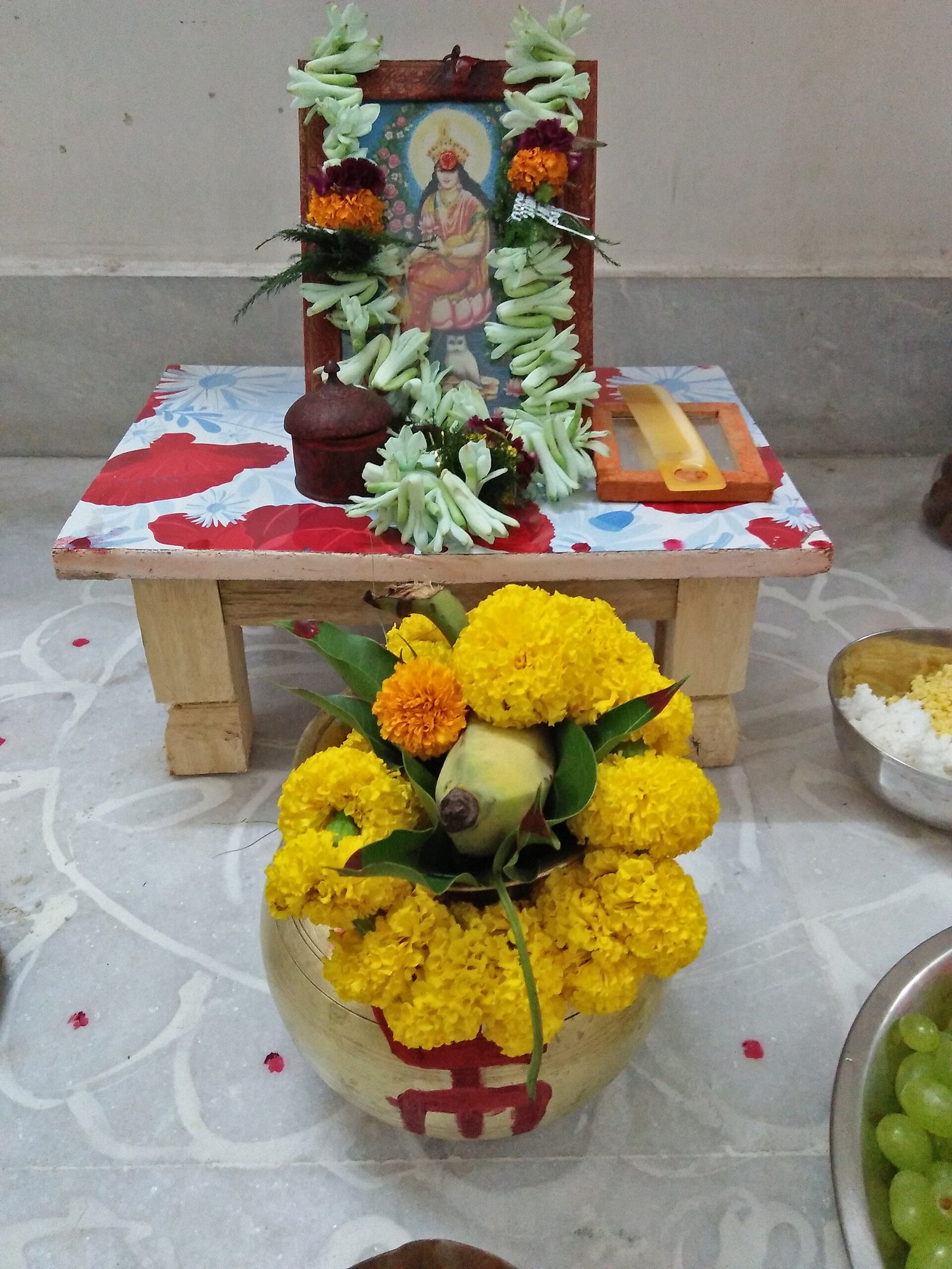
Kojagari Lakshmi Puja is a particularly important Bengali observance.
It takes place on the autumn full moon shortly after Durga Puja.
For 2026, the Government of West Bengal lists Lakshmi Puja on Sunday, October 25, while the Positional Astronomy Centre’s official festival calendar identifies October 25 specifically as Kojagari Lakshmi Puja (Bengal).
The timing gives the festival a distinctive place in Bengal’s autumn sacred calendar.
Durga has departed after Vijaya Dashami, but Goddess worship continues.
Lakshmi is welcomed into homes through a quieter, more domestic form of devotion.
Compared with the enormous public installations of Durga Puja, Kojagari Lakshmi Puja often has a more intimate household character, although community and temple observances also exist.

What Does “Kojagari” Mean?
The name Kojagari is traditionally connected with the Sanskrit expression ko jāgarti?, commonly interpreted as:
“Who is awake?”
The festival is associated with staying awake on the full-moon night and with the belief that Lakshmi visits or blesses households that remain attentive to her presence.
The association has produced a rich body of regional customs around:
- night worship
- household preparation
- lamps
- offerings
- full-moon observance
- vigilance or wakefulness
As with many festival etymologies and customs, local explanations vary.
The basic devotional theme is not simply staying awake for its own sake, but remaining receptive to Lakshmi and auspiciousness.
Lakshmi Puja After Durga Puja
The placement of Kojagari Lakshmi Puja soon after Durga Puja gives it particular meaning in Bengal.
During Durga Puja, Lakshmi commonly appears as part of Durga’s accompanying divine family in Bengali festival imagery.
A few days after Durga’s departure, Lakshmi becomes the focus of her own worship.
This transition illustrates an important feature of Bengali Goddess traditions.
The autumn season is not centered on only one form of Devi.
Instead, worship moves through different divine forms and ritual moods:
- Durga
- Lakshmi
- Kali
- later Jagaddhatri in some communities
The Goddess tradition therefore unfolds across the season rather than ending with Vijaya Dashami.
Diwali Lakshmi Puja
In many parts of India, Lakshmi Puja is strongly associated with Diwali.
On the Diwali new-moon night, homes and businesses may be illuminated with lamps and prepared for worship.
The Government of India’s Diwali guide describes Lakshmi Puja as a central part of the festival, with families gathering to seek blessings associated with prosperity and success.
In 2026, Diwali falls on Sunday, November 8.
This is a different observance from Bengal’s Kojagari Lakshmi Puja on October 25.
Both center on Lakshmi, but their:
- lunar dates
- regional histories
- surrounding festivals
- ritual customs
are distinct.

Lakshmi, the Home and Auspiciousness
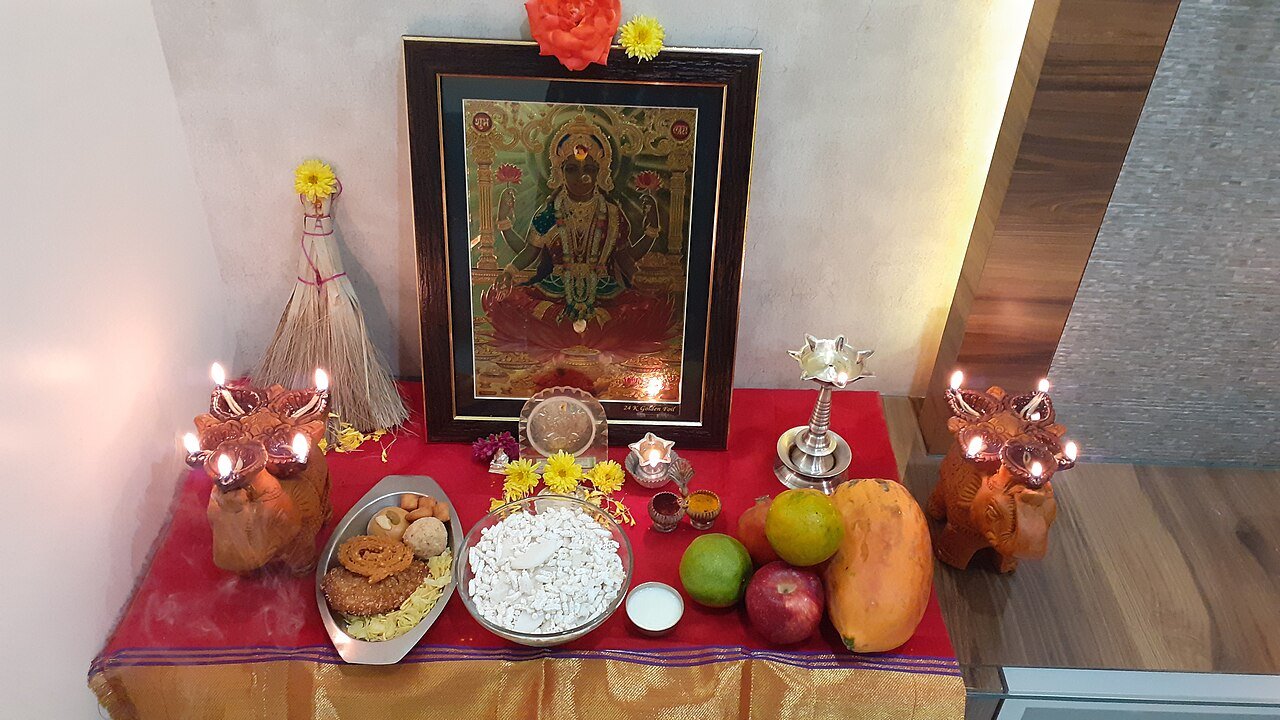
Lakshmi worship has a particularly strong connection with the household.
Before Diwali Lakshmi Puja, families may clean and decorate their homes, illuminate entrances and prepare the worship area.
Kojagari Lakshmi Puja likewise has important domestic traditions in Bengal.
These practices reflect a larger religious idea: prosperity requires an environment in which life can flourish.
Cleanliness, hospitality, beauty, order, food, generosity and household stability can all become expressions of auspiciousness.
The preparation of the home therefore carries symbolic meaning beyond decoration.
The household becomes a sacred environment in which Lakshmi is welcomed.

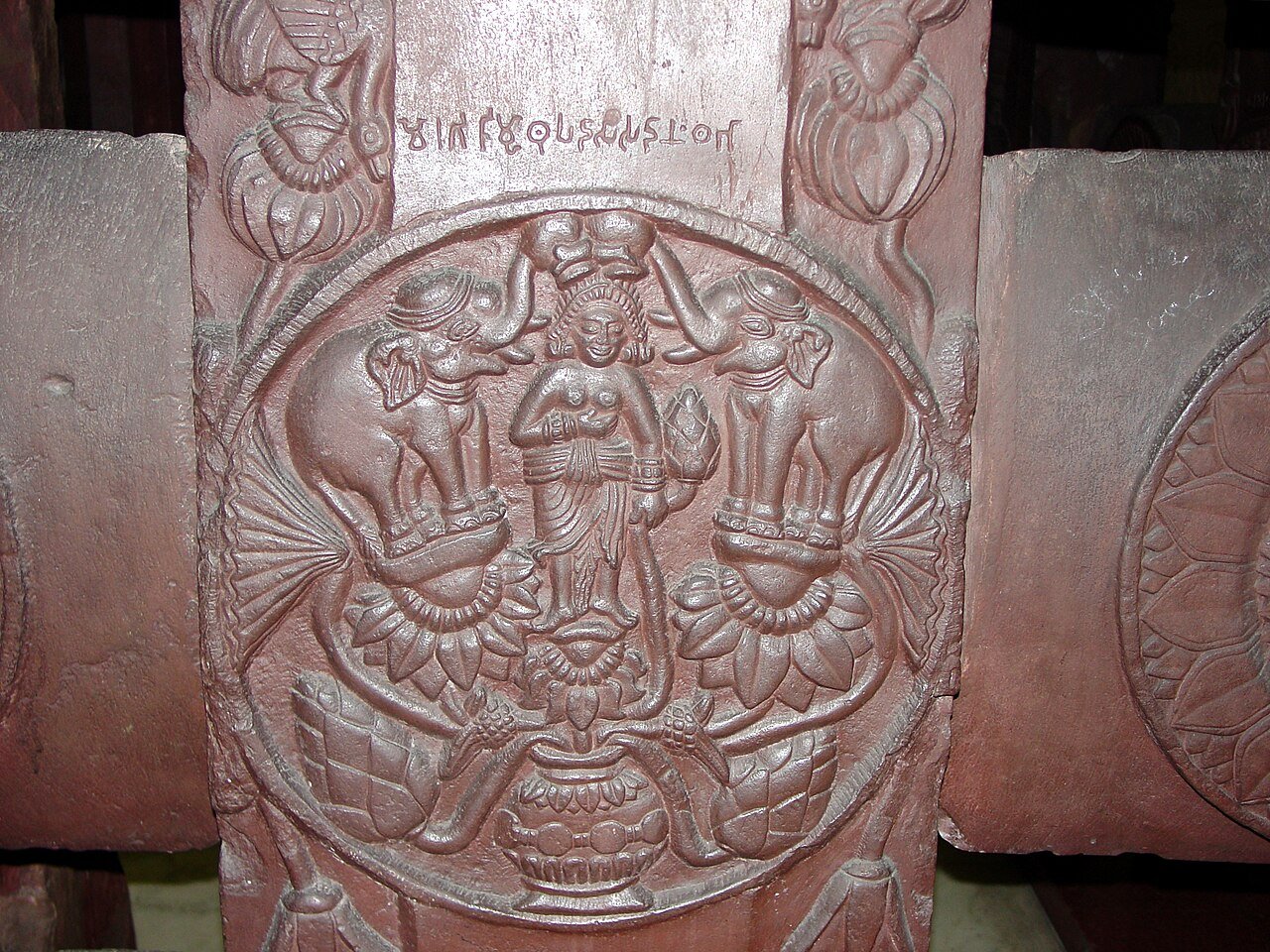
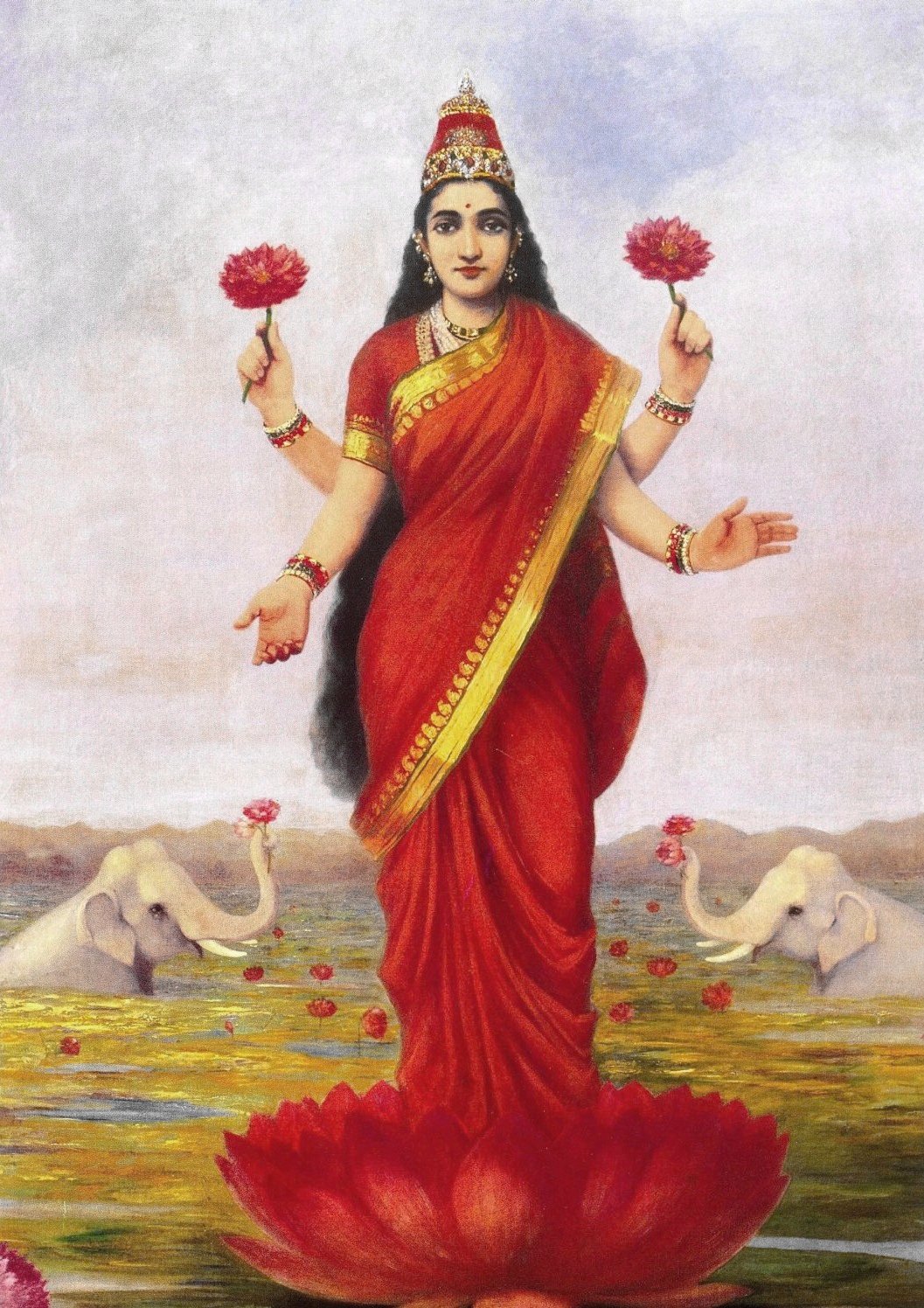
Lotus, Elephants and Other Lakshmi Symbols
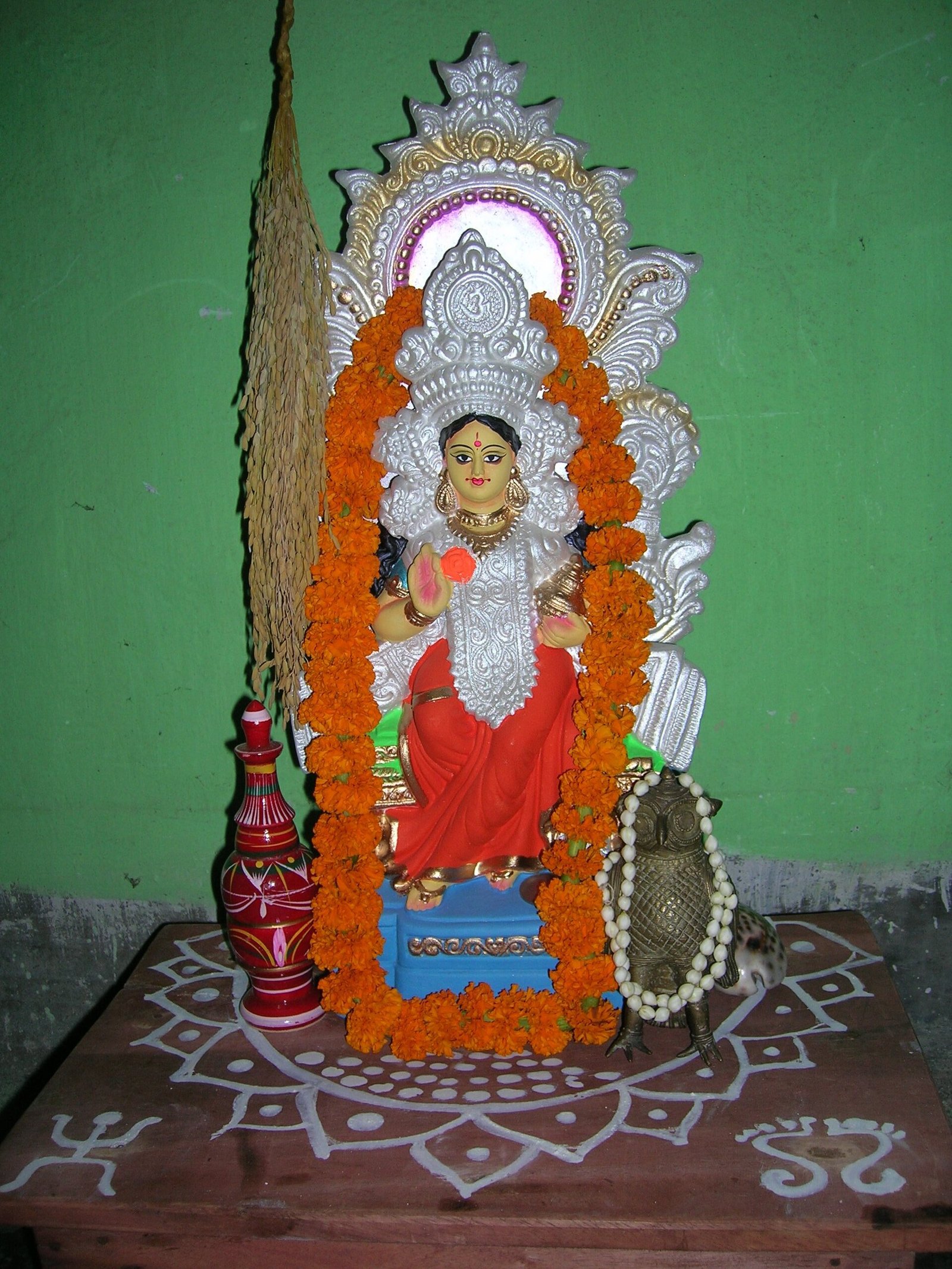
Lakshmi’s iconography is rich with symbols of fertility, abundance and sacred prosperity.
Lotus
Lakshmi is frequently shown seated or standing on a lotus.
The flower is associated with:
- beauty
- purity
- fertility
- unfolding spiritual and material abundance
Elephants
Elephants appearing with Lakshmi evoke:
- rain
- fertility
- royal auspiciousness
- abundance
The form known as Gajalakshmi, with elephants flanking the Goddess, has a long history in South Asian art.
Water
Water frequently appears in Lakshmi imagery through lotuses, vessels and elephants.
It evokes fertility, nourishment and the conditions that sustain life.
Gold and abundance
Lakshmi is sometimes represented with coins or other signs of wealth.
These should be understood within her wider association with prosperity rather than interpreted only as monetary symbolism.


Offerings and Household Traditions
Lakshmi Puja practices vary considerably.
Common household offerings may include:
- flowers
- fruit
- sweets
- lamps
- water
- grains
- seasonal foods
Some communities use particular items associated with regional or family tradition.
These should not be presented as universally mandatory.
A large temple ritual, a hereditary family puja and a simple household observance may all differ substantially.
Lakshmi Puja and Business Traditions
Lakshmi’s association with prosperity also connects her worship with commercial life in many communities.
During the Diwali season, merchants and business families may worship:
- account books
- ledgers
- business premises
- financial records
- tools of trade
In modern settings, computers or digital records may accompany or replace traditional account books.
Some regional communities also mark the opening of a new commercial year around Diwali.
These customs should be understood as one expression of Lakshmi’s wider connection with prosperity, order and flourishing.
They are not universal to every Lakshmi Puja tradition.
Lakshmi Puja Across Regions
Lakshmi worship extends throughout India, but its festival context varies.
Bengal
Kojagari Lakshmi Puja on the autumn full moon has strong household and regional significance.
North and Western India
Lakshmi Puja is particularly prominent during Diwali and may be connected with household and business worship.
South India
Lakshmi is honored through multiple festival and temple traditions, while Deepavali itself may emphasize regional narratives such as Naraka Chaturdashi.
Odisha and neighboring traditions
The autumn full-moon period also carries important regional observances, although names, ritual emphasis and associated deities may differ.
Lakshmi Puja and Kali Puja
Lakshmi and Kali are very different manifestations of Goddess theology, yet both become especially prominent during the autumn festival season.
In Bengal:
- Kojagari Lakshmi Puja falls after Durga Puja
- Kali Puja follows later on Kartik Amavasya
In 2026:
- Lakshmi Puja in Bengal: October 25
- Kali Puja: November 8
The West Bengal calendar confirms these two distinct dates.
Diwali creates another connection because Kali Puja in Bengal coincides with the same night on which many other Hindu households worship Lakshmi.
These overlapping sacred calendars demonstrate how different forms of Devi may become central in different regional traditions on or around the same festival season.
What Does Lakshmi Puja Celebrate?
Lakshmi Puja centers on inviting and honoring auspiciousness.
That can include material prosperity, but its religious meaning is broader.
The festival may express gratitude and hope for:
- household well-being
- abundance
- nourishment
- stability
- beauty
- harmony
- ethical prosperity
- flourishing relationships
The form of worship changes across regions and occasions.
What remains central is the recognition of prosperity as something sacred rather than merely possessed.
Lakshmi represents the conditions through which life can flourish.
Continue Exploring
Goddess traditions
Festivals
- Read the Diwali guide →
- Read the Kali Puja guide →
- Read the Durga Puja guide →
- View Festivals & Sacred Days →
Related topics
Related Devi profiles
Related festivals
Sources & Further Reading
Government of West Bengal: 2026 Holiday Notification
Useful for:
- official October 25, 2026 Lakshmi Puja date
- distinction from November 8 Kali Puja
Source: Government of West Bengal, Finance Department.
Positional Astronomy Centre, Kolkata: Principal Festivals Calendar
Useful for:
- October 25, 2026
- explicit identification as Kojagari Lakshmi Puja in Bengal
- Sharad Purnima context
Source: India Meteorological Department, Kolkata.
Government of India: Incredible India: Diwali
Useful for:
- November 8, 2026 Diwali date
- Lakshmi Puja during Diwali
- household worship and broader festival context
Source: Ministry of Tourism, Government of India.
National Portal of India: Holiday Calendar
Useful for:
- official November 8, 2026 Diwali date
- surrounding central-calendar observances
Source: Government of India.