

Kali Puja 2026: Date at a Glance
In India, Kali Puja falls on Sunday, November 8, 2026.
The Government of West Bengal’s Puja calendar lists Kali Puja on November 8, 2026 and notes that it falls on the new moon day of Kartik and coincides with Diwali. The state’s 2026 holiday notification independently confirms the date.
Dakshineswar Kali Temple’s official 2026 calendar lists Sri Sri Shyama Puja (Dipanwita) on November 8.
| Reference | Kali Puja 2026 date |
|---|---|
| India: West Bengal and Dakshineswar | Sunday, November 8 |
| USA: Washington, DC; New York; Chicago; Dallas | Sunday, November 8 |
| USA: San Francisco | Saturday, November 7 |
The reviewed U.S. location-specific Kali Puja calendars do not all give the same civil date. Their Amavasya interval runs from early November 8 to early November 9 in Eastern Time, from late November 7 to early November 9 in Central Time, and from late November 7 to late November 8 in Pacific Time. San Francisco’s midnight observance is consequently listed for the night of November 7–8. These are local calendar references, not a single nationwide puja timetable.
Exact ritual timings depend on the local Amavasya tithi and the calendar followed by a temple, priest or household. Kali Mandir in Laguna Beach, for example, announces Shyama Kali Puja from 10 p.m. on November 7 to 1 a.m. on November 8. A community program can use a different weekend: the Bengali Society of Florida lists its Kali Pujo for November 14. Confirm attendance details with the organizer.
Calendar references checked on 7 October 2026: Washington, DC, New York, Chicago, Dallas, and San Francisco.
Annual date and timing information should therefore be verified each year rather than carried forward automatically.
- Associated deities
- Kali
- Traditions
- Bengali Goddess worship
- Calendar basis
- Kartik Amavasya; local tithi and temple calendar
- Lunar month
- Kartik in the Bengali festival context
- Paksha
- Krishna paksha
- Tithi / range
- Amavasya
- Typical Gregorian period
- October–November
- Duration
- Evening and night worship; local programs vary
- Calendar and local-date guidance
- Exact ritual timing and the civil date depend on location and the calendar followed. Community programs may use a different weekend. See the verified annual section.
On this page
Kali Puja is a major festival dedicated to Goddess Kali, especially associated with Bengal and Bengali religious life.
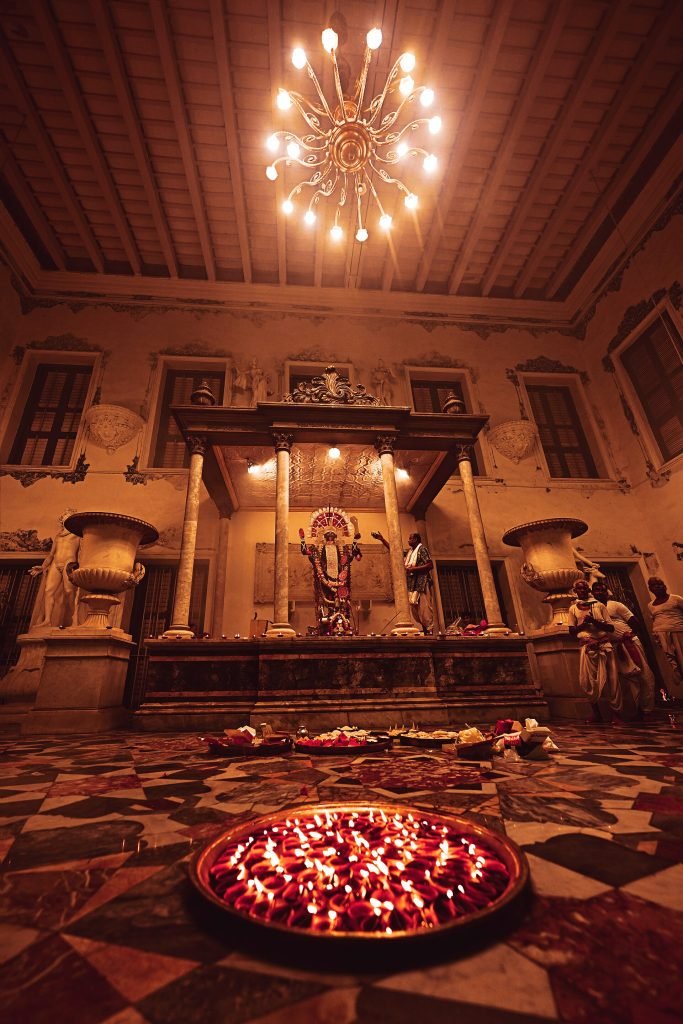
It is observed on the new moon night of the Bengali month of Kartik, when homes, temples and public spaces are illuminated with lamps while Kali is worshipped through evening and night rituals.
In West Bengal, the festival is also commonly called Shyama Puja or Mahanisha Puja. The state’s official Puja calendar identifies Kali Puja as a distinct Goddess festival that coincides with Diwali but centers specifically on Kali.
At important Kali temples such as Dakshineswar, the festival is observed as Dipanwita Kali Puja, with special worship, lamps, devotional music and night-long ritual before the Divine Mother.
What Is Kali Puja?
Kali Puja is the ritual worship of Goddess Kali, one of the most powerful and complex forms of the Hindu Divine Mother.
Kali is associated with time, transformation, death, protection, freedom and the destruction of forces that bind or threaten spiritual life. Her imagery can appear fearsome, but within devotional traditions she is also approached as a compassionate and intimate Mother.
During Kali Puja, this theology moves into living practice.
Worship may include:
- lamps
- flowers
- offerings
- mantra and prayer
- devotional music
- temple darshan
- public community pujas
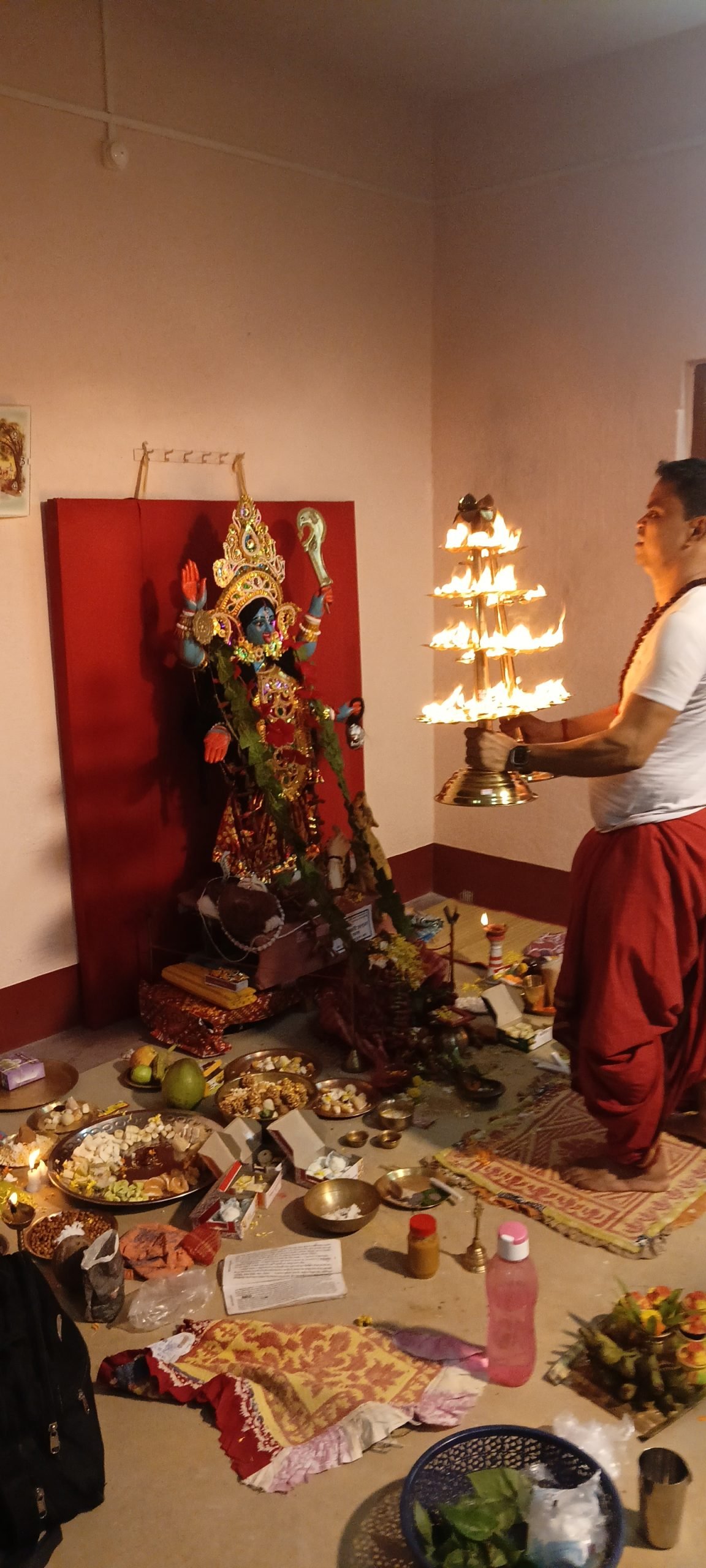
- clay images of Kali
- night-long worship
The form and complexity of the ritual vary considerably among temples, households and traditions.
Kali Puja should therefore not be reduced to a single standardized ceremony.
Why Is Kali Worshipped on the New Moon Night?
Kali Puja takes place on Amavasya, the dark night of the lunar month.
The absence of moonlight gives the festival a visual and theological character very different from many daytime Hindu celebrations.
Lamps illuminate homes, temples and public pujas while worship continues into the night.
Within Kali traditions, darkness does not simply represent something evil that must be rejected. Kali herself is often described through imagery of darkness, time and dissolution.
Her worship confronts realities that ordinary religious language may try to avoid:
- mortality
- fear
- impermanence
- ego
- destruction
- transformation
The Goddess is not overcome by these realities. She encompasses them.
For devotees, the night can therefore become a setting for approaching Kali as the power that protects, transforms and ultimately liberates.
This theological interpretation should be distinguished from simplified festival slogans about darkness and light.
Shyama Puja, Dipanwita Kali Puja and Mahanisha Puja
Several names are used for Kali Puja in Bengali traditions.
Shyama Puja refers to worship of Kali as Shyama, the dark Goddess.
Dipanwita Kali Puja emphasizes the festival’s association with lamps and illumination.
Mahanisha Puja evokes worship during the great night.
These names overlap in contemporary usage, although specific temples and traditions may emphasize one name more strongly than another.
The Government of West Bengal identifies Kali Puja as Shyama Puja or Mahanisha Puja, while Dakshineswar Kali Temple describes the Kartik new-moon observance as Dipanwita Kali Puja.
The terminology itself reflects the festival’s combination of Goddess worship, darkness, light and nocturnal ritual.
Kali Puja in Bengal
Kali Puja has a particularly strong public and devotional presence in West Bengal.
Neighborhoods may organize community pujas with temporary shrines and clay images of Kali, while households perform smaller forms of worship.
The festival atmosphere may include:
- illuminated streets
- decorated puja spaces
- community gatherings
- devotional music
- offerings
- temple visits
- public Kali images
- prayer late into the night
Yet there is no single form of Bengali Kali Puja.
Large public celebrations, traditional family observances and temple rituals can differ significantly in scale and ritual structure.
The common center is worship of the Goddess.

Kali Puja at Dakshineswar
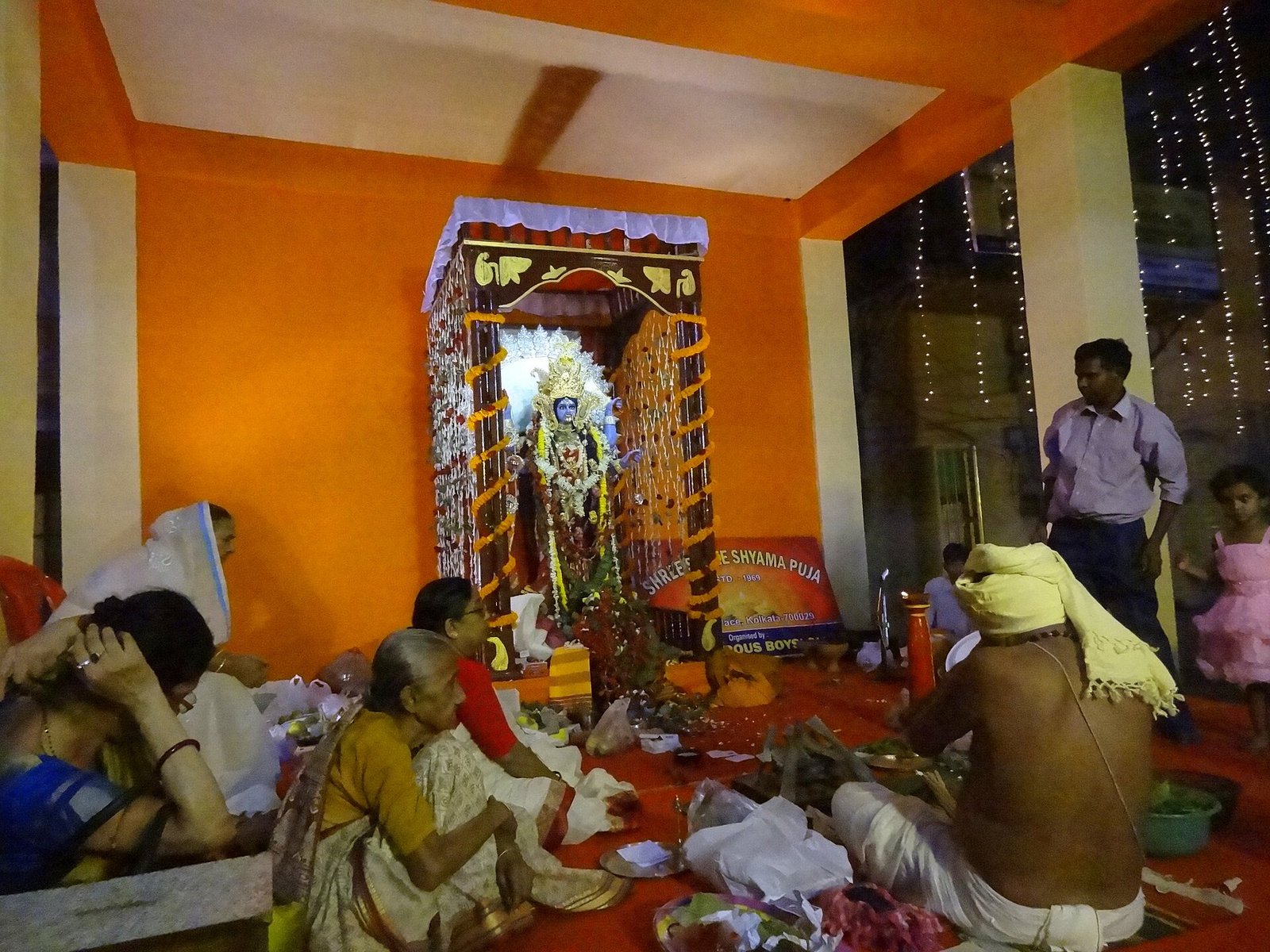
Dakshineswar Kali Temple is one of Bengal’s most important Kali pilgrimage centers.
The temple was founded in 1855 by Rani Rashmoni and is dedicated to the Goddess as Sri Sri Jagadiswari Kalimata Thakurani, Bhavatarini.
Its spiritual history is closely connected with Sri Ramakrishna, whose intense worship of Kali at Dakshineswar became central to his religious life and teachings.
The temple’s official tradition distinguishes several annual Kali observances, including:
- Phalaharini Kali Puja
- Ratanti Kali Puja
- Dipanwita Kali Puja
Among them, Dipanwita Kali Puja is described by the temple as its most celebrated annual Kali festival.
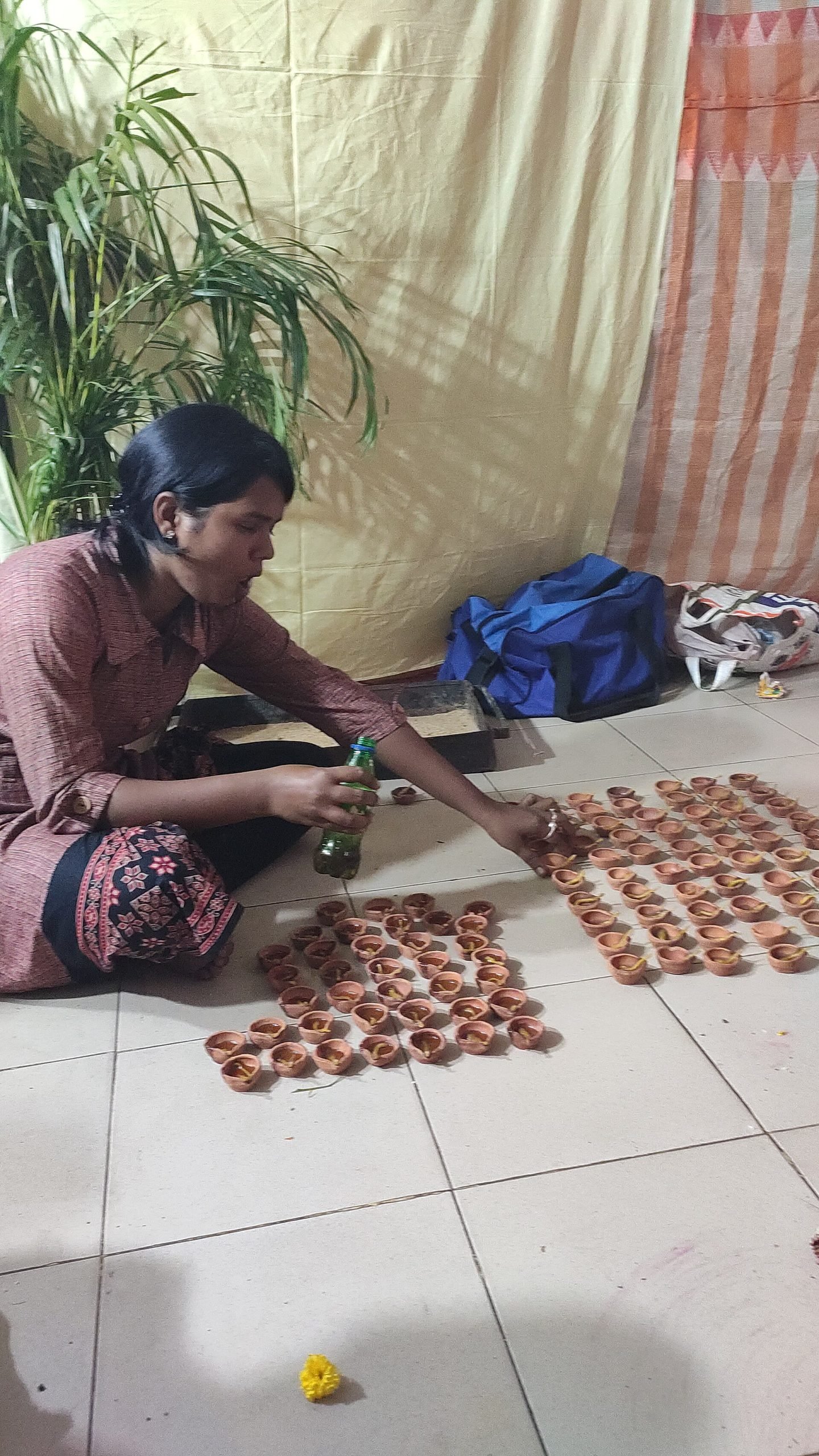
On the Kartik new-moon night, the temple complex is illuminated with large numbers of lamps and special worship continues through the night.
This living temple tradition gives Kali Puja an important connection to pilgrimage as well as public festival culture.
Discover Temples & Sacred Places →

Public Kali Images and the Work of Artisans
Like Durga Puja, public Kali Puja depends on the work of image-makers and craftspeople.
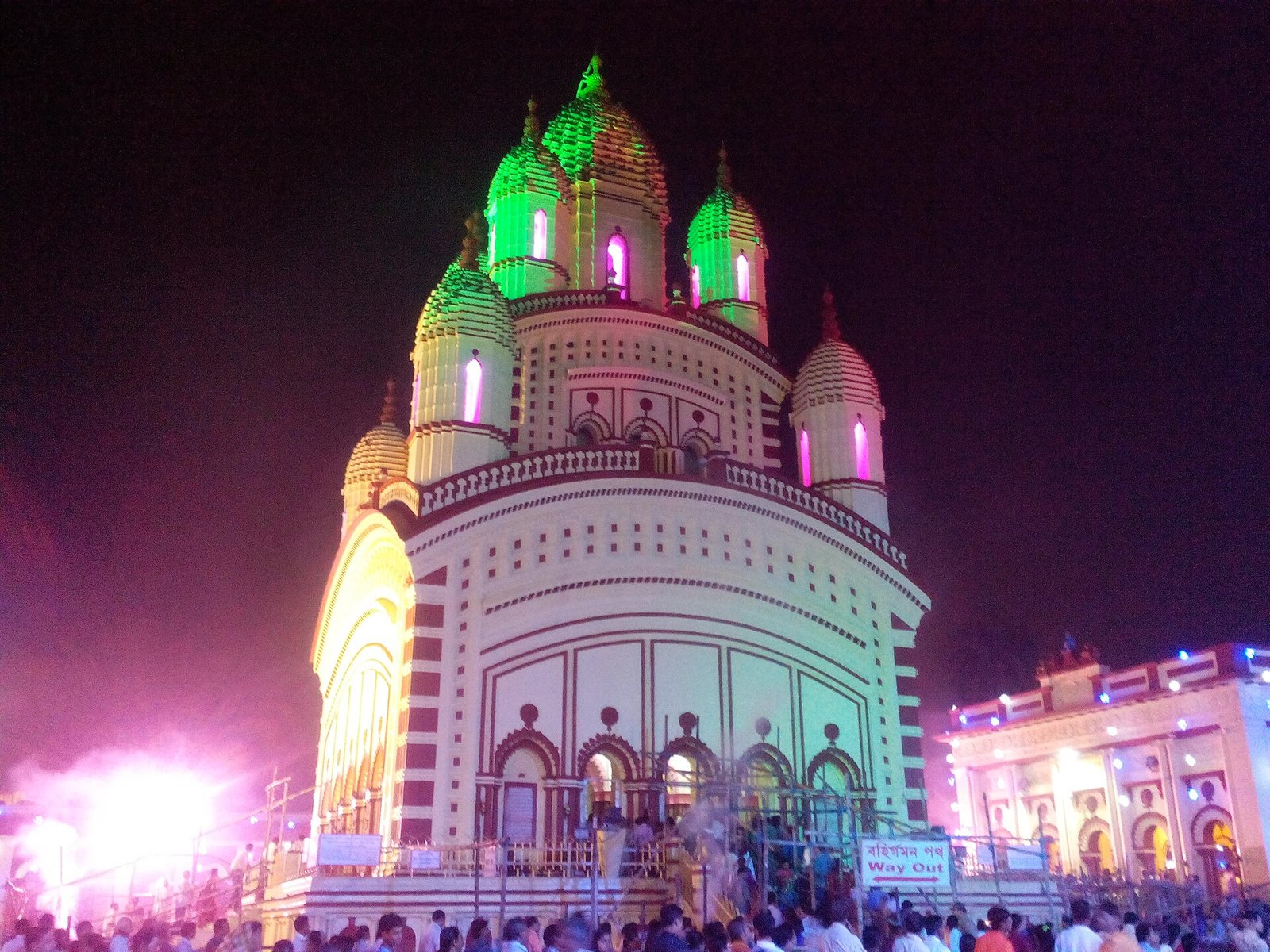
In Kolkata and other parts of Bengal, artisans create temporary clay images of Kali for community celebrations.
The imagery often follows recognizable Kali iconography:
- dark or black complexion
- flowing hair
- multiple arms
- weapons
- garland
- extended tongue
- Shiva beneath her feet
Individual puja committees and artisans may interpret these forms differently.
The sacred image therefore belongs to both an iconographic tradition and a living craft tradition.
Photographs of unfinished or newly completed Kali images can help readers understand that festival worship depends upon months of artistic labor before the night of Puja arrives.

Temple Worship, Household Worship and Community Puja
Kali Puja exists at several scales.
Temple worship
Established Kali temples may conduct elaborate rituals according to their own inherited procedures.
These may include extended mantra, offerings, arati, music and worship lasting deep into the night.
Household worship
Families may observe Kali Puja privately with a simpler devotional practice.
Household observances vary according to family tradition, region and spiritual lineage.
Community puja
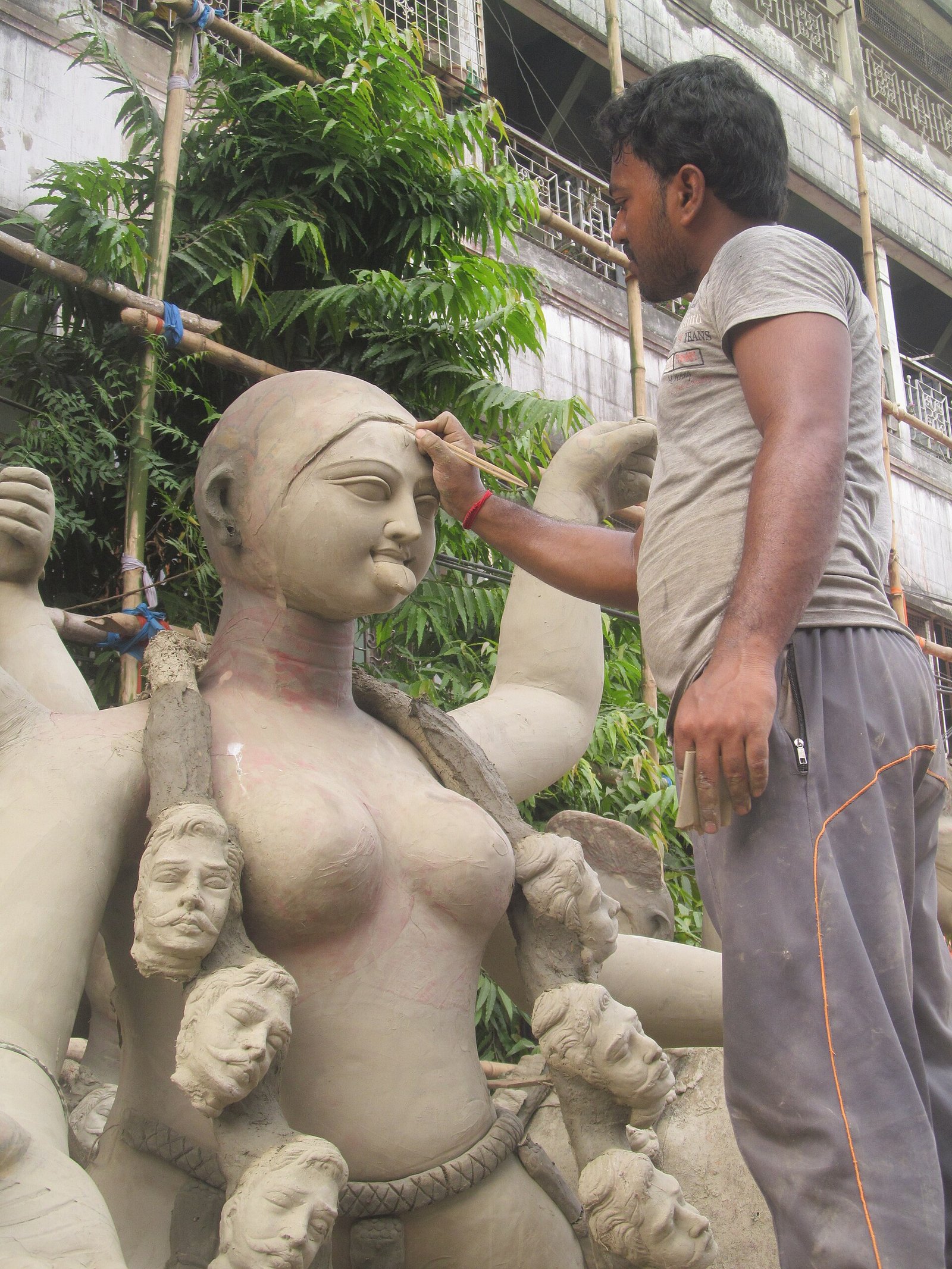
Neighborhood organizations may install temporary Kali images and organize public worship, lighting and gatherings.
These three settings should not be treated as interchangeable.
A simple household observance does not need to reproduce a major temple ritual, while a public community puja has its own social and organizational character.

Kali Puja and Diwali
Kali Puja and Diwali occur on the same night in Bengal, but they are not simply two names for the same religious observance.
In many parts of India, Diwali is strongly associated with Lakshmi, lamps, prosperity, household worship and other regional narratives.
In Bengal, the same new-moon night is especially associated with Kali.
In the 2026 West Bengal references, both Kali Puja and Diwali fall on November 8. U.S. Kali Puja dates require the location-specific distinction given above.
This coincidence illustrates a larger feature of Hindu festival traditions: a shared sacred date can carry different theological emphasis in different regions.
A Bengali household may participate in broader Diwali customs while centering the night on Kali Puja.
Elsewhere, Lakshmi Puja may be the principal ritual.
Kali Puja and Durga Puja Are Different Festivals
Kali Puja takes place only a few weeks after Durga Puja, and both festivals center on powerful forms of the Goddess.
They are nevertheless distinct observances.
Durga Puja centers on Durga’s arrival, worship and departure during the autumn Navratri season.
Kali Puja occurs later, on the Kartik new-moon night, and centers specifically on Kali.
Their:
- ritual calendars
- imagery
- emotional atmosphere
- theological emphasis
- public traditions
are not identical.
Understanding this distinction helps prevent Kali Puja from being treated as an extension of Durga Puja or as simply another name for Navratri.
Lamps, Darkness and the Festival Night
One of the strongest visual contrasts of Kali Puja is the relationship between the dark Amavasya night and widespread illumination.
Homes, temple complexes and community spaces may glow with lamps and decorative lighting.
At Dakshineswar, the official temple account describes the shrine during Dipanwita Kali Puja as illuminated by thousands of lamps while worship continues through the night.
The imagery is powerful, but it should not be simplified into a generic statement that “light represents good and darkness represents evil.”
Kali complicates that binary.
She herself is associated with darkness and the unknown, yet she is worshipped as Mother, protector and liberating power.
The lamps of Kali Puja therefore exist within a richer theological setting than a simple opposition between light and darkness.

Kali Puja Beyond West Bengal
Although Kali Puja is particularly associated with Bengal, it is also observed by Bengali communities elsewhere in India and throughout the diaspora.
Temples and cultural organizations may adapt the schedule around local circumstances while preserving the central worship of Kali.
Diaspora observances may bring together:
- formal puja
- community meals
- devotional music
- cultural programs
- family gathering
As with Durga Puja, practical scheduling can differ from the exact lunar date, especially when community events must accommodate work, school or venue availability.
The ritual date and the date of a public community program should therefore not automatically be treated as identical.
What Does Kali Puja Celebrate?
Kali Puja is difficult to reduce to a single theme.
For devotees, the festival can hold together several dimensions of the Goddess:
- fierce protection
- transformation
- destruction of harmful forces
- confrontation with fear
- maternal devotion
- spiritual freedom
- the mystery of time and death
The festival’s night setting, sacred imagery and living rituals make these ideas visible in ways that abstract philosophy alone cannot.
Kali Puja is therefore not simply a celebration about Kali.
It is a night in which communities approach the Goddess through worship, image, sound, light, prayer and presence.
Continue Exploring
Goddess traditions
Festivals
- Read the Diwali guide →
- Read about Kojagari and Diwali Lakshmi Puja →
- View Festivals & Sacred Days →
- Read the Durga Puja guide →
- Read the Navratri guide →
- Read the Dussehra & Vijayadashami guide →
Practices and sacred places
Related Devi profiles
Related festivals
Sources & Further Reading
Government of West Bengal: SAHAJ Puja Permission Portal
Useful for:
- official 2026 Kali Puja date
- Kartik Amavasya context
- relationship with Diwali
- Shyama Puja / Mahanisha Puja terminology
- contemporary public Kali Puja context
Source: View source
Government of West Bengal: 2026 Holiday Calendar
Useful for:
- independent confirmation of Kali Puja on November 8, 2026
Source: View source
Dakshineswar Kali Temple: Official Website
Useful for:
- Dipanwita Kali Puja
- Dakshineswar festival calendar
- Sri Sri Bhavatarini
- temple history
- Rani Rashmoni
- Sri Ramakrishna
- Kali Puja night observances
- distinctions among Phalaharini, Ratanti and Dipanwita Kali Puja
Source: View source
—