

- Associated deities
- Durga, Amba, Navadurga and regional Devi forms; Saraswati and Lakshmi in certain traditions
- Traditions
- Pan-regional Goddess / Shakti festival cycle with substantial regional variation
- Calendar basis
- Sharad Navratri and Chaitra Navratri are two major cycles; regional traditions may recognize others.
- Typical Gregorian period
- Autumn, with additional spring observance
- Duration
- Nine nights, usually followed by a tenth day of culmination
- Calendar and local-date guidance
- Local observance dates and ritual sequences vary by calendar and community.
On this page
Navratri, literally “nine nights,” is one of the most widely observed Goddess-centered festival cycles in Hindu traditions.
Durga is central to many Navratri observances, while Amba, Lakshmi, Saraswati and other forms of Devi receive particular emphasis in different communities. Navratri therefore includes several traditions of Goddess worship, rather than one uniform Durga festival.
Across India and the wider Hindu world, Navratri can involve:
- worship of Durga or other forms of Devi
- fasting
- temple pilgrimage
- household ritual
- recitation
- music and dance
- sacred image-making
- community gatherings
- regional seasonal customs
The festival’s most important feature is not uniformity but repetition around a common sacred pattern: nine nights of intensified devotion to the Goddess.
The Government of India tourism overview describes regional Navratri traditions including Garba in Gujarat, Ramlila in North India, Kolu displays in South India and Durga Puja in Bengal. The 2026 India and USA dates guide separates religious calendar dates from local celebration schedules.
That regional diversity should be understood as part of Navratri itself.
What Does Navratri Mean?
The Sanskrit word Navarātri combines:
nava = nine
rātri = night
Devanagari:
नवरात्रि
IAST:
Navarātri
The name refers to a nine-night observance, usually followed by a tenth day of culmination.
The autumn Navratri is the best-known form today, but Navratri observances occur at more than one point in the Hindu calendar.
Two major cycles are commonly recognized:
- Sharad Navratri, during the autumn season
- Chaitra Navratri, during the spring
Regional traditions may also recognize other Navratri periods.
The autumn festival has the broadest public visibility and overlaps with other major celebrations, including Durga Puja and Dussehra.
Is Navratri Always About Durga?
Durga is one of the central deities associated with Navratri, especially in many modern devotional traditions.
Yet Navratri cannot be reduced to one single form of Durga worship.
Depending on region and community, devotees may worship:
- Durga
- Amba
- regional forms of Devi
- Navadurga
- Saraswati
- Lakshmi
- local temple Goddesses
- Shakti in a broader theological sense
In Gujarat, UNESCO describes Garba as a devotional practice performed during Navratri in honor of Shakti, often around an image of the Mother Goddess Amba or a lit earthen vessel.
In parts of South India, the festival cycle gives particular prominence to Lakshmi and Saraswati alongside other Goddess forms.
At many North Indian Shakti temples, Navratri is primarily a season of pilgrimage and temple worship.
The shared framework is Goddess devotion, but the divine identity emphasized within that framework can vary.
The Nine Nights
Many contemporary Navratri traditions organize the festival across nine nights followed by a tenth day.
The precise ritual sequence differs by region, lineage and household.
Some communities focus on one Goddess throughout.
Others move through a sequence of forms.
In some traditions, the nine nights are grouped into sets associated with different dimensions of the Goddess, such as Durga, Lakshmi and Saraswati.
Other communities emphasize the Navadurga, nine named forms of Durga.
DurgaShakti documents specific systems in their own cultural and textual contexts.
The Navadurga
The term Navadurga refers to nine forms of Durga that are widely associated today with Navratri worship.
A commonly used sequence is:
- Shailaputri
- Brahmacharini
- Chandraghanta
- Kushmanda
- Skandamata
- Katyayani
- Kalaratri
- Mahagauri
- Siddhidatri
Government of India tourism material uses this familiar sequence in its overview of Navratri.
The list has become extremely popular through temple practice, calendars, devotional publishing and modern festival observance.
It should not, however, be presented as the only historically valid structure for Navratri.
For the present page, the Navadurga should be understood as one influential framework within the larger Navratri tradition.
Navratri in Gujarat: Garba and the Goddess
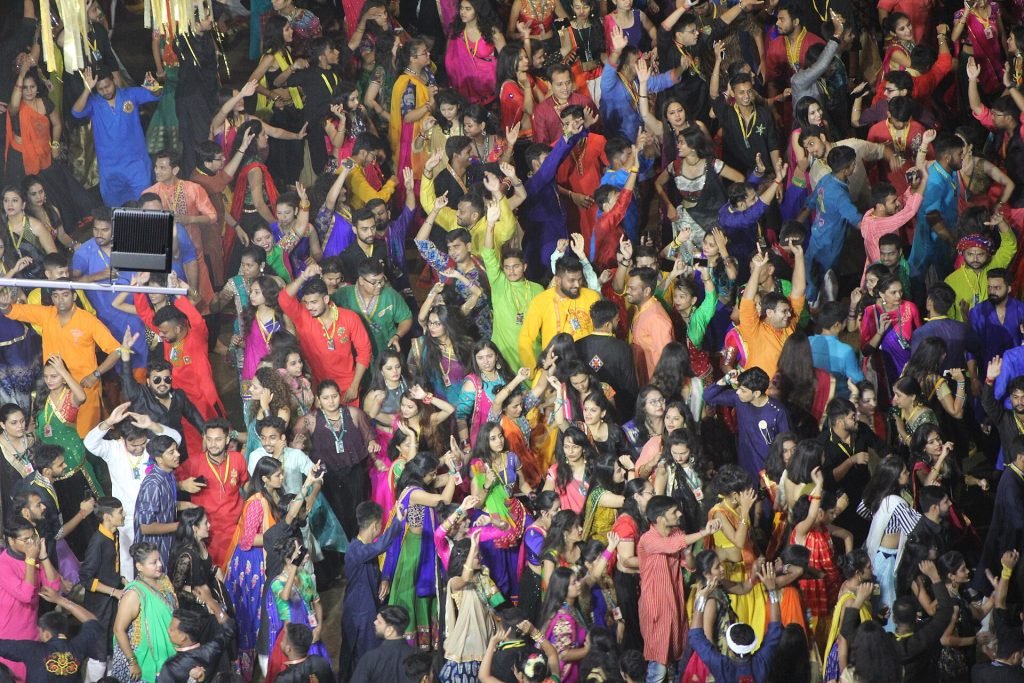
Gujarat has one of the most visually recognizable Navratri traditions.
For nine nights, communities gather for Garba, a circular devotional dance centered on the Goddess.
UNESCO inscribed Garba of Gujarat on the Representative List of the Intangible Cultural Heritage of Humanity in 2023.
Its documentation describes Garba as a ritual and devotional dance performed during Navratri in honor of Shakti. Participants traditionally dance around a perforated earthen pot containing an oil lamp or around an image of the Mother Goddess Amba.
The sacred center matters.
Garba is therefore not simply a social dance performed during a religious festival. Its circular movement developed within a devotional setting focused on the Goddess.
Modern Garba ranges from neighborhood gatherings and temple-centered events to extremely large public celebrations.
UNESCO’s documentation also emphasizes the wider cultural ecosystem surrounding Garba:
- musicians
- dancers
- craftspeople
- costume makers
- religious figures
- community organizers
The tradition is transmitted through participation as much as formal teaching.
Garba and Dandiya Are Not Exactly the Same
Garba and Dandiya Raas are frequently mentioned together in modern Navratri celebrations, but the terms should not automatically be treated as synonyms.
Garba traditionally involves circular devotional movement, clapping and singing around a sacred center.
Dandiya Raas involves paired or group movement using sticks.
Large contemporary Navratri events often include both.
For DurgaShakti, the distinction matters because the devotional structure of Garba is historically tied to the sacred center and Mother Goddess tradition documented by UNESCO.
Garba performance traditions vary across communities and settings.
Navratri in North India
North Indian Navratri often has a different public character from Gujarat’s dance-centered celebrations.
Common practices may include:
- fasting
- household worship
- recitation
- temple visits
- Goddess pilgrimage
- community fairs
- worship of young girls in some traditions
- overlap with Ramlila and Dussehra
The exact combination varies by region.
Government of India tourism material notes the prominence of Ramlila and Dussehra in the northern festival landscape during the same broader season.
For Goddess traditions, however, one of the most important features is the increased pilgrimage to Devi temples and Shakti Peethas.
Navratri and the Shakti Peethas of Himachal Pradesh
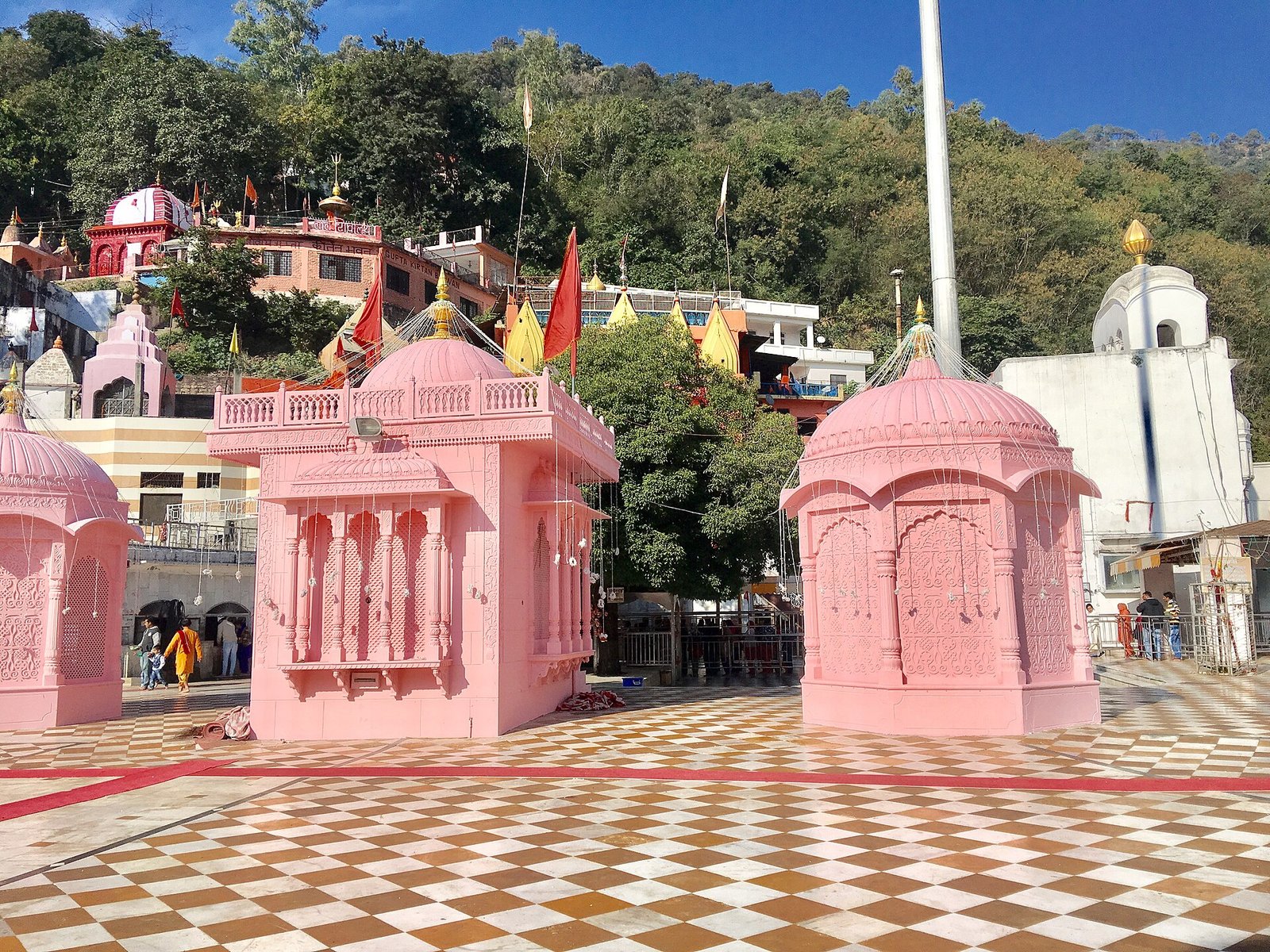
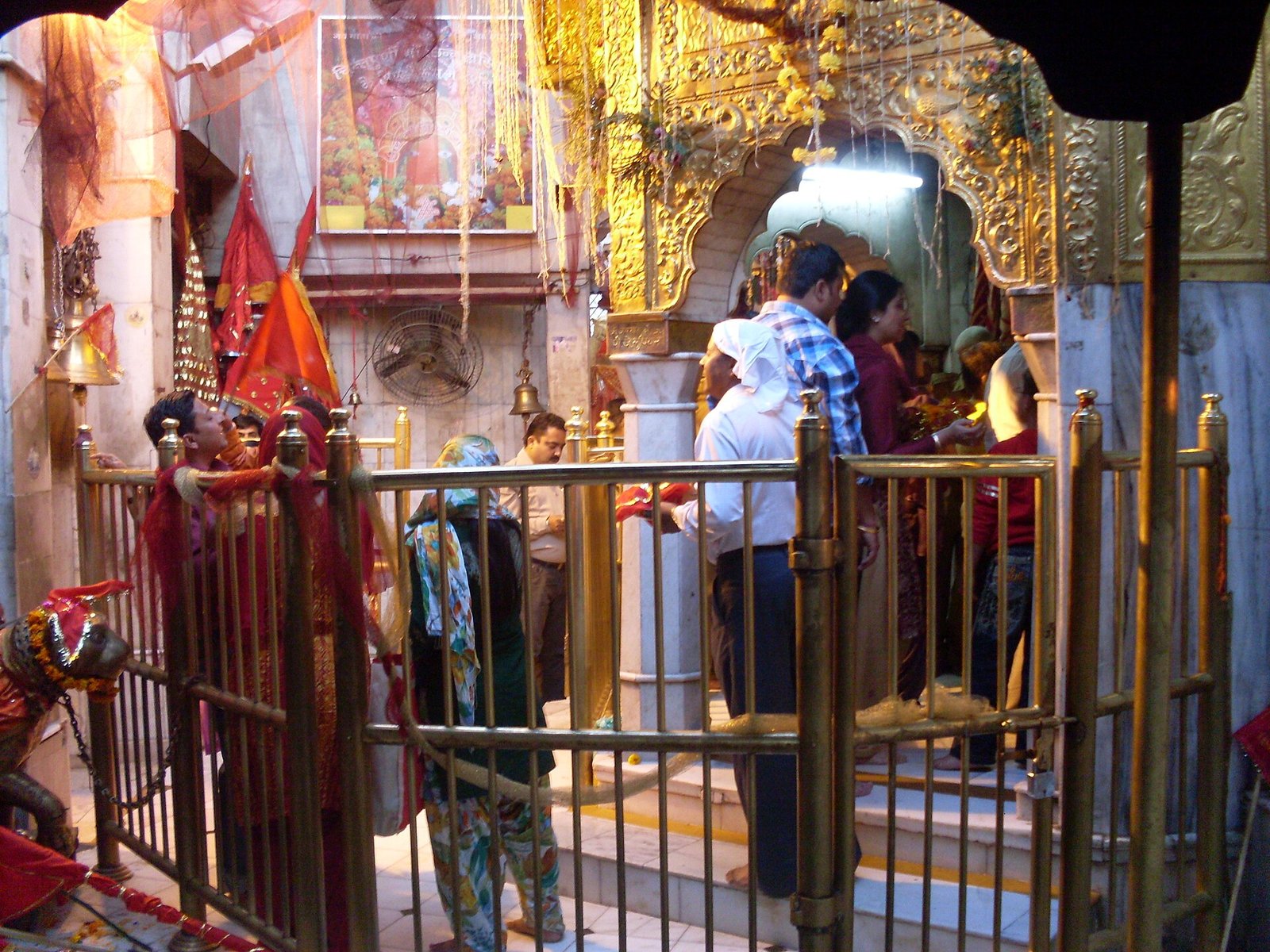
Himachal Pradesh provides one of the clearest examples of Navratri as a pilgrimage season.
Official Himachal Tourism documentation describes large Navratri fairs and pilgrim flows at several major Goddess temples.
These include:
- Naina Devi
- Chintpurni
- Jwala Ji
- Brajeshwari Devi
- Chamunda Devi
- Bala Sundari
- Bhimakali
Himachal Tourism specifically describes Navratri fairs at Naina Devi and Jwala Ji and notes that Bhimakali becomes especially active during Chaitra and Ashvin Navratri.
Its festival documentation also describes a wider Shakti Peetha pilgrimage circuit during the spring Navratri season, connecting Naina Devi, Chintpurni, Brajeshwari, Jwalamukhi and Chamunda.
This is precisely the kind of North Indian tradition that can disappear when Navratri is presented only through Navadurga graphics or Garba photographs.
Here, Navratri is experienced through journey, temple darshan, fairs and sacred geography.


Navratri in Jammu and Other Northern Traditions
The wider northern Himalayan region includes other important Devi pilgrimage traditions.
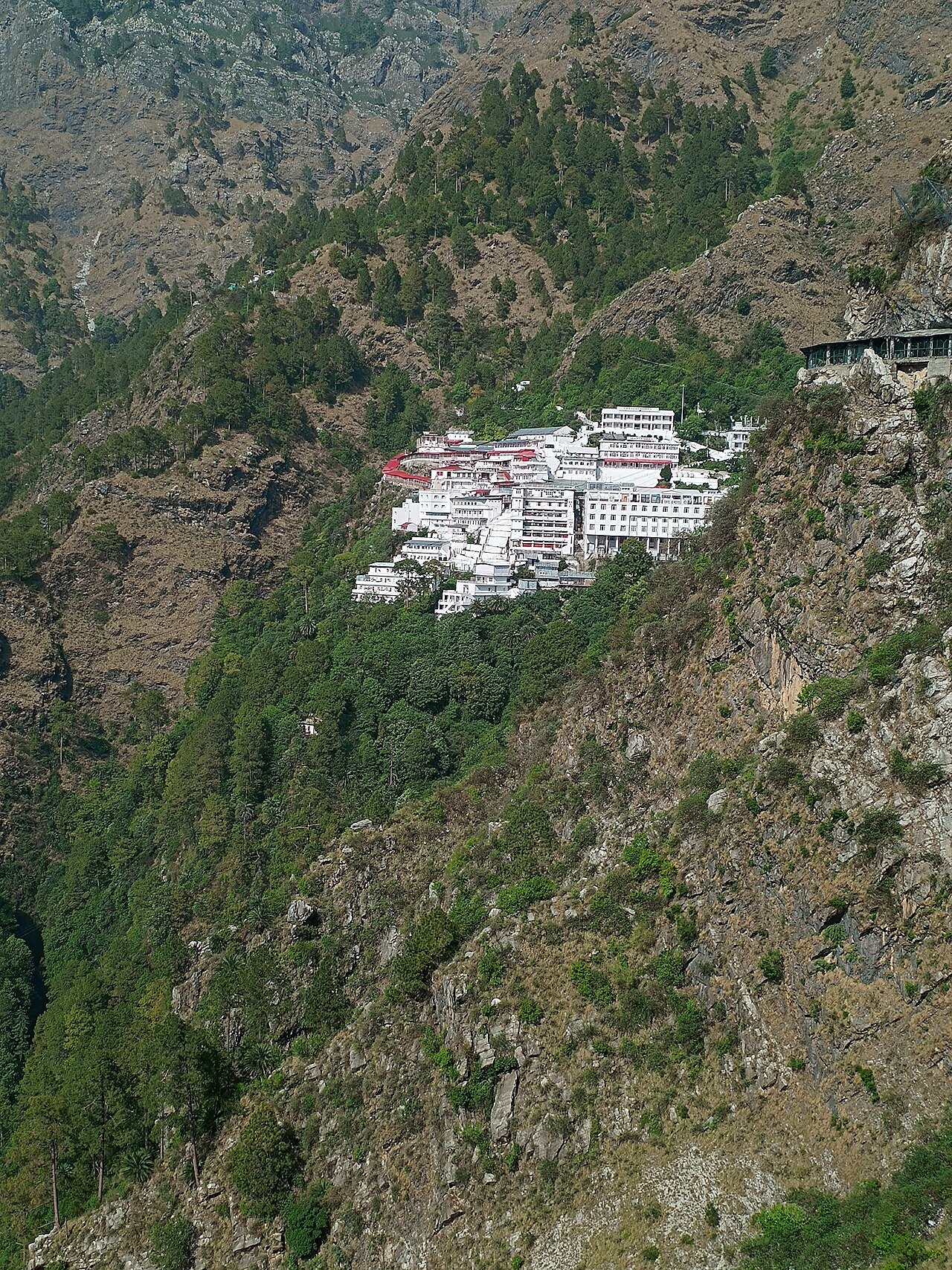
Vaishno Devi in Jammu is one of the most prominent Goddess pilgrimage centers in South Asia, and Navratri is an especially important period for devotees.
Other regional Goddess traditions are connected with Uttarakhand, Kashmir, the Himalayan foothills and local temple networks.
These traditions deserve individual documentation because their theology and ritual life should not be reduced to a generic pan-Indian Navratri formula.

Navratri in South India: Golu, Learning and Worship
In parts of South India, Navratri takes on a markedly different visual form.
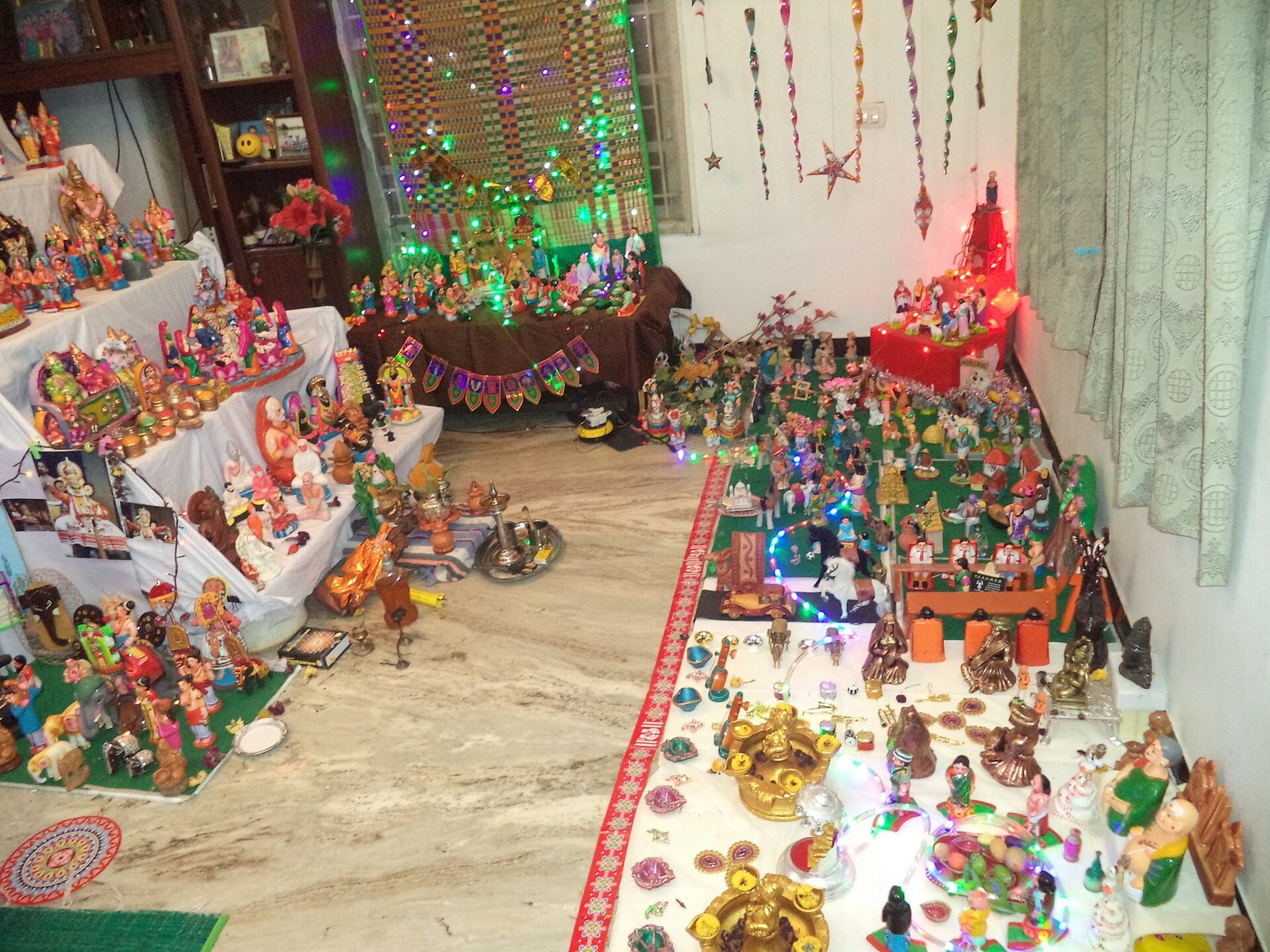
One well-known tradition is Golu, also called Kolu, in which households arrange dolls, sacred figures and narrative scenes on stepped displays.
Government of India tourism material identifies Kolu displays as a characteristic South Indian Navratri practice.
The displays may include:
- gods and goddesses
- scenes from sacred narratives
- saints
- musicians
- animals
- village life
- contemporary themes
Families visit one another’s homes, exchange gifts and participate in devotional and social gatherings.
The closing part of the festival also gives special importance to Saraswati and learning in several southern traditions.
Books, musical instruments and tools may be placed for worship before being ceremonially used again.
This connects Navratri with the broader themes of knowledge, art and the sacred character of skilled work.

Ayudha Puja and the Sacredness of Work
In several South Indian traditions, the Navratri period includes Ayudha Puja, the worship of tools, instruments and implements.
The objects honored can vary widely:
- books
- musical instruments
- tools
- machinery
- vehicles
- implements used for work
The practice reflects an important religious idea: the instruments through which knowledge, skill and livelihood are expressed can themselves become objects of reverence.
Ayudha Puja should not be described as one universal Navratri ritual across India.
Its prominence and form vary by region.
Within southern festival traditions, however, it provides an important connection between Goddess worship and everyday work.
Saraswati Puja and Vidyarambham
The final days of Navratri are closely connected with Saraswati in several South Indian traditions.
Books and instruments may be placed before the Goddess.
In some regions, the conclusion of the festival is associated with Vidyarambham, the ceremonial beginning of learning for young children.
This creates a distinctive festival arc in which the Goddess is encountered through knowledge and education rather than martial imagery.
The relationship between Navratri and Saraswati therefore provides another example of why the festival cannot be reduced to one form of Durga worship.
Navratri and Durga Puja in Eastern India
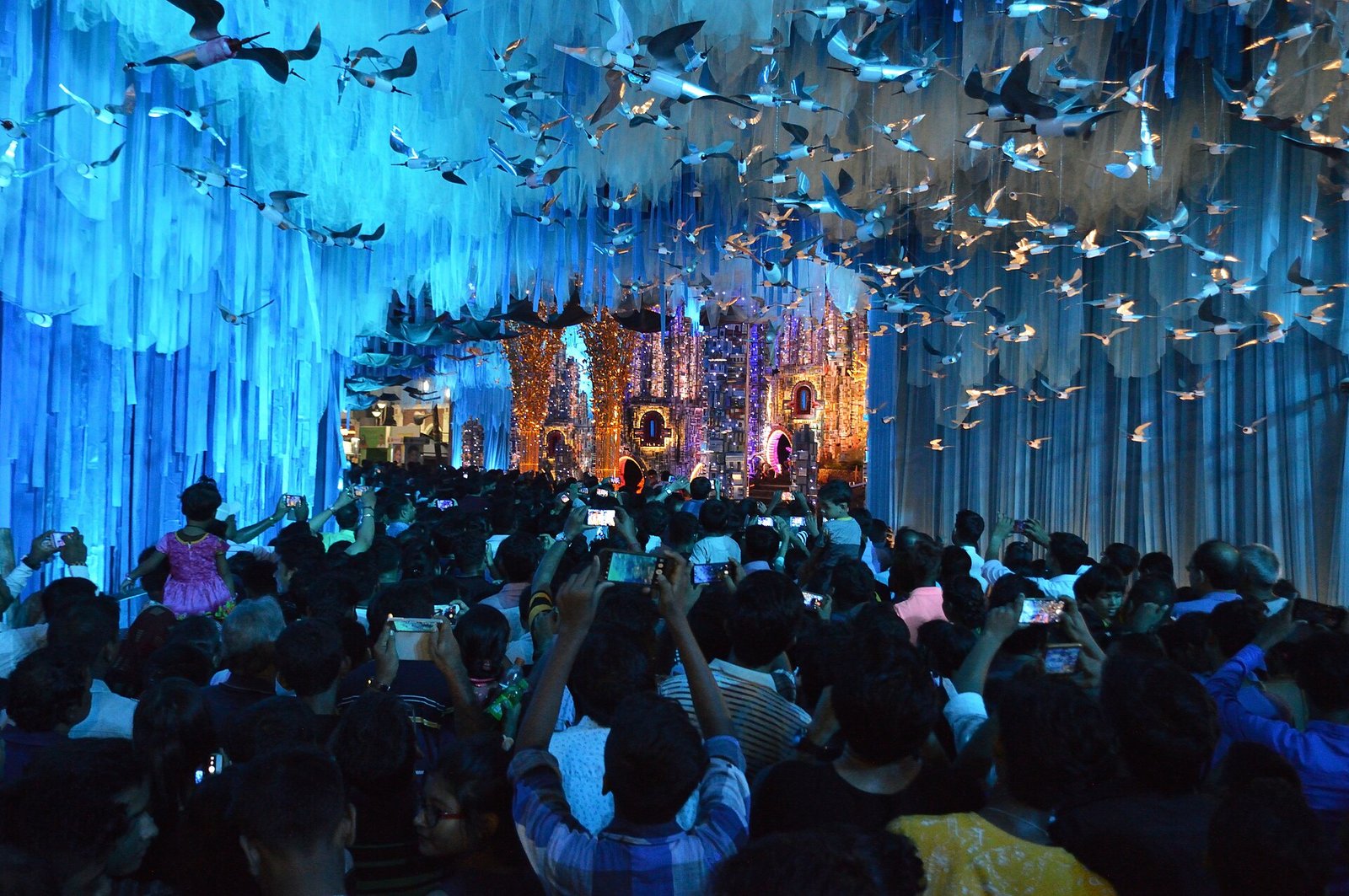
In Bengal, the autumn festival season is dominated by Durga Puja.
Durga Puja overlaps with the broader Navratri period but developed its own ritual, artistic and social character.
For many Bengali communities, the central experience is not a nine-day sequence of Navadurga images.
Instead, attention centers on the arrival and worship of Durga with her accompanying divine family, the construction of pandals, clay image-making, ritual worship and eventual immersion.
UNESCO inscribed Durga Puja in Kolkata on the Representative List of the Intangible Cultural Heritage of Humanity in 2021, recognizing its combination of ritual, craftsmanship and public art.
Durga Puja therefore belongs within the same autumn Goddess season while deserving its own dedicated treatment.

Fasting During Navratri
Fasting is an important part of Navratri for many devotees.
The practice varies considerably.
Some people undertake a strict fast.
Others:
- avoid particular foods
- eat only once a day
- follow regional fasting diets
- abstain from meat or alcohol
- modify their diet for selected days
- fast only on particular days
Religious motivations can include:
- discipline
- purification
- devotion
- concentration
- family tradition
- participation in a sacred seasonal rhythm
There is no single universal Navratri fasting rule.
Fasting traditions need to be understood within specific regions and communities.
Kanya Puja
Some North Indian Navratri traditions include Kanya Puja or Kanjak Puja, in which young girls are honored as manifestations of the Goddess.
The practice is especially associated with the closing part of Navratri in many households and temples.
Details can vary:
- number of girls invited
- day of observance
- foods served
- ritual sequence
- whether a young boy is included alongside them
This is a living devotional practice rather than a single standardized ritual.
Its theological foundation lies in recognizing divine presence in the feminine child, but individual communities may explain and practice it differently.
Chaitra Navratri
Although the autumn Navratri receives more public attention, Chaitra Navratri in the spring is also important.
It occurs in the lunar month of Chaitra and is associated with Goddess worship in many parts of northern India.
Himachal Tourism documents major spring Navratri pilgrimage activity at Shakti Peetha temples across the state.
Chaitra Navratri also occurs in a festival period associated with Ram Navami in many communities.
This illustrates how Hindu festival calendars frequently overlap rather than existing as isolated events.
Spring Navratri has particular significance in North Indian Devi temple traditions.
Sharad Navratri
Sharad Navratri, held during the autumn season, is the most widely visible Navratri cycle.
It overlaps with:
- Garba in Gujarat
- Durga Puja in Bengal
- Goddess pilgrimage in North India
- Golu traditions in South India
- Dussehra and Vijayadashami celebrations
The tenth day is widely known as Vijayadashami or Dussehra, although the theological and narrative emphasis of that day differs by region.
In some communities, the culmination is strongly connected with Durga’s victory.
Elsewhere, Dussehra emphasizes Rama’s victory over Ravana.
The shared festival period therefore holds multiple narratives at once.
Vijayadashami and Dussehra
The tenth day following the nine nights is widely celebrated as Vijayadashami.
Its meaning varies across regional traditions.
In Goddess-centered contexts, it can mark the culmination of Devi worship and victory.
In Ramayana-centered traditions, Dussehra is associated with the defeat of Ravana by Rama.
In southern educational traditions, the day may be associated with restarting study, beginning lessons or honoring teachers and instruments.
These traditions coexist within the broader autumn festival season.
Dance, Music and Community
Navratri demonstrates how festival devotion can take forms that are both religious and social.
Garba is the clearest example.
UNESCO’s documentation describes the tradition as involving not only dancers but also musicians, craftspeople, religious figures and communities that transmit the practice across generations.
Other regions express the festival through:
- devotional singing
- temple music
- storytelling
- recitation
- Ramlila
- folk performance
- community fairs
The festival therefore creates a temporary social world structured around sacred time.
Navratri in the Hindu Diaspora
Navratri is now celebrated widely outside South Asia.
Diaspora communities organize:
- Garba
- temple worship
- community pujas
- cultural programs
- children’s performances
- devotional singing
- festival meals
These celebrations may preserve regional traditions while also bringing together communities whose practices would have remained more geographically separate in South Asia.
A Gujarati Garba event, for example, may attract participants from many Hindu backgrounds.
Diaspora Navratri is therefore not simply a copy of an Indian regional festival.
It is also a developing religious and cultural tradition in its own right.
What Does Navratri Celebrate?
There is no single sentence that captures every Navratri tradition.
At its broadest, the festival celebrates Devi and Shakti through a nine-night period of intensified worship.
Different communities express this through:
- Durga
- Amba
- Navadurga
- local Goddesses
- Saraswati
- Lakshmi
- Shakti Peetha pilgrimage
- dance
- fasting
- household ritual
- public festivals
This diversity does not make Navratri incoherent.
The recurring themes are Goddess devotion, sacred time and the renewal of relationships among households, temples and communities.
Continue Exploring
Goddess traditions
Festivals
Sacred places and practice
Related Devi profiles
Related temples
- Jwala Ji / Jwalamukhi, Himachal Pradesh
- Chintpurni, Himachal Pradesh
- Brajeshwari Devi, Kangra, Himachal Pradesh
- Vaishno Devi, Jammu
Related festivals
Sources & Further Reading
UNESCO Intangible Cultural Heritage
Garba of Gujarat
Inscribed in 2023 on the Representative List of the Intangible Cultural Heritage of Humanity.
Useful for:
- Garba as ritual and devotional dance
- Navratri
- Mother Goddess Amba
- sacred lamp/pot at the center
- community transmission
- musicians and craftspeople
Source: UNESCO Intangible Cultural Heritage.
Government of India, Incredible India
Navratri: Nine Nights of Divine Celebration
Useful for:
- national overview
- Gujarat Garba
- North Indian Ramlila/Dussehra context
- South Indian Kolu
- Bengal / Durga Puja
- common Navadurga sequence
Source: Ministry of Tourism, Government of India.
Himachal Tourism
Temples
Useful for:
- Naina Devi
- Chintpurni
- Jwala Ji
- Bhimakali
- Bala Sundari
- temple-specific Navratri fairs
- Shakti Peetha context
Source: Department of Tourism and Civil Aviation, Government of Himachal Pradesh.
Himachal Tourism
Fairs & Fests
Useful for:
- spring Navratri fairs
- Shakti Peetha pilgrimage circuit
- Naina Devi
- Chintpurni
- Brajeshwari
- Jwalamukhi
- Chamunda
Source: Department of Tourism and Civil Aviation, Government of Himachal Pradesh.