

Diwali 2026: Date at a Glance
In 2026, Diwali falls on Sunday, November 8.
The Government of India holiday calendar lists Diwali / Deepavali on November 8, 2026.
| Observance | 2026 date |
|---|---|
| India: Diwali / Deepavali | Sunday, November 8 |
| USA: Diwali / Lakshmi Puja in six reviewed cities | Sunday, November 8 |
| Kali Puja / Shyama Puja in Bengal | Sunday, November 8 |
| Govardhan Puja | Monday, November 9 |
| Bhai Dooj | Wednesday, November 11 |
The National Portal of India also lists Naraka Chaturdashi on November 8 for the central calendar, reflecting the fact that festival-day naming and sequence can vary regionally.
Government guidance for 2026 specifically notes that in some states the principal Deepavali observance may be associated with Naraka Chaturdashi, illustrating why one national date should not be assumed to describe every regional ritual sequence identically.
All six reviewed U.S. calendars place Diwali / Lakshmi Puja on November 8. The local Amavasya interval begins early November 8 in Eastern Time and late November 7 in Central and Pacific Time; it ends early November 9 in Eastern and Central Time, but late November 8 in Pacific Time. Local evening puja windows consequently differ even though the civil observance date agrees. This does not override the separate midnight Kali Puja calendar, which lists November 7 in San Francisco.
U.S. calendar references checked on October 7, 2026: Washington, DC, New York, Chicago, Dallas, San Francisco, Los Angeles.
Public celebrations may use another weekend. New York State’s Diwali Festival of Lights at the Empire State Plaza Convention Center is scheduled for October 24, 2026; this is a community-event date, not the local Lakshmi Puja date.
Exact puja timings depend on local lunar calculations and should be verified annually for the relevant city and tradition. Confirm temple and community schedules with the organizer; these annual references should be checked again each year.
- Associated deities
- Lakshmi; Kali in Bengal; Rama in Ayodhya traditions; Krishna in Naraka and Govardhan traditions
- Traditions
- Household Lakshmi worship; Regional Hindu traditions; Jain Nirvana observance and Sikh Bandi Chhor Divas in their own religious contexts
- Calendar basis
- Local lunar calendar; regional observances and temple schedules vary
- Lunar month
- Kartik in the northern new-moon context; regional month names vary
- Paksha
- Krishna paksha for the principal new-moon observance
- Tithi / range
- Amavasya; surrounding observances have distinct tithis
- Typical Gregorian period
- October–November
- Duration
- Several days; sequence and emphasis vary by community
- Calendar and local-date guidance
- Exact puja timings depend on location and tradition. Public events may use another weekend. See the verified annual section.
On this page
Diwali, also known as Deepavali, is one of the most widely celebrated festivals in India and across the global Indian diaspora.
Homes, temples, streets and businesses are illuminated with lamps. Families gather, sweets are exchanged, worship is performed and thresholds may be decorated with rangoli. Yet beneath this recognizable festival atmosphere lies considerable regional and religious diversity.
For many Hindu households, Goddess Lakshmi is central to Diwali night. Elsewhere, the festival is associated especially with Rama’s return to Ayodhya, Krishna’s defeat of Narakasura, the story of King Bali, the worship of Kali, Govardhan Puja, business traditions or the beginning of a new year.
Jain and Sikh communities also observe important sacred events during the wider Diwali period within their own religious traditions.
There is therefore no single narrative that completely explains Diwali across India.
In 2025, UNESCO inscribed Deepavali on the Representative List of the Intangible Cultural Heritage of Humanity, recognizing it as a living festival celebrated by diverse communities across India.
What Does Diwali Mean?
The Sanskrit name Dīpāvalī is commonly understood as a “row of lamps,” from dīpa, lamp, and āvalī, row or series.
The name reflects one of the festival’s most enduring visual features: the lighting of oil lamps in homes, temples and public spaces.
Diwali is often summarized as a festival of “light over darkness” or “good over evil.” These ideas are present in many contemporary explanations, but they do not by themselves capture the festival’s full religious range.
Depending on region and tradition, Diwali may mark:
- worship of Lakshmi
- household and business renewal
- Rama’s return to Ayodhya
- Krishna’s defeat of Narakasura
- remembrance of King Bali
- Govardhan worship
- Kali Puja
- family relationships
- new-year observances
- harvest and seasonal transition
The lamps provide a shared visual language, but the stories and rituals around them are not identical everywhere.
Why Is Lakshmi Worshipped During Diwali?
For many Hindu households, Lakshmi Puja is the religious center of Diwali night.
Lakshmi is associated with Shri, a concept encompassing prosperity, abundance, auspiciousness, beauty, well-being and flourishing.
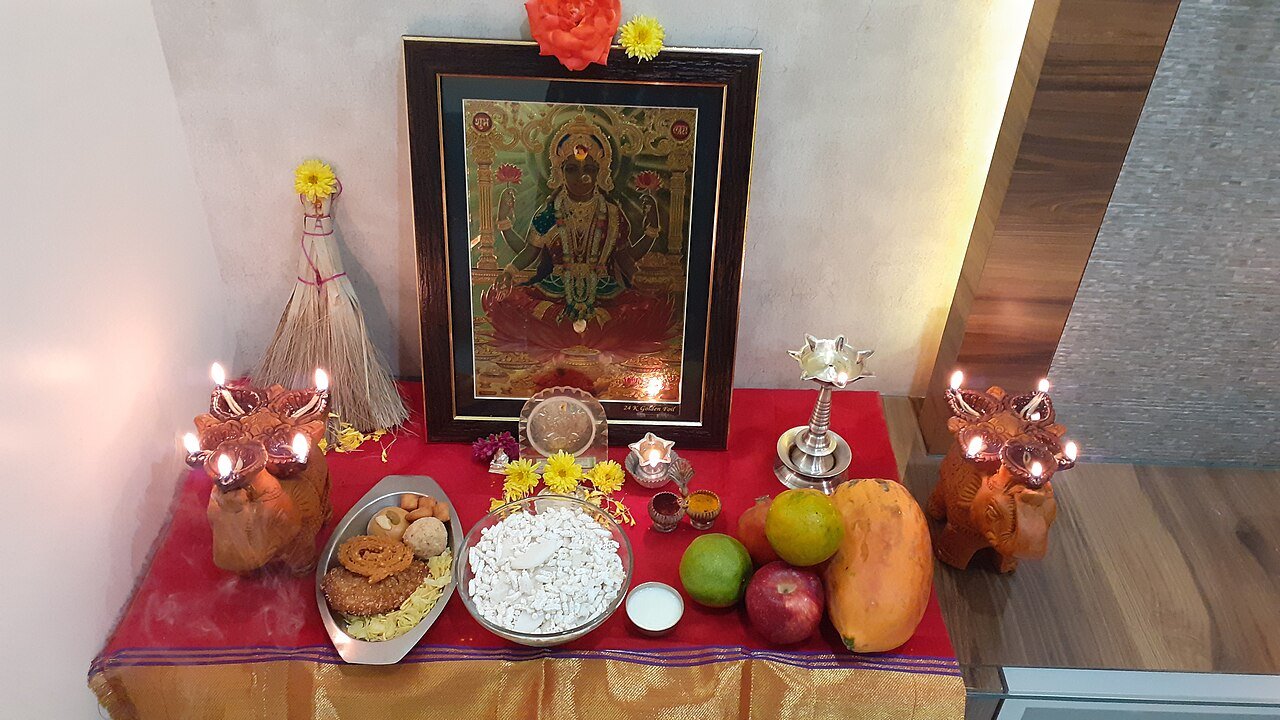
Before Diwali, households may be thoroughly cleaned and prepared. Entrances are decorated, lamps are lit and a space is prepared for worship.
These customs are frequently explained through the belief that Lakshmi enters places that are illuminated, welcoming and well cared for.
The religious meaning of prosperity, however, is broader than money alone.
Within Hindu traditions, Lakshmi can represent the conditions that allow life to flourish:
- food
- family well-being
- generosity
- beauty
- fertility
- order
- material stability
- auspiciousness
The Diwali connection therefore brings household life and sacred life together.

Diwali Is Not the Same Everywhere
One of the easiest ways to misunderstand Diwali is to treat one regional celebration as the universal version.
Across India, the festival season carries different stories, names, calendars and ritual emphases.
In parts of North India, the story of Rama’s return to Ayodhya after exile is especially prominent.
Across several southern and western traditions, Naraka Chaturdashi and Krishna’s defeat of Narakasura carry particular importance.
In Bengal and nearby regions, the new-moon night is strongly associated with Goddess Kali.
Many households across India worship Lakshmi.
Other communities emphasize King Bali, Govardhan, family relationships, new-year traditions or local temple observances.
These traditions overlap, but they should not be forced into a single universal sequence.
Rama and the Lights of Ayodhya
In much of North Indian popular tradition, Diwali is closely associated with the return of Rama, Sita and Lakshmana to Ayodhya after fourteen years of exile and Rama’s victory over Ravana.
Lamps are understood as welcoming the returning royal family home.
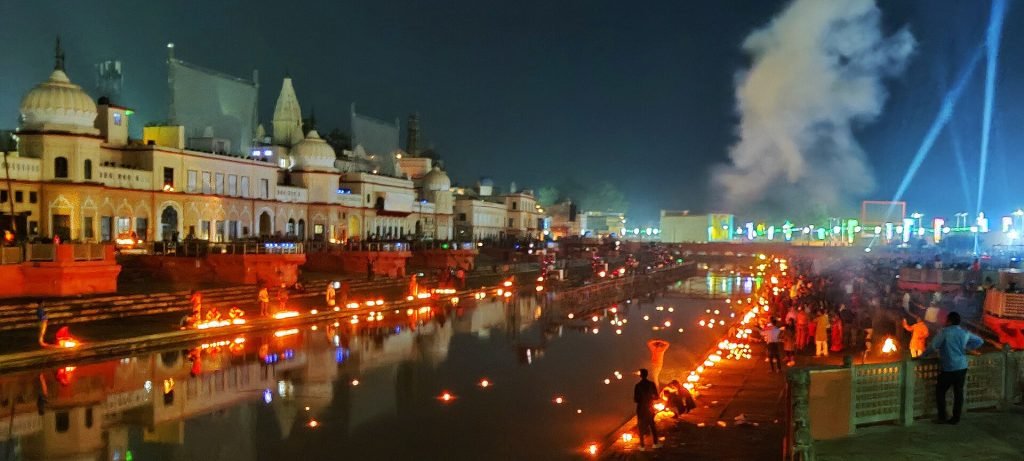
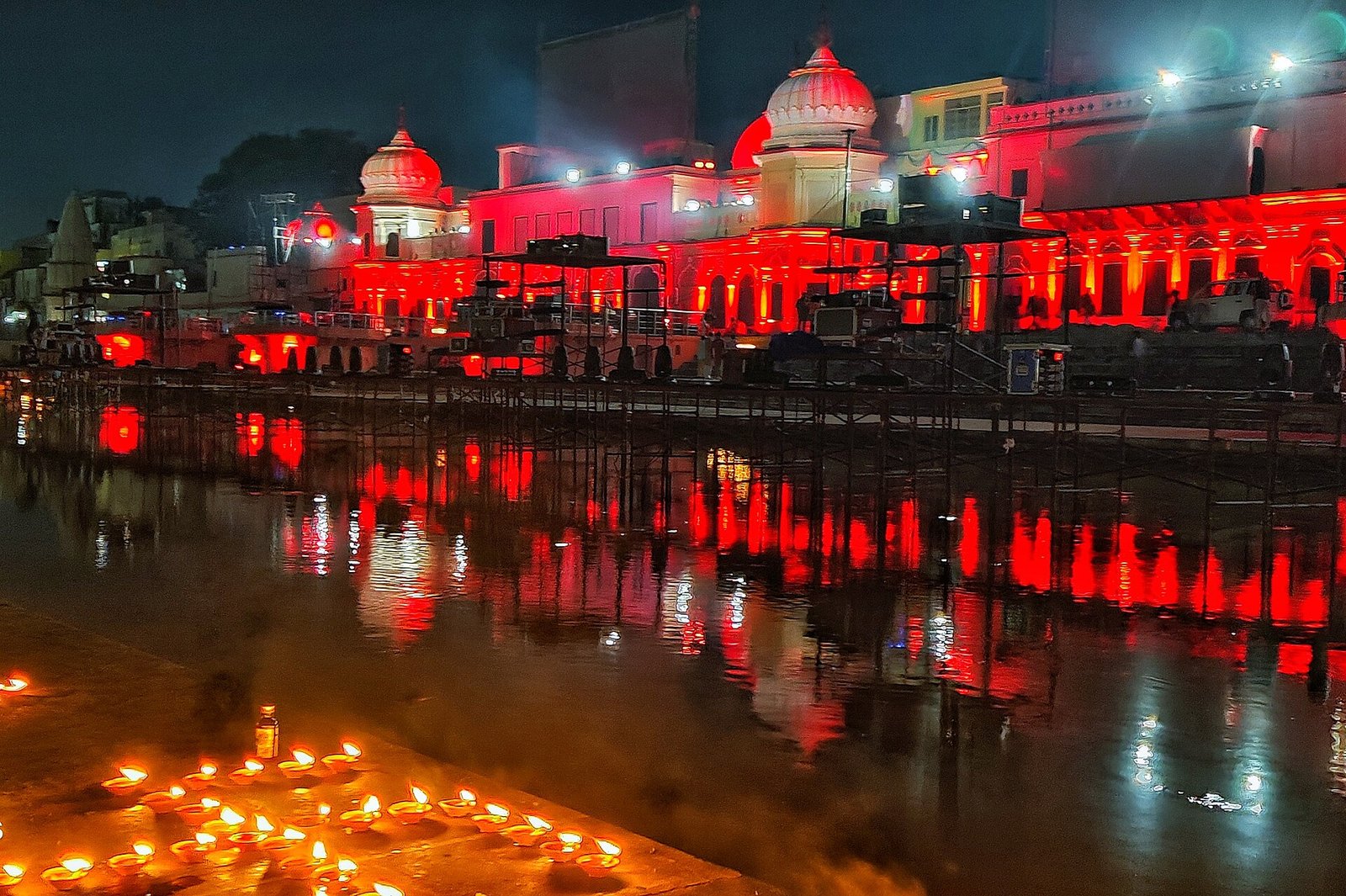
Modern Ayodhya has made this association especially visible through large public lamp-lighting celebrations.
The Rama narrative also creates a seasonal connection between Dussehra and Diwali:
- Dussehra commemorates Rama’s victory over Ravana in many North Indian traditions
- Diwali follows later and is associated with Rama’s return to Ayodhya
This sequence is highly influential, but it should still be identified as one important regional and devotional interpretation rather than the only explanation of Diwali.
Read about Dussehra and Vijayadashami →

Naraka Chaturdashi and Southern Deepavali Traditions
In several parts of South India, Naraka Chaturdashi is one of the most important moments of the Deepavali season.
The observance is associated with Krishna’s defeat of Narakasura.
Morning customs may include:
- ritual oil bathing
- new clothing
- family prayer
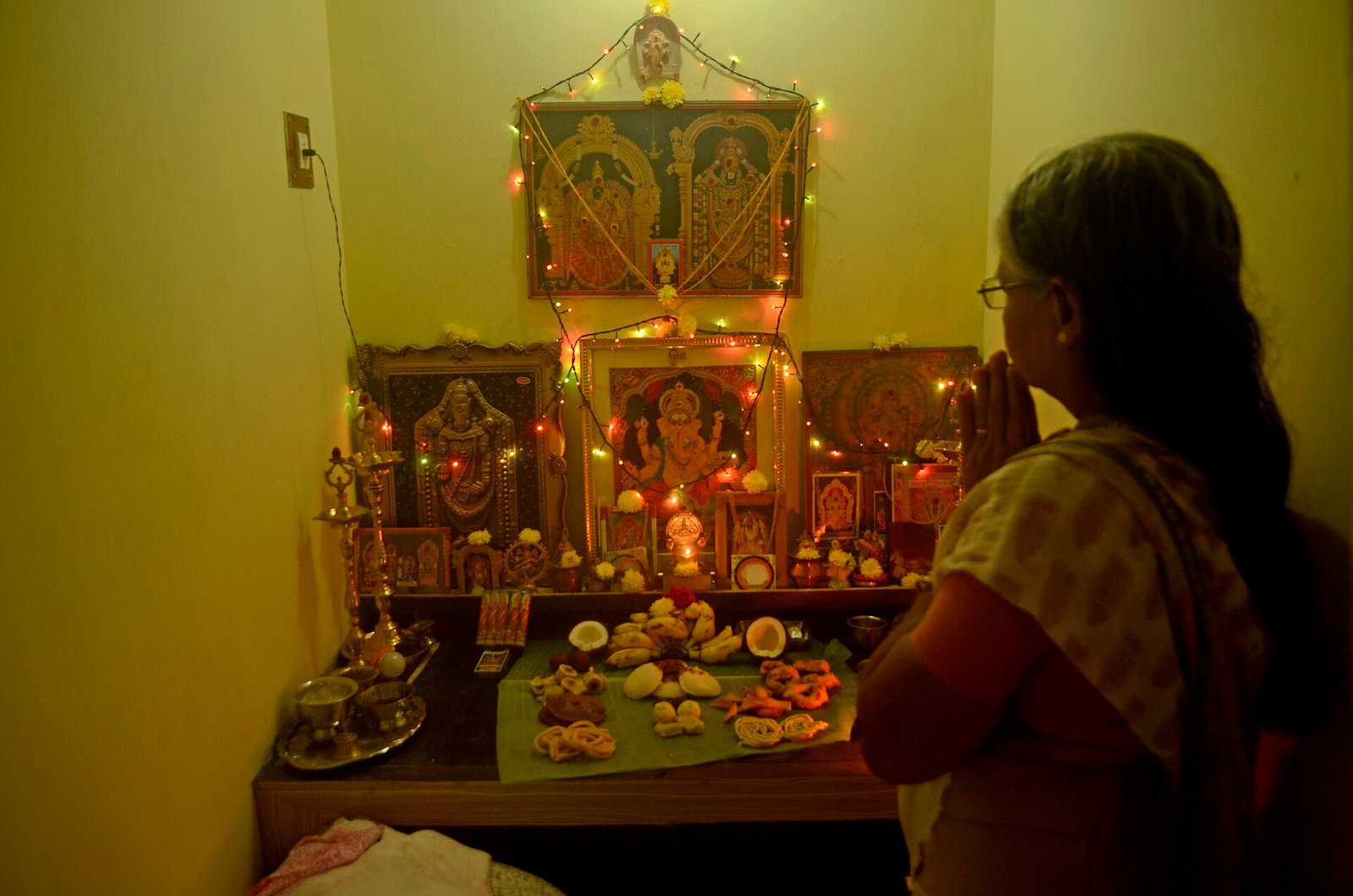
- lamps
- sweets
- festive meals
The timing and ritual sequence differ by region and household.
This is an important reminder that Deepavali does not always center primarily on the evening Lakshmi Puja familiar from many North Indian descriptions.
Government of India holiday guidance itself acknowledges that some states observe the principal Deepavali holiday on Naraka Chaturdashi.

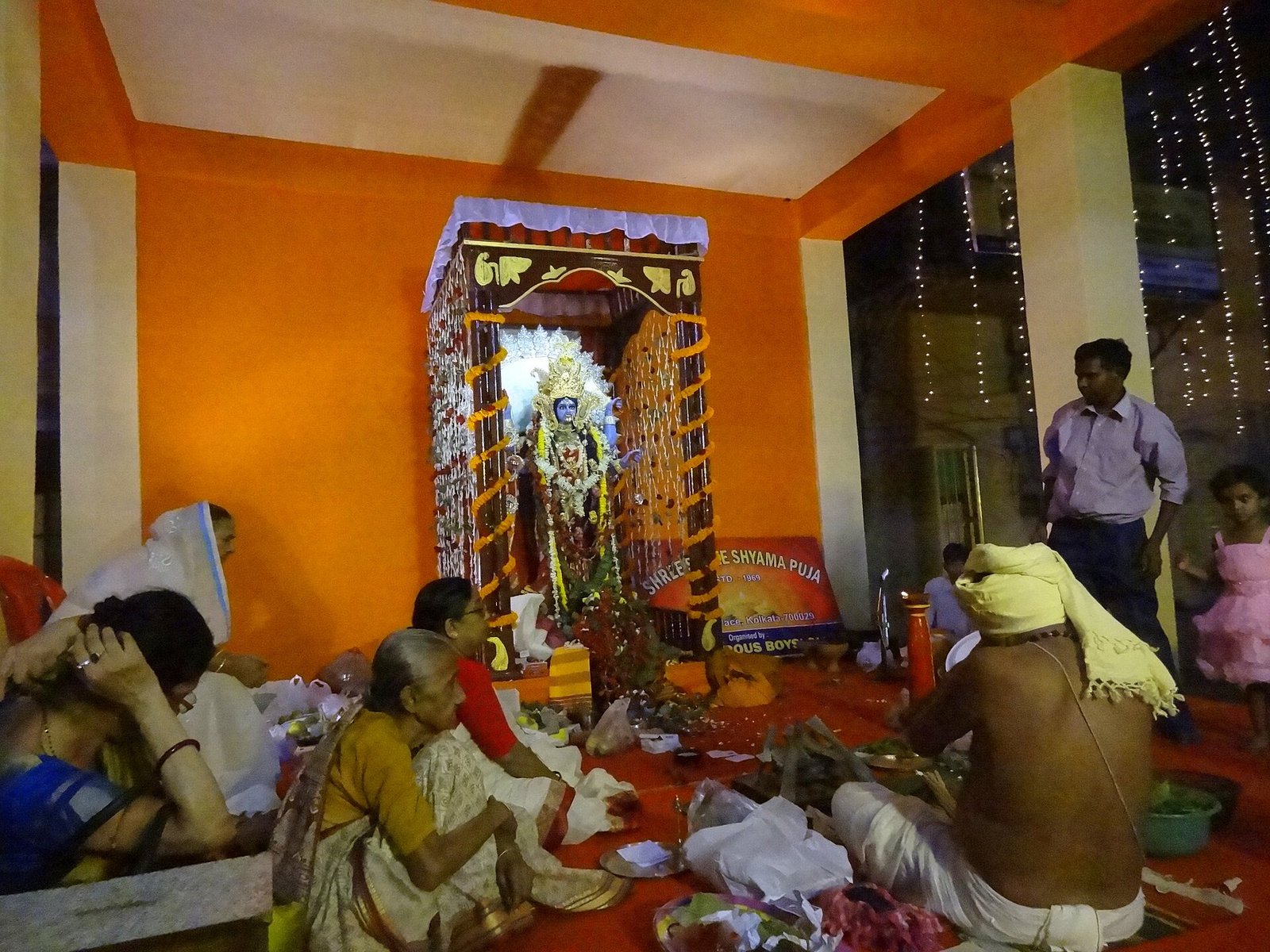
Kali Puja: Diwali Night in Bengal
In Bengal, Diwali night has a distinct Goddess-centered expression through Kali Puja.
On the Kartik new moon, temples, households and public community pujas worship Kali as lamps illuminate the night.
In the 2026 West Bengal references, Kali Puja and Diwali both fall on November 8.
The coincidence of date does not make them identical festivals.
Diwali is a wider festival complex with many regional traditions, while Kali Puja centers specifically on Goddess Kali.
This distinction is particularly important for DurgaShakti because it shows how the same sacred night can carry different theological emphasis in different parts of India.

The Days Around Diwali
Diwali is often described as a five-day festival, but that pattern should be understood as a common framework rather than a universal sequence observed identically everywhere.
A frequently encountered sequence includes:
Dhanteras
Associated with prosperity, auspicious beginnings and purchases for the household or business.
Some traditions also connect the day with Dhanvantari, associated with Ayurveda and healing.
Naraka Chaturdashi
Particularly important in several regional Deepavali traditions and associated with Krishna and Narakasura.
Diwali / Lakshmi Puja
The principal new-moon night, widely associated with lamps, household worship and Lakshmi.
Govardhan Puja / Annakut
Associated with Krishna and Govardhan Hill in many Vaishnava traditions.
Temple communities may prepare large displays of food offerings known as Annakut.
Bhai Dooj
A family observance centered on the bond between sisters and brothers.
The names, sequence and relative importance of these observances vary across communities.
They should therefore not be presented as a mandatory five-step ritual calendar for every Hindu household.
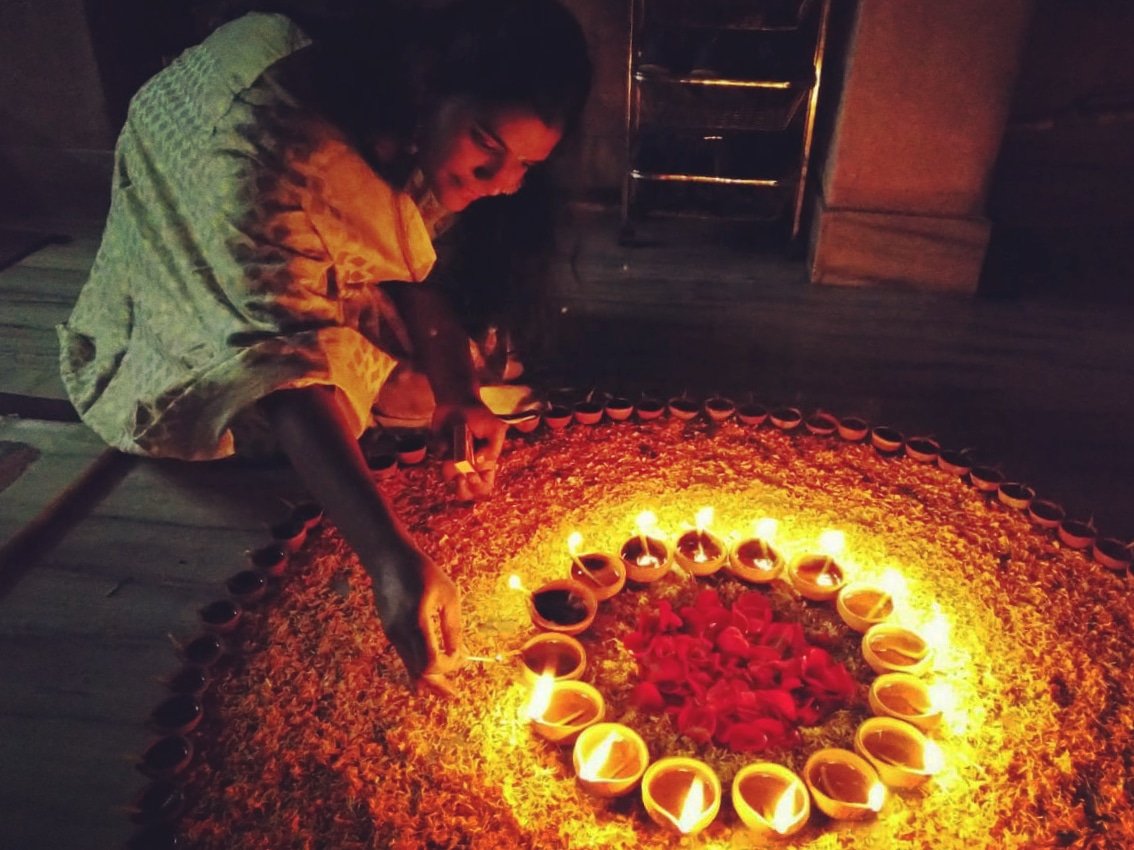
Lamps, Rangoli and the Preparation of the Home
Diwali’s most recognizable practices often take place at the threshold between domestic and sacred life.
Homes may be:
- cleaned
- illuminated
- decorated with flowers
- marked with rangoli
- prepared for guests
- arranged for household worship
Small oil lamps, traditionally called diyas, may be placed at entrances, windows, courtyards and shrines.
Rangoli designs vary widely in style and region.
Some households include symbolic footprints associated with Lakshmi near the entrance or worship area.
These practices transform the household itself into part of the festival environment.
For many families, preparing for Diwali is therefore not separate from the religious observance. The acts of cleaning, decorating, cooking, welcoming and worshipping become part of one seasonal rhythm.

Diwali, Business and the Idea of Prosperity
Diwali also has a long association with trade, business and financial renewal in many communities.
Merchants may worship account books, ledgers or business spaces.
In contemporary settings, computers, financial records or workplace tools may take the place of older account books.
Some regional communities mark a new financial or commercial year around the Diwali period.
These customs reinforce Lakshmi’s connection with prosperity but should not reduce her to a Goddess of money.
Traditional concepts of Shri and auspicious prosperity include ethical household order, generosity and well-being as well as material abundance.
Govardhan Puja and Annakut
The day after the principal Diwali night is associated in many Vaishnava communities with Govardhan Puja.
The tradition recalls Krishna lifting Govardhan Hill to protect the people of Vraja.
Temples may prepare Annakut, literally a “mountain of food,” consisting of extensive offerings presented before the deity.
The observance shifts the festival atmosphere from lamps and household prosperity toward:
- gratitude
- food
- protection
- Krishna devotion
- community offering
Govardhan Puja is especially prominent in Vaishnava traditions and should not be assumed to have the same importance in every Diwali-observing household.

Diwali Beyond Hindu Traditions
The wider Diwali period also carries important meanings for Jain and Sikh communities.
Jain traditions
For Jains, the festival is associated with Mahavira’s attainment of Nirvana, one of the most important events in Jain sacred history.
This meaning belongs to Jain religious tradition and should not be treated merely as a variation of Hindu Diwali.
Sikh traditions
For Sikhs, the period is associated with Bandi Chhor Divas, connected with Guru Hargobind and his release from imprisonment.
The Golden Temple at Amritsar becomes an especially visible setting for illumination and gathering during this period.
Again, Bandi Chhor Divas belongs to Sikh religious history and should be described on its own terms rather than absorbed into Hindu explanations of Diwali.
Recognizing these distinctions helps explain why the festival period has become one of South Asia’s most widely shared yet religiously diverse times of the year.
Diwali Around the World
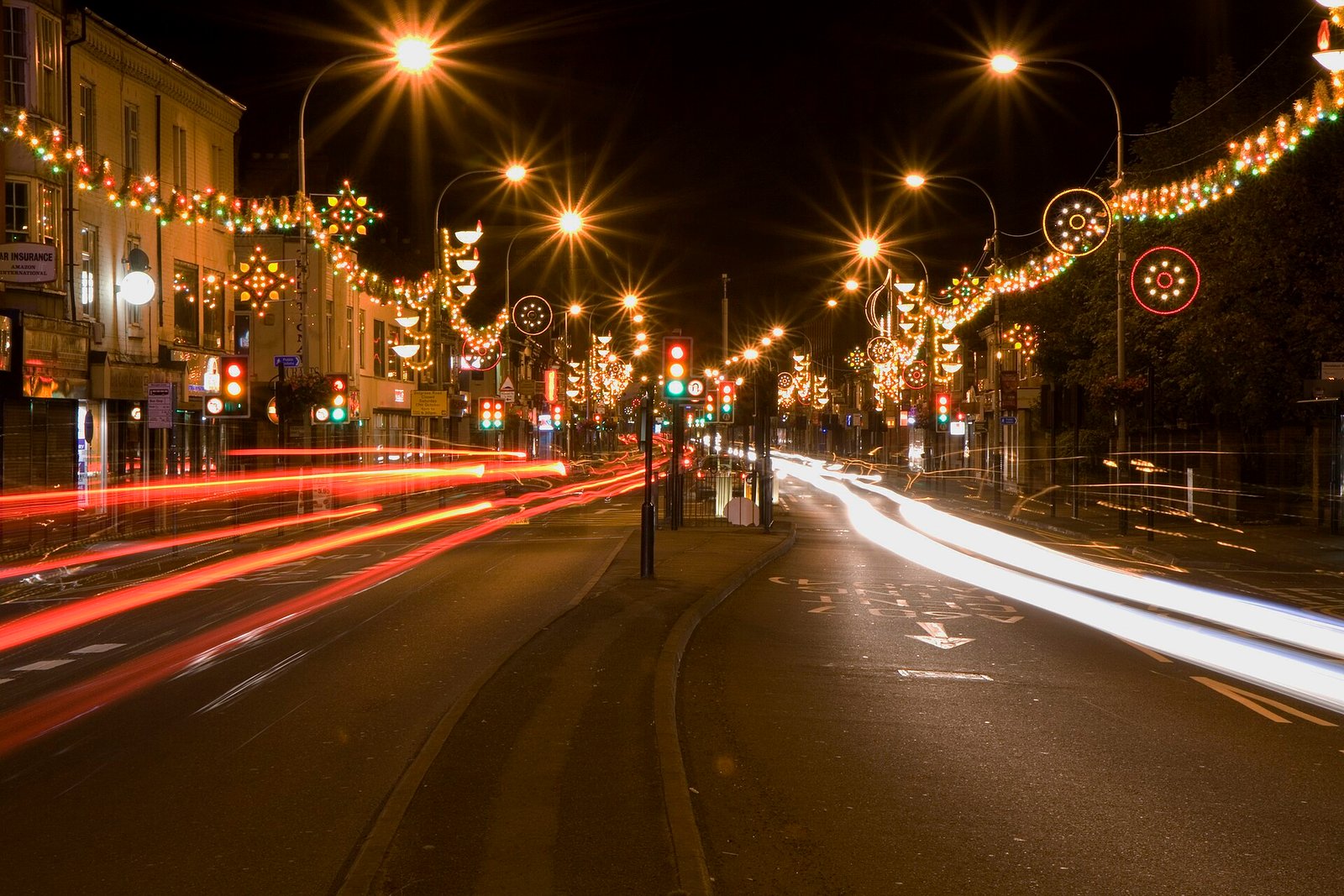
Diwali is now celebrated throughout a large global diaspora.
Public celebrations take place in:
- the United States
- Canada
- the United Kingdom
- Singapore
- Malaysia
- Mauritius
- Fiji
- the Caribbean
- other regions with significant South Asian communities
Diaspora celebrations may combine:
- temple worship
- household Lakshmi Puja
- community dinners
- cultural performances
- lamps and rangoli
- fireworks where permitted
- public civic events
Public events may be scheduled for convenient weekends even when the religious observance falls on another date.
As with Navratri, the religious date and the community-event date should therefore be distinguished.

Deepavali as Living Cultural Heritage
In 2025, UNESCO inscribed Deepavali on the Representative List of the Intangible Cultural Heritage of Humanity.
The recognition is significant because it identifies Deepavali not as a monument or object but as a living practice transmitted through communities.
UNESCO describes the festival as involving diverse communities across India and associates it with:
- lamps
- seasonal renewal
- gatherings
- ritual
- shared cultural practice
- continuity between generations
This living-heritage perspective fits DurgaShakti’s broader approach to festivals.
Diwali cannot be understood only through mythology.
Its meaning also exists in the practices through which people clean homes, prepare food, light lamps, worship, gather with family and transmit traditions to the next generation.
What Does Diwali Celebrate?
There is no single answer that applies equally to every community.
Diwali may express:
- devotion to Lakshmi
- Rama’s return to Ayodhya
- Krishna’s victory over Narakasura
- Kali worship
- Govardhan worship
- prosperity and household renewal
- new-year traditions
- family relationships
- seasonal transition
- Jain remembrance of Mahavira’s Nirvana
- Sikh observance of Bandi Chhor Divas
The festival’s shared lamps do not erase these differences.
Instead, Diwali shows how a common festival season can hold multiple sacred histories at once.
Continue Exploring
Goddess traditions
Festivals
- Read about Kojagari and Diwali Lakshmi Puja →
- View Festivals & Sacred Days →
- Read the Kali Puja guide →
- Read the Dussehra & Vijayadashami guide →
- Read the Navratri guide →
- Read the Durga Puja guide →
Practices and sacred places
Related Devi profiles
Related festivals
Sources & Further Reading
UNESCO Intangible Cultural Heritage: Deepavali
Deepavali was inscribed in 2025 on the Representative List of the Intangible Cultural Heritage of Humanity.
Useful for:
- living heritage
- diversity of communities
- annual lunar-calendar context
- transmission
- seasonal renewal
- cultural practices
Government of India: Incredible India: Diwali
Useful for:
- 2026 date
- regional traditions
- Ayodhya
- Naraka Chaturdashi
- King Bali traditions
- broader contemporary festival context
Government of India: National Portal Holiday Calendar
Useful for:
- official 2026 central-calendar dates
- Diwali
- Naraka Chaturdashi
- Govardhan Puja
- Bhai Dooj
Government of India: Central Government Holiday Guidance for 2026
Useful for:
- November 8, 2026 date
- explicit recognition that some states observe Deepavali in association with Naraka Chaturdashi
Press Information Bureau, Government of India: Deepavali Traditions
Useful for:
- Rama
- Krishna/Narakasura
- Lakshmi
- Mahavira
- King Bali
- Kali Puja
- Govardhan traditions