
Goddesses and the Many Forms of Devi
Hindu traditions include a remarkable diversity of goddesses.
Some are worshipped across India and throughout the Hindu diaspora. Others are especially important within a particular region, lineage, temple or community. Some appear in ancient sacred literature, while others become prominent in later Puranic, Tantric, devotional or regional traditions.
The Sanskrit word Devi simply means “Goddess,” but it can also carry a deeper theological meaning. In Goddess-centered traditions, Devi or Mahadevi (the Great Goddess) may be understood as supreme divine reality, appearing through many forms.
That does not mean every Hindu tradition organizes the goddesses in the same way.
Durga, Kali, Lakshmi, Saraswati, Parvati and Lalita Tripurasundari are connected through wider ideas of Devi and Shakti, yet each has her own stories, iconography, sacred texts, festivals and devotional traditions.
This section of DurgaShakti explores those goddesses individually while also examining the larger traditions that connect them.
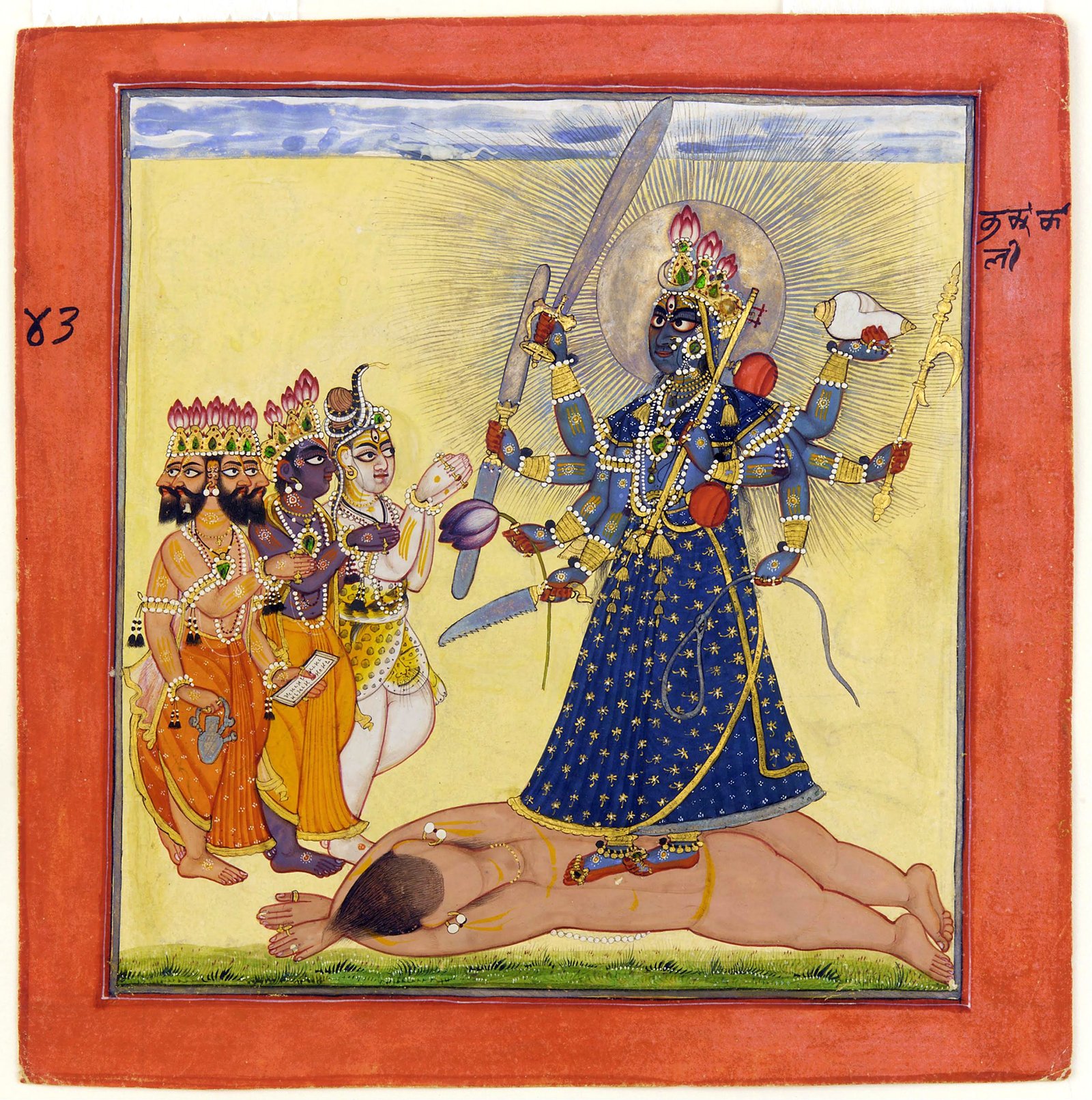

What Does Devi Mean?
Devī is the Sanskrit feminine form of deva, a divine being or deity, and is commonly translated as Goddess.
The word can be used for an individual goddess, but in several Hindu traditions Devi also becomes a name for the supreme Goddess.
Another important term is Mahadevi, “Great Goddess.”
The distinction matters because the phrase “the Hindu Goddess” can refer to more than one kind of religious idea.
A devotee may worship Lakshmi as a distinct goddess associated with prosperity and auspiciousness. Another tradition may understand Lakshmi as an expression of one supreme Goddess. A Shakta theological system may describe the ultimate divine reality itself as Devi or Shakti.
These views can coexist within the wider Hindu religious world.
The National Museum of Asian Art notes this complexity when presenting forms such as Durga, Kali, Lakshmi, Parvati and Saraswati: some may be understood as forms or expressions of Mahadevi, while each still has distinctive iconography and traditions of worship.
Is There One Hindu Goddess or Many?
The answer can be both, depending on the tradition.
Hindu religious life includes many individual goddesses. They may have separate temples, myths, festivals and communities of devotees.
At the same time, Goddess-centered texts and traditions often interpret multiple goddesses as manifestations of a deeper unity.
The Devi Mahatmya is one of the most influential examples. Its Goddess appears through different forms and names while also being praised as a cosmic divine power. In later Shakta traditions, similar ideas develop in different ways.
This is why a list of Hindu goddesses should not be treated like a collection of unrelated mythological characters.
But the opposite mistake is just as misleading: it is not accurate to assume that every goddess is simply an interchangeable version of one deity.
DurgaShakti therefore approaches each goddess at two levels:
- Her own identity, stories, worship and iconography
- Her relationship to broader ideas of Devi and Shakti
Explore the Goddesses
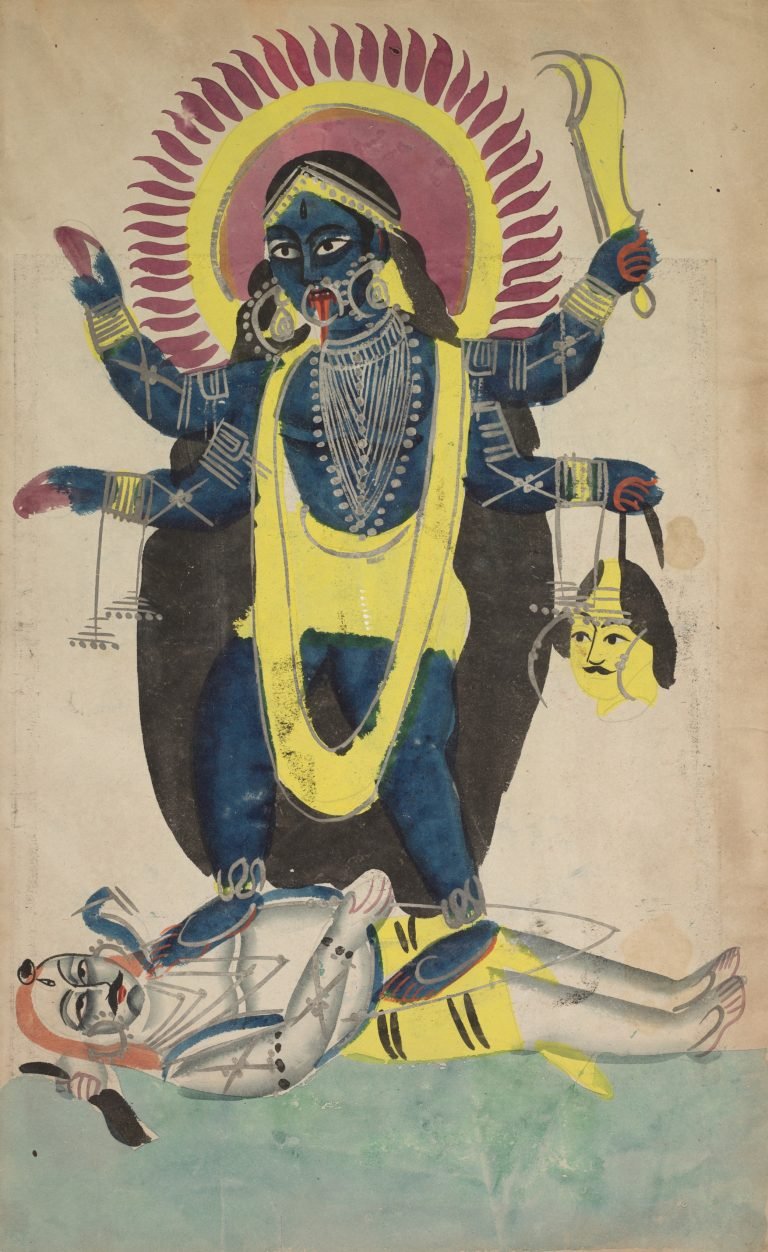
Kali Dancing on Shiva, from a Kalighat album, Bengal, ca. 1890. Cleveland Museum of Art, 1980.216.a. Gift of Mr. and Mrs. William E. Ward in memory of Dr. William G. Archer. Image source. CC0 1.0. Kali
Time, transformation, protection, fierce Goddess traditions and liberation.
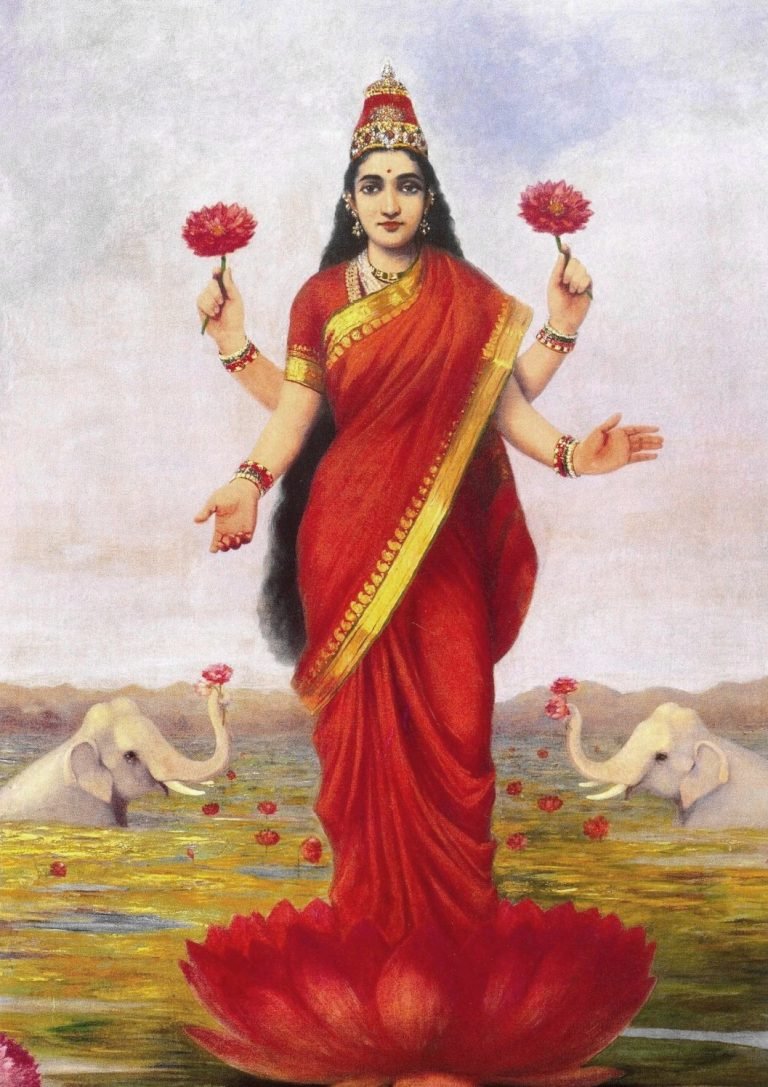
Goddess Lakshmi, Raja Ravi Varma, 1896. Oil on canvas. Maharaja Fateh Singh Museum, Vadodara, Gujarat. Reproduction via Wikimedia Commons. Image source. Public domain. Lakshmi
Prosperity, auspiciousness, abundance and flourishing.
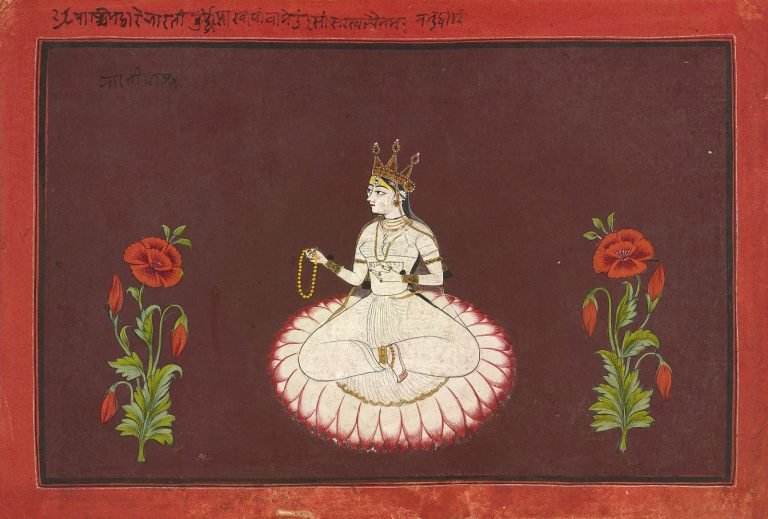
Saraswati, folio from a Goddess series, attributed to Wajid, Sawar, Rajasthan, ca. 1680-1700. Opaque watercolor and gold on paper. National Museum of Asian Art, Smithsonian Institution, S2018.1.40. Image source. CC0. Saraswati
Knowledge, learning, speech, music and the arts.
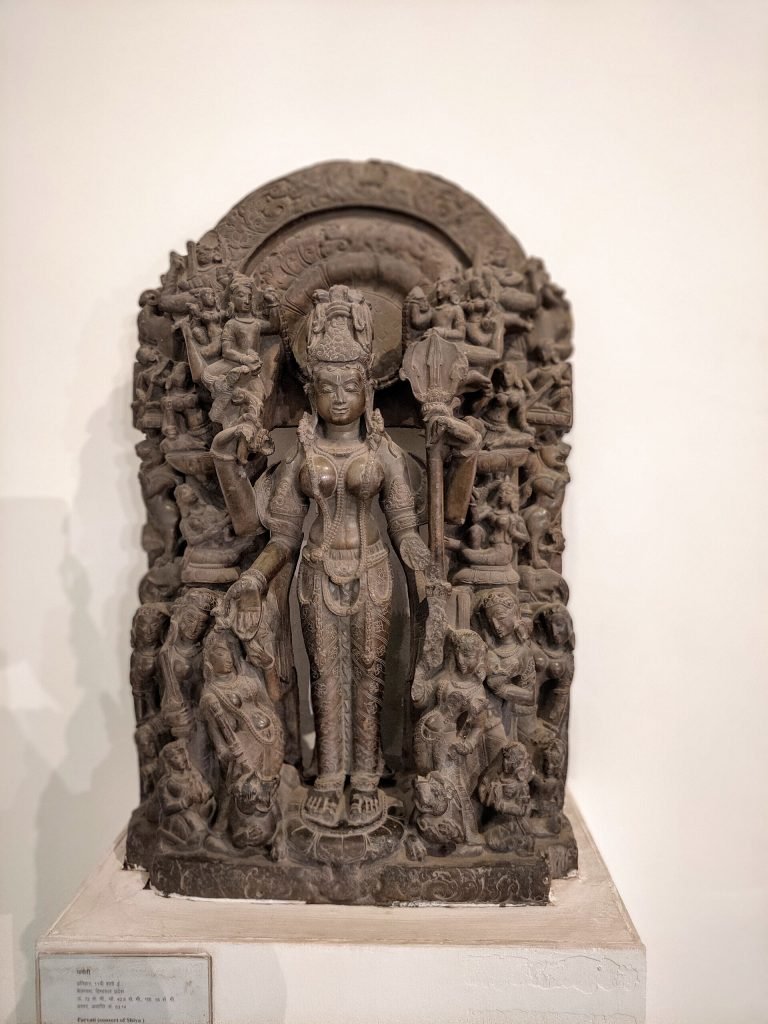
Parvati, National Museum, New Delhi. Photograph: Dr Sandip Roy, 23 June 2022. Image source. CC BY 3.0. Parvati
Goddess of the mountain, Shiva-Shakti traditions, devotion and divine family.
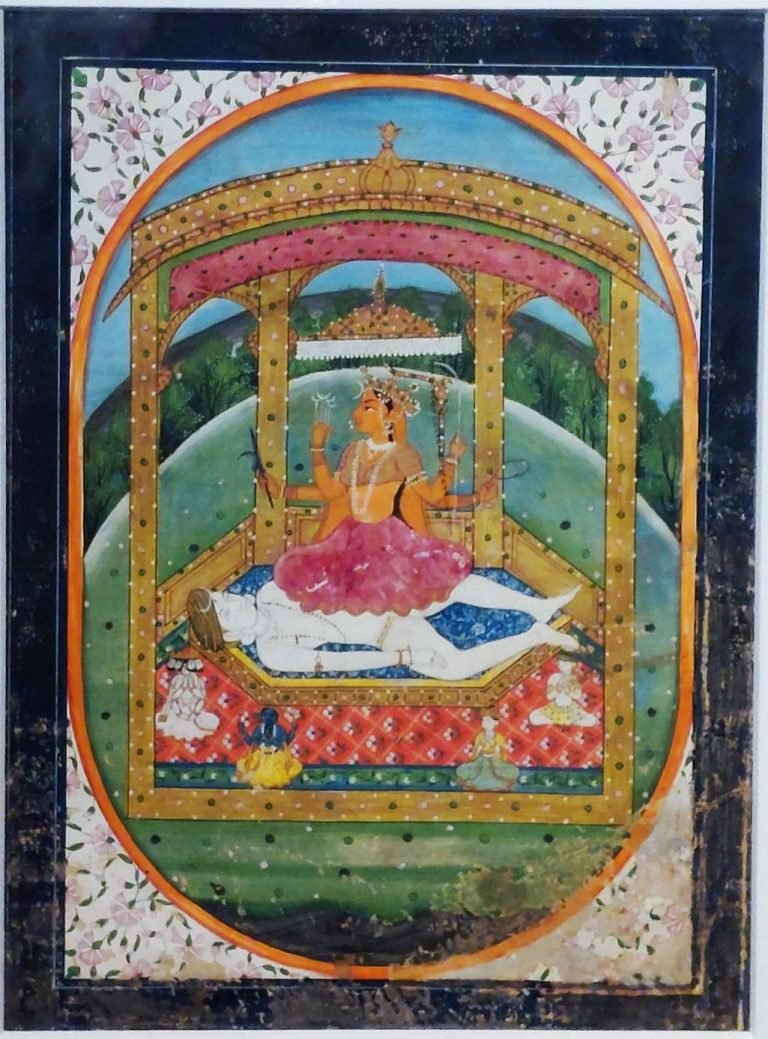
Tripurasundari, Rajasthan school, late eighteenth century, catalogued at the National Museum, New Delhi. Photograph: SpeakingArch, 2026. Image source. CC BY-SA 4.0. Lalita Tripurasundari
Supreme Goddess of Sri Vidya and the tradition of the Sri Chakra.
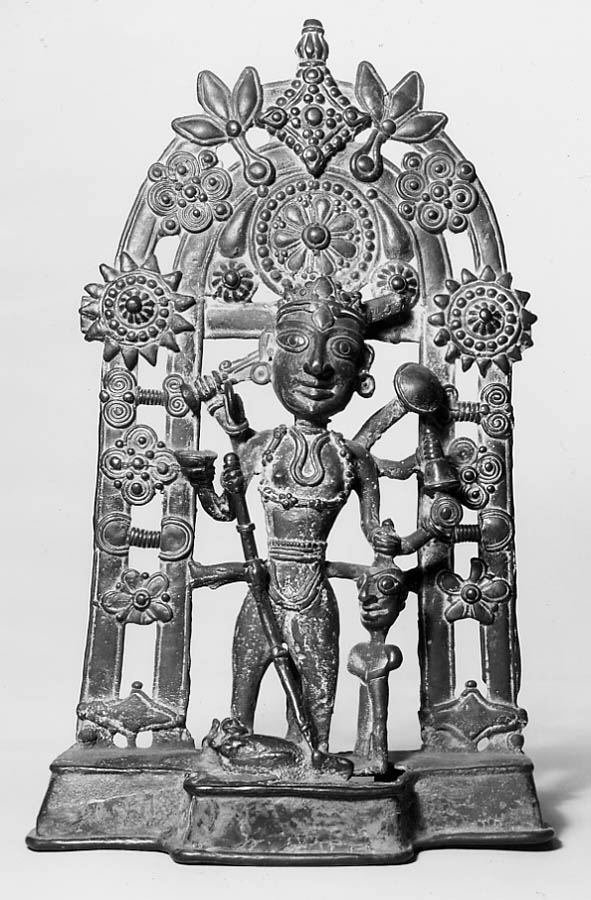
Durga as Mahishasuramardini, the slayer of the buffalo demon Mahisha. India, ca. 1400. The Metropolitan Museum of Art. Source · Public domain Durga
Protector, Mahishasuramardini and one of the central forms of the Great Goddess.


Durga
Durga is one of the most widely recognized forms of the Goddess.
Her most famous narrative is her defeat of the buffalo demon Mahishasura, told prominently in the Devi Mahatmya. She is often represented with multiple arms carrying divine weapons and accompanied by a lion.
Durga may be worshipped as warrior, protector, mother and supreme Goddess.
She holds a central place in Navratri and Durga Puja traditions, though the form of those celebrations differs greatly by region.
Read about her stories, iconography and worship in the Durga guide.
Kali
Kali is one of the most visually striking and theologically complex forms of the Goddess.
She is often shown with dark skin, loose hair, weapons and imagery associated with death or the battlefield. Yet devotees also worship Kali as mother, protector and giver of liberation.
Her fierce iconography should not be reduced to the idea of an “evil” or destructive goddess. Within Hindu traditions, destruction may be linked with protection, transformation, the destruction of demonic forces, and the overcoming of ignorance or attachment.
Kali becomes especially important in several Bengali and Tantric traditions.
The National Museum of Asian Art describes Kali as a fierce Goddess who destroys demonic forces while also noting her worship as Mahadevi and mother of the universe.
Lakshmi
Lakshmi is widely associated with prosperity, auspiciousness, abundance and good fortune.
She is frequently represented standing or seated on a lotus, sometimes accompanied by elephants. Her imagery appears in many religious, household and artistic settings.
Lakshmi is closely associated with Vishnu in Vaishnava traditions, yet she also possesses a devotional identity of her own and is worshipped widely in homes and temples.
Her festivals and observances vary across regions. Lakshmi worship becomes especially visible during Diwali in many communities, while other regions maintain distinct Lakshmi Puja traditions.
“Prosperity” in Lakshmi traditions should not be reduced simply to money. The idea of auspicious abundance may include well-being, fertility, flourishing and good fortune more broadly.
Saraswati
Saraswati is the Goddess of knowledge, learning, speech, music and the arts.
She is frequently represented in white, associated with a veena, books or manuscripts, prayer beads and a swan or other sacred imagery depending on the tradition.
Her identity has a long history, including early associations with a river and later development as a deity of speech and knowledge.
Saraswati remains especially important to students, teachers, musicians, artists and communities engaged in learning.
The National Museum of Asian Art describes Saraswati simply and clearly as a Hindu Goddess of the arts and learning, while historical representations reveal how those associations developed visually across time.
Parvati
Parvati is one of the major goddesses of Hindu tradition and is closely associated with Shiva.
Her stories include ascetic practice, marriage to Shiva, motherhood and divine power. She is also known through names and forms such as Uma.
Parvati is particularly important for understanding the theological relationship between Shiva and Shakti.
Historic art frequently presents her beside Shiva, while the composite form Ardhanarishvara visually expresses their unity within a single body.
The National Museum of Asian Art describes Parvati/Uma as both the Goddess of the Mountain and as an important expression of the feminine divine power of the universe.
Lalita Tripurasundari
Lalita Tripurasundari occupies a central position within Sri Vidya, an important Shakta Tantric tradition.
Her name is commonly interpreted in relation to beauty and sovereignty over the “three worlds,” though specific theological explanations belong within the textual and ritual traditions that worship her.
Lalita is associated with the Sri Chakra or Sri Yantra, mantra traditions and an elaborate theological system in which the Goddess may be understood as supreme reality.
She should not simply be presented as another popular form of Durga or Parvati without qualification.
Her traditions have their own scriptures, ritual systems and philosophical frameworks.
More Forms of Devi
The five profiles above are only the beginning.
Hindu Goddess traditions include many other important figures, such as:
- Annapurna
- Bhuvaneshwari
- Chinnamasta
- Dhumavati
- Bagalamukhi
- Matangi
- Kamala
- Tara
- Bhairavi
- Tripura Bhairavi
- Chamunda
- Minakshi
- Kamakhya
- Sitala
- Mariamman
- regional Gramadevatas
- numerous local and temple-specific goddesses
Some belong to major theological systems such as the Mahavidyas.
Others are deeply connected to a particular place, community or historical tradition.
As the DurgaShakti library grows, these goddesses should be added when there is enough reliable source material to treat them properly, not merely to create a long directory.
The Navadurga
One well-known grouping is the Navadurga, or nine forms of Durga, especially associated with Navratri worship.
Different traditions may emphasize the sequence in slightly different ritual contexts, but the commonly recognized nine are:
- Shailaputri
- Brahmacharini
- Chandraghanta
- Kushmanda
- Skandamata
- Katyayani
- Kalaratri
- Mahagauri
- Siddhidatri
The Navadurga belong specifically to a Durga-centered festival and devotional framework.
They should not be confused with the Mahavidyas, which constitute a different Goddess grouping with distinct Tantric histories and theological meanings.
Each Navadurga form belongs within the specific traditions that describe and worship her.
The Mahavidyas
The Mahavidyas, commonly described as ten forms of great knowledge or wisdom, constitute another important Goddess grouping within Shakta Tantra.
The list commonly includes:
- Kali
- Tara
- Tripurasundari
- Bhuvaneshwari
- Bhairavi
- Chinnamasta
- Dhumavati
- Bagalamukhi
- Matangi
- Kamala
Their iconography ranges from beautiful and regal to deliberately unsettling.
The Mahavidyas should not be understood merely as “ten forms of Durga.” They emerge within particular Tantric Goddess traditions and require their own textual and historical treatment.
The National Museum of Asian Art notes that Mahavidya traditions connect these goddesses with divine feminine power, while particular figures such as Tara and Kali retain distinct identities and ritual contexts.
The Mahavidyas have distinct textual, iconographic and ritual traditions.
Regional Goddesses and Living Traditions
Not every important Hindu Goddess fits neatly into a pan-Indian theological system.
Many Goddess traditions are deeply rooted in place.
Local goddesses may be connected with:
- a village
- a mountain
- a river
- disease and healing
- fertility
- agriculture
- protection
- a royal dynasty
- a temple
- a pilgrimage landscape
Some later become identified with wider forms such as Parvati, Durga or Shakti. Others retain strongly local identities.
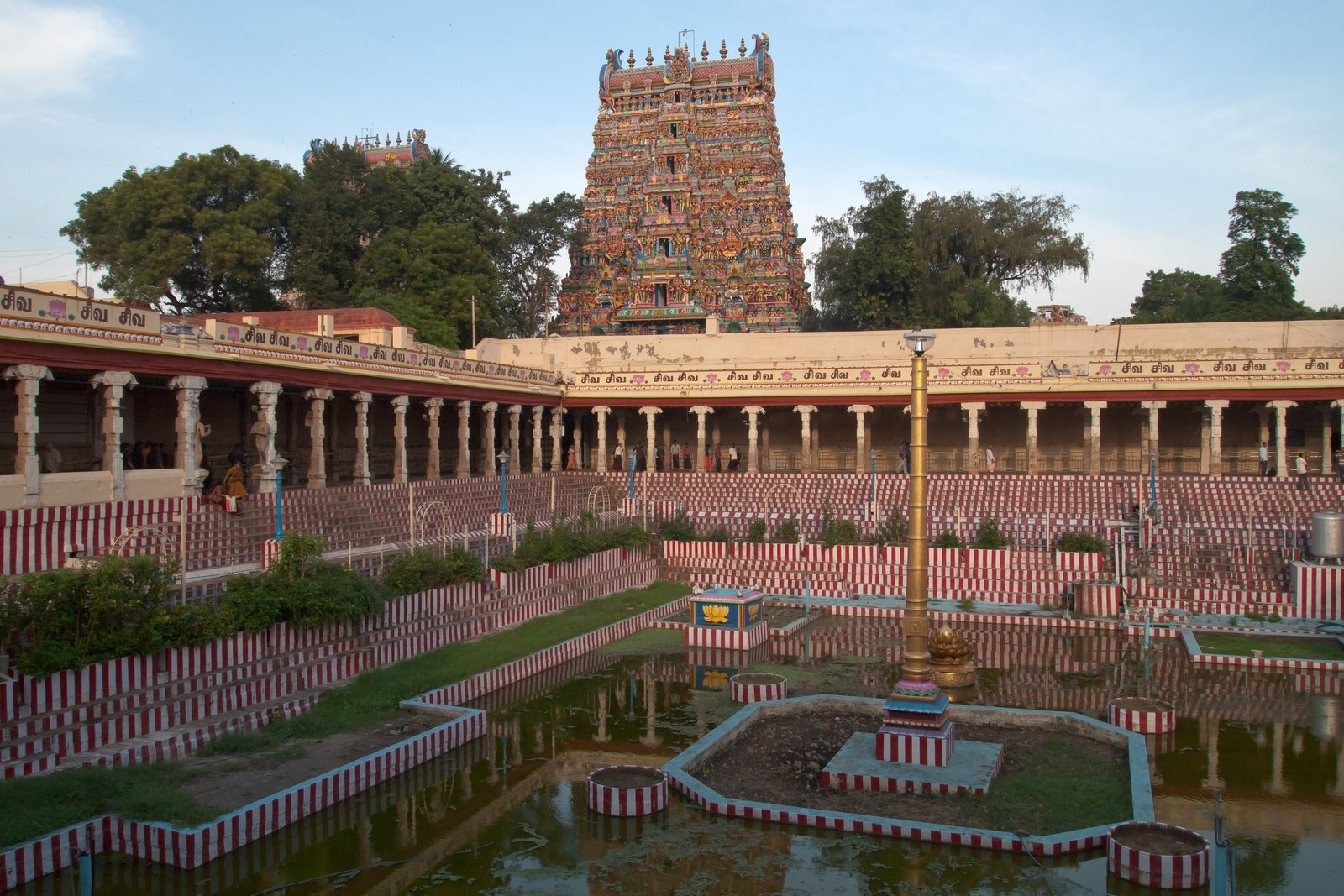
For example, Minakshi of Madurai is connected with Parvati in theological interpretation but also possesses a distinctive regional identity and festival tradition centered on Madurai.
Smithsonian educational material on Goddess art specifically uses Minakshi’s temple festival as an example of how living Goddess worship helps illuminate the ritual role of historic sacred images.
These regional traditions are essential for understanding Hindu Goddess worship as a living religious landscape rather than only as a system of classical texts.

How Are These Goddesses Related?
There is no single family tree that accurately explains every relationship.
Some relationships are strongly established within particular traditions:
- Parvati is closely associated with Shiva.
- Lakshmi is closely associated with Vishnu.
- Saraswati is associated with knowledge and, in many later traditions, with Brahma.
- Durga may be understood as a form of Parvati in some contexts.
- Kali may emerge from or be identified with other Goddess forms in particular texts.
- Lalita Tripurasundari occupies a distinct supreme position within Sri Vidya.
Other relationships depend on the text, region or lineage.
This is why DurgaShakti maintains a separate section for Divine Relationships rather than inserting every deity into a universal genealogy.
Goddesses in Sacred Texts
Different sacred texts play very different roles in Goddess traditions.
Important examples include:
Devi Mahatmya
One of the foundational texts for understanding Durga, Mahadevi and the theological unity of different Goddess manifestations.
Devi Bhagavata Purana
A major Goddess-centered Purana that develops extensive narratives and theology of Devi.
Lalita Sahasranama
A celebrated liturgical text containing the thousand names of Lalita and particularly important within Sri Vidya traditions.
Puranic traditions
Stories of Parvati, Lakshmi, Saraswati and other goddesses occur throughout different Puranas and related textual traditions.
Tantric texts
Numerous Goddess traditions develop through Tantric scriptures, especially traditions involving Kali, the Mahavidyas, Sri Vidya and other forms of Shakti worship.
These sources were composed in different historical contexts and should not be treated as if they all teach one identical Goddess theology.
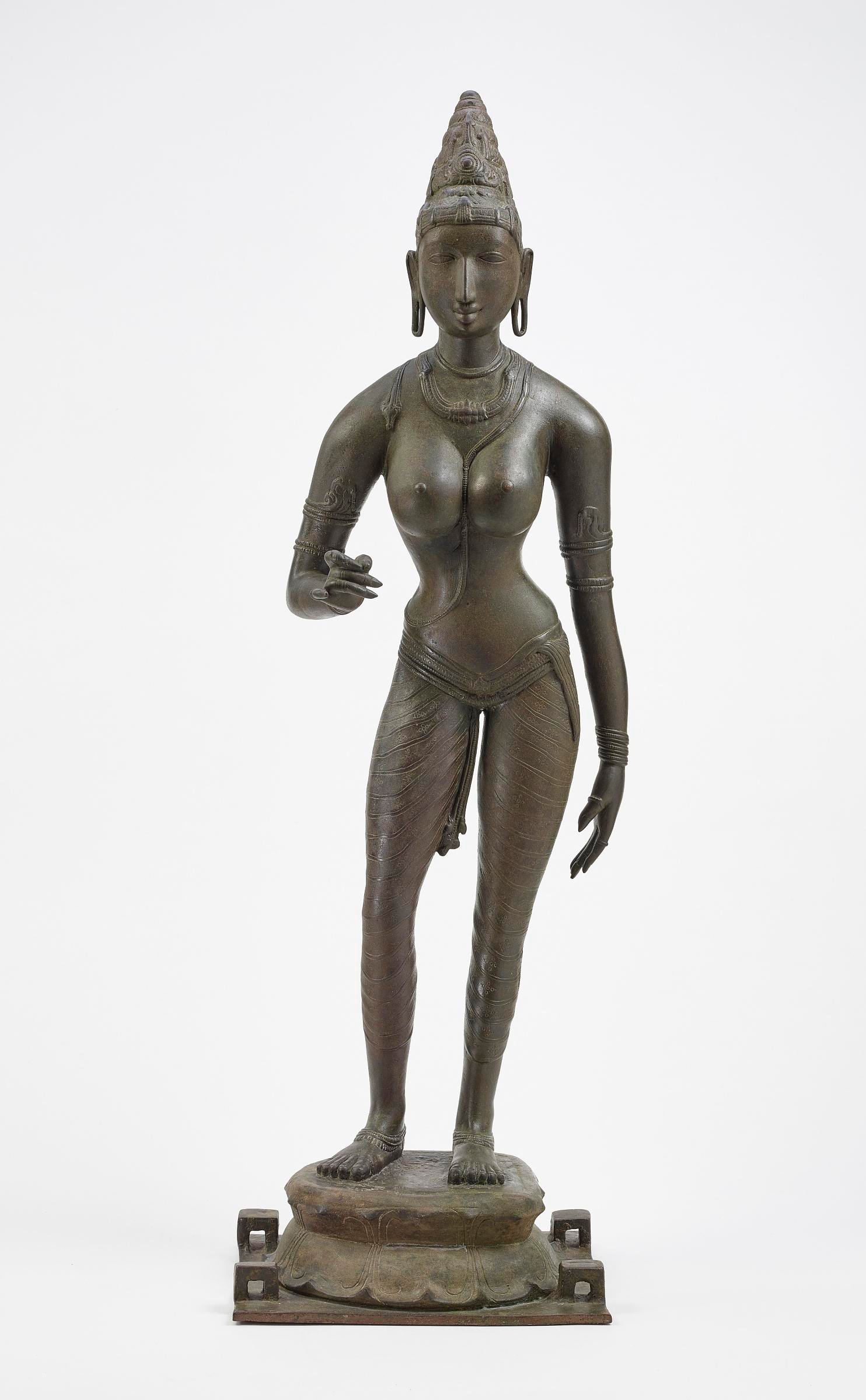
Seeing and Worshipping the Goddess
Sacred images in Hindu traditions are not simply illustrations.
In temple and devotional contexts, an image may participate directly in worship.
The Sanskrit concept of darshan refers to the encounter in which the devotee sees and is seen by the deity. Consecrated images can therefore occupy a religious role very different from an artwork displayed solely for aesthetic appreciation.
Museum collections preserve many sculptures and paintings that originally belonged to temples, shrines, manuscripts or private devotional settings.
The National Museum of Asian Art emphasizes that historic Goddess images should be understood in relation to their original ritual contexts. Many were created as aids for worship, carried in procession, used in manuscripts or encountered through devotional practice.
Recognizing this context helps us approach Hindu sacred art with greater care.
How DurgaShakti Approaches Goddess Traditions
This library does not assume that every claim found in modern Goddess websites or devotional summaries comes from scripture.
For each Goddess, we aim to distinguish among:
- sacred-text narratives
- theology
- traditional commentary
- ritual practice
- regional traditions
- historical development
- iconography
- academic interpretation
- modern devotional belief
The goal is not to remove devotion from the subject.
It is to treat living Hindu traditions with enough respect to identify whose tradition, which text and what historical context we are describing.
Sources & Further Reading
Museum and cultural sources
National Museum of Asian Art — Wisdom of the Goddess
Useful for:
- Durga
- Kali
- Lakshmi
- Parvati/Uma
- Saraswati
- Shakti
- Mahadevi
- historical Goddess imagery
- devotional use of sacred art
The exhibition draws from objects dating from the ninth through nineteenth centuries and places Goddess imagery within devotional and historical contexts.
National Museum of Asian Art — Viewing Goddesses in Asian Art
Useful for:
- original ritual contexts of Goddess sculpture
- darshan
- temple procession imagery
- Minakshi worship
- historical relationships between Hindu, Buddhist and Jain sacred art
Further sources for individual Goddesses
Further study of individual Goddesses draws on:
- relevant primary texts
- scholarly translations
- Oxford/academic studies of Hindu Goddess traditions
- university-press scholarship
- museum collections for iconography
- regionally appropriate historical and cultural institutions
Consult sources specific to each Goddess for detailed textual and historical claims.