
- Alternate names
- Sharada; Sharda; Vani; Vagdevi; Bharati; Veena Pani; Mahasaraswati
- Traditions / lineages
- Hindu Goddess traditions; Educational and artistic devotion; Regional Sharada traditions; Wider Devi frameworks where specifically applicable
- Scriptural associations
- Rigvedic Sarasvati; Vac traditions; Later Puranic and regional literature
- Festivals
- Vasant Panchami / Saraswati Puja, with regional variation; Vidyarambham in relevant South Indian contexts
On this page
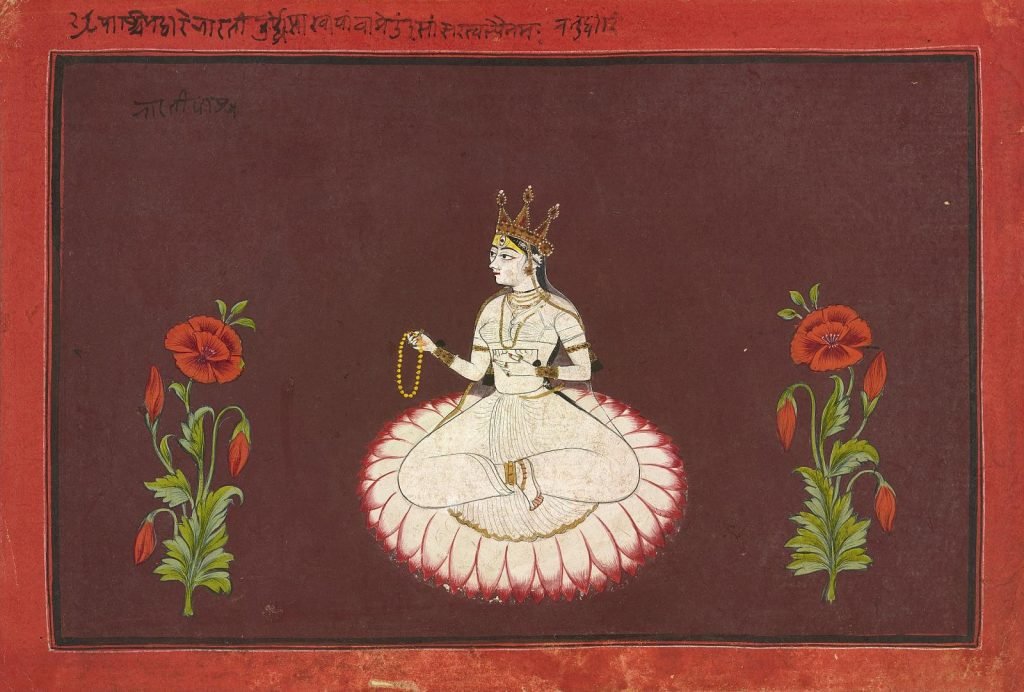
Saraswati is the Hindu Goddess of knowledge, speech, learning, music and the arts. Students pray to her before examinations, musicians honor her before performances, and schools and households celebrate her during festivals devoted to learning.
Her history, however, begins much earlier than the familiar image of a white-clad Goddess holding a veena.
In the Vedas, Sarasvati is also the name of a river. Over centuries, the identity associated with that river became increasingly connected with speech, sacred knowledge and learning. The relationship between river, speech and Goddess is one of the most distinctive features of Saraswati’s religious history.
Elizabeth Rohlman’s study of Saraswati in The Oxford History of Hinduism: The Goddess emphasizes this layered development. Saraswati moves through Sanskrit literature as river, sacred speech and Goddess of knowledge without losing all traces of her earlier identities.
The result is a deity whose symbolism is unusually coherent. Water flows, speech flows, music flows, and knowledge passes from teacher to student. Saraswati’s traditions bring these ideas together through sound, memory, language and disciplined learning.
What Does the Name Saraswati Mean?
The Sanskrit name Sarasvatī has ancient roots.
Its earliest meanings are connected with water and the river called Sarasvati in Vedic literature. The name has been interpreted in relation to saras, a term associated with pools, lakes or flowing water.
As Saraswati’s religious identity developed, her name also became associated with eloquence, learning and speech.
Formal transliteration:
Sarasvatī
Devanagari:
सरस्वती
The common spelling Saraswati is appropriate for ordinary English text.
Her history shows why reducing her simply to "the Goddess of education" leaves out an important part of her identity. Knowledge becomes her dominant later association, but the river and speech traditions remain part of the background from which that role developed.
Saraswati as a Vedic River
The Sarasvati River occupies a prominent place in the Rigveda.
Vedic hymns praise Sarasvati as a powerful river and invoke her in religious language that later scholars have examined in relation to the development of the Goddess. The river belongs to a sacred geography as well as to the poetic and ritual world of early Vedic religion.
The historical and geographical identification of the Vedic Sarasvati has generated extensive debate in archaeology, geology, history and modern politics. That debate is separate from the religious question of how Sarasvati developed as a Goddess.
For DurgaShakti, the important point is simpler: the earliest Sarasvati of Vedic literature has a strong river identity.
Rohlman describes this as essential to understanding the later deity. Saraswati’s religious development does not neatly discard the river and replace it with a Goddess. The river, speech and Goddess identities remain intertwined across different texts and regional traditions.
Modern pilgrimage landscapes also preserve memories of Saraswati as a sacred river. Sites in Gujarat and Haryana, among other regions, continue to connect local sacred geography with Saraswati traditions. These living identifications should be presented as religious and regional traditions rather than used as simple proof for unresolved historical claims.
Saraswati and Sacred Speech
Saraswati’s movement from river toward knowledge is closely tied to the Hindu religious importance of speech.
Sacred speech is not merely communication. In Vedic ritual, correctly pronounced words, meters and sounds form part of religious action itself.
Another Vedic Goddess, Vac, personifies speech. Over time, Saraswati and Vac become increasingly connected, and Saraswati develops into a Goddess associated with eloquence, recitation and sacred knowledge.
The Sanskrit title Vagdevi, "Goddess of Speech," reflects this dimension of her identity.
This connection helps explain why Saraswati eventually becomes associated with:
- language
- poetry
- grammar
- scripture
- teaching
- scholarship
- memory
- music
Knowledge in this framework is something heard, spoken, remembered, transmitted and practiced.
Rohlman’s study specifically identifies the relationship among river Sarasvati, Vac and the later Goddess of knowledge as central to Saraswati’s development in Hindu traditions.

Saraswati as Goddess of Learning
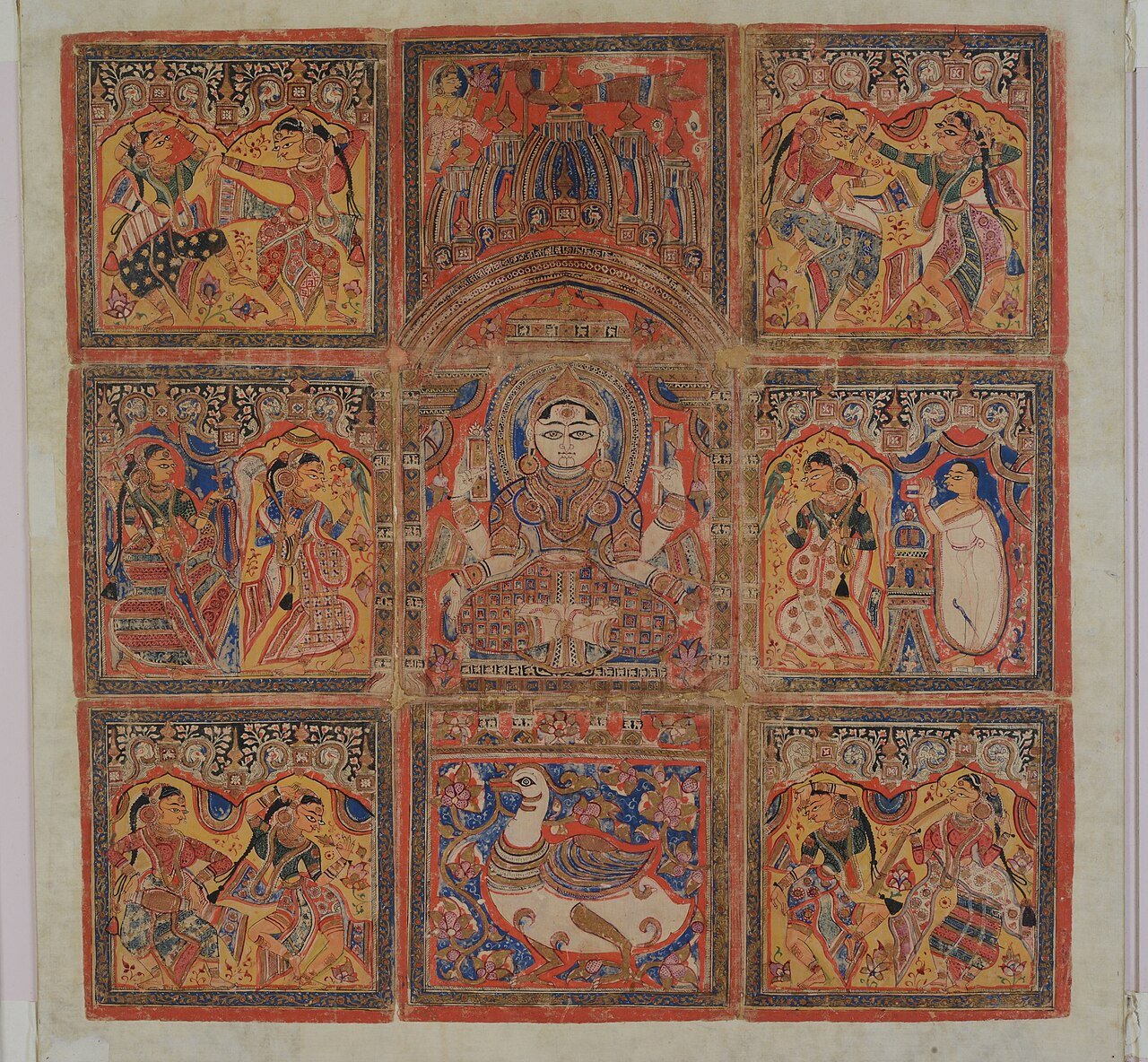
By the classical and medieval periods, Saraswati is firmly established as a Goddess of knowledge and learning.
She becomes associated with students, teachers, poets, scholars, musicians and artists.
This remains one of the most visible forms of Saraswati devotion today.
Books, writing tools and musical instruments may be placed before her during worship. Children may begin formal study under her blessing. Schools and universities may celebrate Saraswati Puja, especially in regions where Vasant Panchami is strongly associated with the Goddess.
This emphasis on learning gives Saraswati a somewhat different devotional atmosphere from Kali or Durga. Her iconography usually communicates composure and intellectual clarity rather than martial force.
That difference should not be interpreted as lack of power. Within wider Goddess traditions, knowledge itself is a form of Shakti, a capacity through which human beings perceive, speak, remember, create and understand.
Why Does Saraswati Hold a Veena?
The veena is one of Saraswati’s most recognizable attributes.
It connects her with:
- music
- artistic discipline
- refined skill
- rhythm
- sound
- learning through practice
IGNCA’s inventory of India’s intangible cultural heritage identifies the veena as a musical tradition found across India and specifically notes Saraswati’s familiar representation as Veenapani, the one who holds the veena.
This association is especially appropriate to Saraswati because Indian classical traditions often treat music as both an art and a disciplined body of knowledge.
A musician does not simply possess inspiration. Musical understanding develops through practice, memory, listening and transmission from teacher to student.
The veena therefore visually links Saraswati’s roles as Goddess of music and Goddess of learning.
The exact instrument represented in historical images varies, and modern viewers should not assume that every older image shows the same standardized veena used today.
Saraswati’s Books, Rosary and Other Attributes
Saraswati’s iconography often includes objects associated with learning and contemplation.
Manuscript or Book
A palm-leaf manuscript or book represents her connection with sacred and intellectual knowledge.
The form changes according to period. Ancient and medieval images naturally show manuscript traditions rather than modern bound books.
Rosary
A string of beads can connect Saraswati with contemplation, recitation and spiritual knowledge.
Water Vessel
Some historical images show a vessel, which may preserve aspects of Saraswati’s older association with water and purity.
Veena
The musical instrument expresses her relationship with sound, artistic learning and performance.
Historic representations do not always contain every attribute. IGNCA documentation of a temple Saraswati, for example, describes a four-armed figure holding prayer beads, a vessel and palm leaves while making a teaching gesture.
This variation is useful. Saraswati’s identity does not depend on one fixed visual checklist.

Why Is Saraswati Dressed in White?
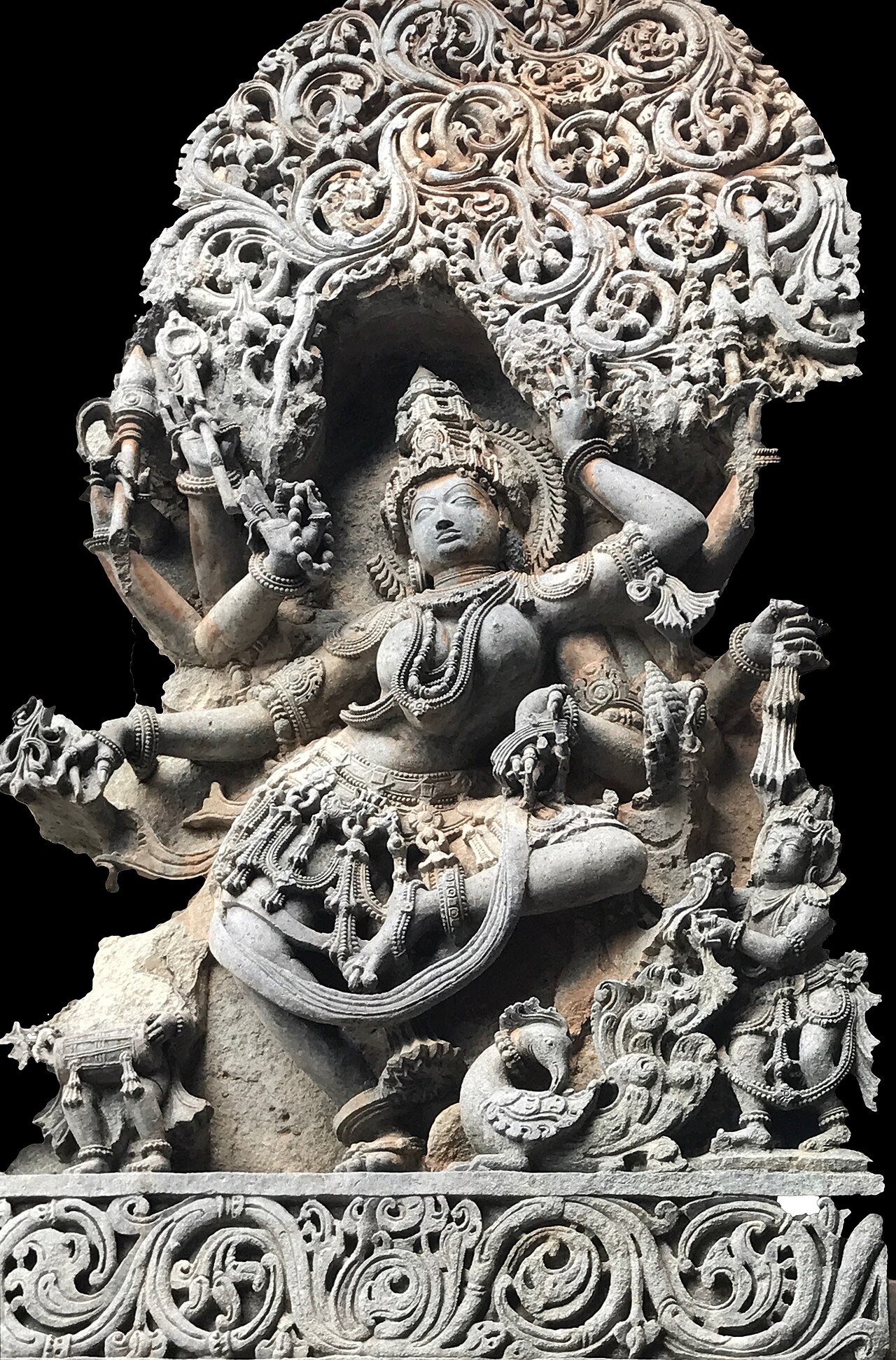
Modern Saraswati images frequently show her in white clothing, often seated on a white lotus.
White has become closely associated with learning, clarity and purity in her visual tradition.
This differs strikingly from Lakshmi’s frequent association with red, gold and abundance, or Kali’s dark and fierce imagery.
These color relationships contribute to the visual identities of the goddesses, but they should not be treated as universal scriptural rules governing every historical representation.
Museum and temple images show considerable variation in Saraswati’s clothing, ornament and color.
The enduring feature is less a particular shade of fabric than the overall presentation of composure, learning and refinement.
Saraswati’s Vahana: Swan or Goose?
Saraswati is commonly associated with a white bird often described in English as a swan.
The Sanskrit word frequently encountered in this context is hamsa.
Translating hamsa precisely as "swan" can be complicated because historical South Asian representations may resemble swans, geese or other water birds. For general devotional usage, "swan" remains common, but discussing a particular artwork requires attention to what is actually shown.
The fifteenth-century Saraswati Pata preserved by the National Museum, New Delhi, depicts Saraswati together with her hamsa and provides a valuable Indian example of this long-standing iconographic relationship.
Later interpretations frequently associate the hamsa with discernment and wisdom. Those symbolic readings belong to particular interpretive traditions and should not replace the simpler historical fact that the bird became a recognizable companion of Saraswati.
Saraswati and Brahma
Saraswati is often associated with Brahma, the creator deity.
Many later Puranic and popular traditions describe her as Brahma’s consort, while stories about their relationship differ considerably across texts and regions.
This relationship should be presented carefully.
Saraswati’s identity as river, speech and Goddess of knowledge is older and broader than the simple description "wife of Brahma." She has a substantial religious history in her own right.
Brahma and Saraswati do appear together within later Hindu mythology, and the pairing makes theological sense within traditions that connect creation with knowledge and speech. Yet this does not mean Saraswati’s significance depends on Brahma.
In many contemporary settings, worshippers approach Saraswati directly without Brahma occupying any central role.
The textual history of Brahma and Saraswati requires closer study; their relationship cannot be reduced to a universal family-tree statement.
Saraswati, Devi and Shakti
Saraswati also belongs to the wider theological world of Devi and Shakti.
Within broad Goddess traditions, knowledge is not separated from divine power. The ability to speak, learn, create music, remember scripture and transmit wisdom can itself be understood as Shakti.
Saraswati therefore represents one dimension of the divine feminine without losing her own identity.
Popular theological groupings sometimes place Saraswati alongside Lakshmi and Parvati, associating them respectively with knowledge, prosperity and divine power or family life. These groupings can be useful devotionally, but they should not be treated as the only or oldest framework for understanding the three Goddesses.
At the Vaishno Devi shrine, for example, official tourism material describes three sacred forms as Maha Kali, Maha Lakshmi and Maha Saraswati. This reflects one particular living Shakta framework rather than a universal Goddess taxonomy.
Explore Forms of Devi →
Learn about Lakshmi →
Read about Shakti →
Saraswati Puja and Vasant Panchami
Vasant Panchami is one of the most widely recognized festivals associated with Saraswati.
The festival falls during the spring season and is celebrated in several parts of India, Nepal and the broader Hindu world. Its customs vary by region.
In areas where Saraswati Puja is prominent, devotees may place books, musical instruments and writing materials before the Goddess.
Students seek blessings for learning.
Schools and educational institutions may organize collective worship.
Yellow clothing and foods are strongly associated with Vasant Panchami in several northern and eastern Indian traditions, reflecting the colors of the spring season.
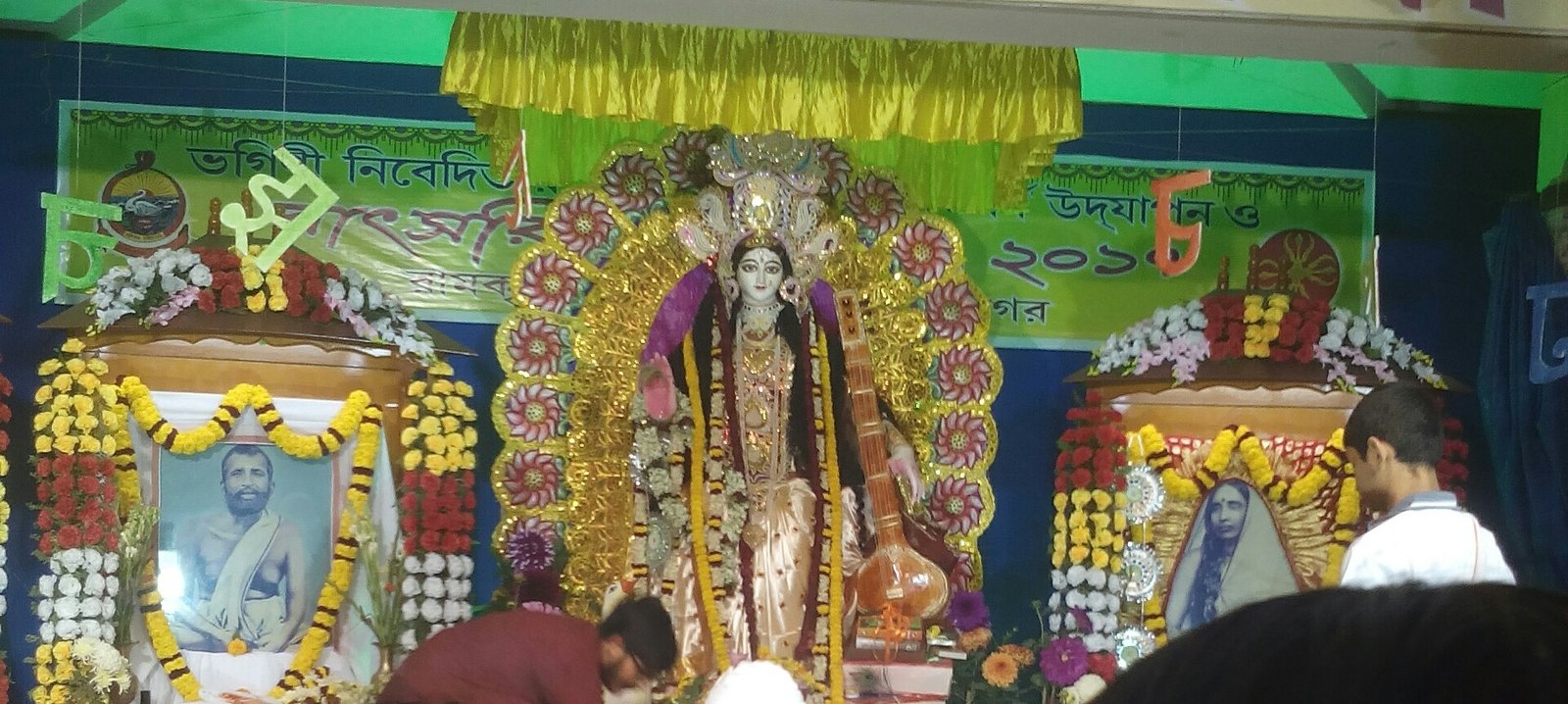
Bengal has a particularly visible Saraswati Puja tradition. Images of Saraswati are installed in schools, homes and community spaces, and students often participate directly in festival organization.
These regional practices should be identified as such. Vasant Panchami has multiple religious and cultural meanings across South Asia, and not every community celebrates it in exactly the same manner.
These variations reflect distinct regional festival traditions.

Saraswati and the Beginning of Learning
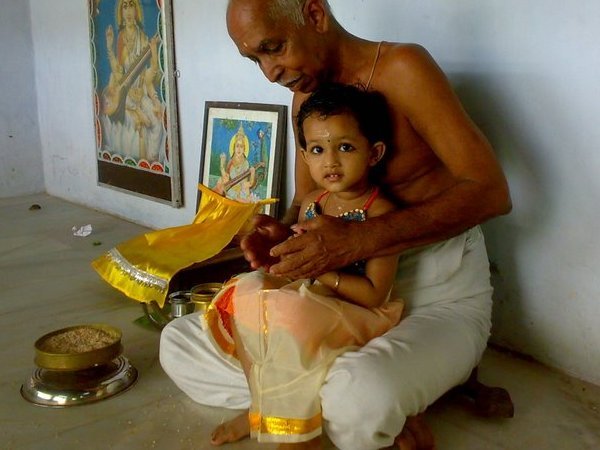
In several South Indian traditions, Saraswati is associated with the ceremonial beginning of education.
One example is Vidyarambham, in which young children are formally introduced to letters and learning.
The ceremony is especially associated with Vijayadashami in Kerala and other parts of southern India.
Government of India tourism material for the Saraswati Mantap in coastal Karnataka describes families bringing children for Vidyarambha, alongside music and dance performances held in Saraswati’s honor.
This is a particularly useful example of Saraswati as a living Goddess.
Her relationship with knowledge is enacted at the moment a child begins to read and write.
Similar customs may be practiced differently in Kerala, Karnataka, Tamil Nadu and other regions. The page should not imply a single standardized ceremony across South India.

Saraswati and Music
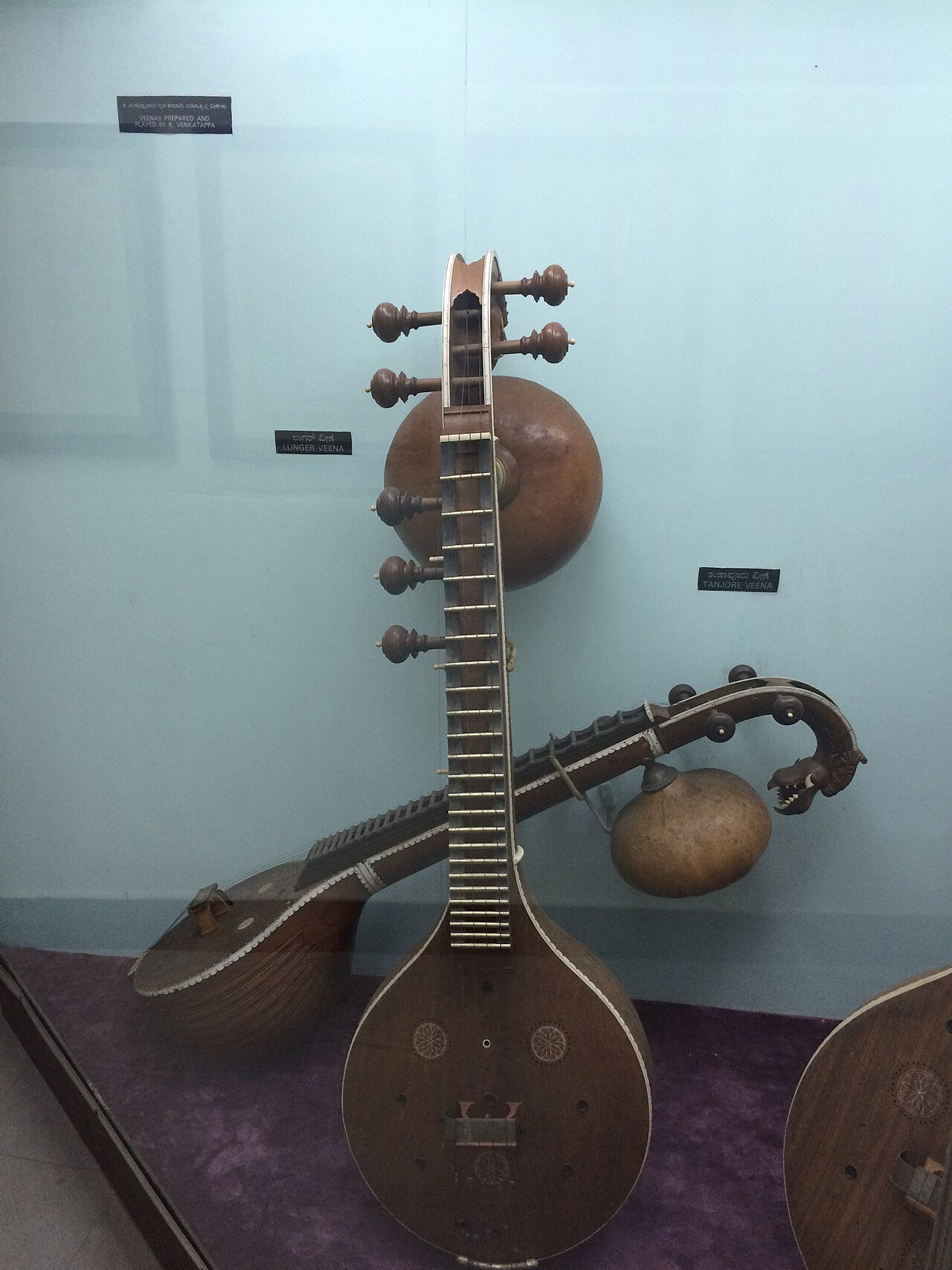
Saraswati’s relationship with music extends beyond the veena she holds.
Musicians may invoke her before study or performance, and Indian traditions frequently connect artistic discipline with learning, memory and transmission.
Her religious role therefore reaches beyond formal schooling.
Music, poetry, dance, language and creative expression belong naturally within her domain because all require cultivated knowledge.
This also explains why Saraswati imagery appears in performance spaces, music institutions and educational settings.
IGNCA’s documentation of India’s veena traditions notes both northern and southern schools and explicitly situates Saraswati within this long musical symbolism.
The visual connection between Goddess and instrument is therefore part of a living artistic culture, not only an iconographic convention.

Saraswati in Jain Traditions
Saraswati also has an important history beyond Hindu worship.
She became a significant Goddess of learning in Jain traditions, where knowledge, scripture and teaching naturally made her an appropriate sacred figure.
The fifteenth-century Saraswati Pata held by the National Museum, New Delhi, illustrates this broader religious history. The Gujarati cloth painting depicts a shrine to Saraswati together with Jain monks, musicians and attendants.
This is an important reminder that South Asian deities and sacred symbols have not always remained confined within the religious categories used today.
Saraswati’s association with learning allowed her to move across Hindu, Jain and Buddhist cultural settings while taking on distinct meanings within each.
DurgaShakti’s main focus remains Hindu Goddess traditions, but relevant cross-tradition history should be acknowledged when it materially contributes to understanding a deity.
Saraswati in Art
Saraswati’s iconography has developed across many regions and artistic media.
She appears in:
- temple sculpture
- bronze
- manuscript painting
- Jain devotional cloths
- Mysore painting
- miniature painting
- modern Indian art
- school and festival images
- household devotional prints
A painting held by the National Gallery of Modern Art, New Delhi, shows Saraswati in the traditional Mysore School style with four arms and a veena, using raised ornament and gold and silver leaf.
The National Museum’s fifteenth-century Gujarati Saraswati Pata offers a very different presentation, embedding Saraswati within a larger devotional and educational community.
Temple sculpture provides another visual language. IGNCA documentation records Saraswati seated on a lotus throne with palm leaves, rosary, vessel and teaching gesture.
Taken together, these works show that there is no single timeless "correct picture" of Saraswati. Her identity persists even as artistic conventions change.
Saraswati, Knowledge and Wisdom
Calling Saraswati the Goddess of knowledge does not mean that every form of information automatically belongs to her religious meaning.
Traditional Saraswati worship places emphasis on cultivated knowledge.
Learning requires:
- listening
- memory
- discipline
- speech
- study
- artistic practice
- transmission between teacher and student
This makes Saraswati particularly relevant to the process of education rather than merely its final result.
Her association with speech is equally important. Knowledge that cannot be articulated, taught or transmitted remains incomplete within many traditional educational settings.
Saraswati therefore joins several capacities that modern culture often separates into different categories: language, scholarship, music, memory and sacred learning.
Is Saraswati Only for Students?
Students are among Saraswati’s most visible devotees, particularly during Saraswati Puja.
Her religious domain is much broader.
Writers, teachers, musicians, dancers, scholars and anyone engaged in disciplined learning can approach Saraswati.
Her older relationship with sacred speech also connects her to recitation and religious knowledge.
A musician learning a raga and a child learning the alphabet participate in very different disciplines, yet both depend on attention, memory and transmission.
This breadth helps explain why Saraswati has remained relevant even as educational institutions and artistic traditions have changed dramatically over time.
Saraswati as a Living Goddess
Saraswati remains present in modern Hindu life in ways that connect ancient ideas with contemporary experience.
A student may place textbooks before her image during Saraswati Puja.
A musician may seek her blessing before a performance.
A family may introduce a child to writing during Vidyarambham.
A temple may preserve a regional form of her iconography.
A school may install a Saraswati image because learning itself is understood as sacred.
These practices are not identical, yet all express a recognizable relationship between divinity and knowledge.
Saraswati’s long religious history gives that relationship unusual depth. She can still be remembered as river, invoked through speech, pictured with a veena and worshipped at the beginning of a child’s education.
Continue Exploring
Goddess traditions
Relationships and texts
Living practice
Related festivals
Sources & Further Reading
Academic scholarship
Elizabeth Mary Rohlman, “The Elusive Sarasvatī: A Goddess, a River, and the Search for the Universal in the Particular,” in The Oxford History of Hinduism: The Goddess.
Primary academic reference for this profile.
Useful for:
- Vedic Sarasvati
- Saraswati as river
- relationship with Vac
- development into Goddess of knowledge
- Saraswati Purana
- regional textual traditions
Mandakranta Bose, ed., The Oxford History of Hinduism: The Goddess.
Useful for placing Saraswati within the wider historical development of Hindu Goddess traditions.
Indian museum and cultural sources
National Museum, New Delhi, Saraswati Pata, Gujarat, fifteenth century.
Useful for:
- Saraswati’s hamsa
- Gujarati painting
- Jain context
- musicians and attendants
- cross-tradition worship of Saraswati
National Gallery of Modern Art, New Delhi, Saraswati by Chitragara Krishnappa.
Useful for:
- Mysore School painting
- veena imagery
- modern continuation of traditional sacred painting techniques
Indira Gandhi National Centre for the Arts, temple documentation.
Useful for:
- Saraswati iconography
- palm-leaf manuscript
- rosary
- vessel
- teaching gesture
- lotus throne
IGNCA Inventory of Intangible Cultural Heritage, Veena and its Music.
Useful for:
- Saraswati as Veenapani
- musical symbolism
- north and south Indian veena traditions
Living tradition sources
Incredible India, Saraswati Mantap, Karnataka.
Useful for:
- Vidyarambha
- Saraswati Festival
- children beginning formal education
- music and dance performed in Saraswati’s honor