
Shakti: Divine Power and the Sacred Feminine in Hindu Traditions
Shakti is one of the most important ideas for understanding the Goddess in Hindu traditions.
The Sanskrit word śakti can mean power, strength, capacity or energy. In religious thought, however, the term reaches far beyond the modern idea of “energy.” Shakti may describe the active power of a deity, the creative force through which the universe comes into manifestation, the divine feminine principle, or the Goddess herself.
These meanings overlap, but they are not identical in every Hindu tradition.
A Vaishnava tradition may speak of the goddess as the shakti of Vishnu. A Shaiva tradition may understand Shakti as inseparable from Shiva. In Shakta traditions, the relationship can be understood differently again: Shakti or Devi may herself be supreme reality, rather than merely the power belonging to another deity.
For this reason, understanding Shakti requires more than translating the word as “female energy.” It means entering a long and diverse conversation about divine power, creation, consciousness and the Goddess.

What Does the Word Shakti Mean?
The Sanskrit term śakti carries meanings related to power, ability, strength, force and capacity.
In Hindu religious language, it can describe the power through which a deity acts. A god without power to create, sustain, transform or reveal would be unable to act at all.
Over time, Shakti also became one of the major ways of expressing the divine feminine.
The National Museum of Asian Art describes Shakti as the animating female power of the universe, while academic scholarship emphasizes that the term can refer both to divine power and to the Goddess or female principle itself.
This is why the word appears in several related ways:
- shakti as power or capacity
- a deity’s shakti, often personified as a goddess
- Shakti as divine feminine power
- Shakti as the Goddess
- Shakti as ultimate reality within Shakta traditions
The intended meaning depends on context.
Is Shakti a Goddess?
Sometimes yes, but that answer needs qualification.
Shakti can be spoken of as an abstract divine power, yet that power is also personified and worshipped as Goddess. The name Devi, meaning “Goddess,” is often used when speaking about the divine feminine as a supreme deity.
This produces a distinctive feature of Hindu Goddess traditions: a theological principle and a personal deity do not always need to be separated.
Shakti may be understood as the power through which the cosmos exists while simultaneously being worshipped through particular forms such as:
Within some Goddess traditions these may be understood as manifestations of one supreme Devi. In other contexts, each retains a distinctive identity, mythology, worship and theological role.
Academic studies of Hindu goddesses repeatedly stress this diversity: Goddess traditions include pan-Indian and regional deities, household and temple worship, devotional traditions, scriptural systems and Tantric traditions.
Shakti and Devi: Are They the Same?
Devi and Shakti are closely related, but they emphasize different ideas.
Devī means Goddess.
Śakti means power or capacity, and in theological contexts can refer to divine feminine power or to the Goddess as that power.
When the supreme Goddess is called Devi, attention falls on her identity as divinity. When she is called Shakti, attention often falls on her power, activity and capacity to manifest.
In many Shakta traditions those distinctions flow into one another. Devi is Shakti, and Shakti is not merely something the Goddess possesses; she is divine power itself.
The Devi Mahatmya offers an influential example of this development. Its Goddess is not simply one deity among many. She appears as the power operating through the cosmos and assumes different forms when cosmic order requires them. The Smithsonian’s National Museum of Asian Art describes the text’s first episode as presenting Devi in a universal form as Shakti (energy or power), central to the restoration of cosmic order.
What Is Shaktism?
Shaktism, or the Shakta tradition, is a broad term for Hindu traditions centered on worship of the Goddess or divine feminine power.
A practitioner may be called a Shakta.
There is no single Shakta theology or ritual system shared by everyone who worships the Goddess. Scholarship describes Shaktism as encompassing very different expressions of Goddess religion, including devotional worship, regional Goddess traditions and multiple Tantric lineages.
Some Shakta traditions understand one supreme Goddess as the source of other divine forms.
Others emphasize particular goddesses or regional manifestations.
Some approach the Goddess through devotional bhakti.
Others belong to highly developed ritual and philosophical systems such as Sri Vidya.
The diversity matters. “Shaktism” is useful as an umbrella term, but it should not suggest that every Shakta community follows the same scriptures, worships the same form of Devi or interprets Shakti in precisely the same way.
Shakti as Supreme Reality
One of the most significant developments in Goddess theology is the understanding of the feminine divine not simply as the companion or power of a male god, but as ultimate reality in her own right.
Academic descriptions of Shaktism frequently identify this as one of its defining theological possibilities: Shakti may be understood as the supreme deity, creative force and ultimate reality.
Texts and traditions express this idea differently.
In the Devi Mahatmya, the Goddess is praised in cosmic terms and appears through multiple forms.
Later Shakta traditions develop increasingly elaborate understandings of Devi as the source, substance and power of the universe.
Sri Vidya traditions, for example, center worship on Lalita Tripurasundari, who can be understood as supreme Goddess and cosmic sovereignty.
Other traditions give comparable theological prominence to Kali, Durga or other forms of Devi.
This does not mean every Hindu tradition considers Shakti supreme. It describes a particularly important feature of Shakta theology.
Learn about Lalita Tripurasundari →

Shakti and Shiva
One of the best-known theological relationships involving Shakti is her relationship with Shiva.
In many Shaiva and Shakta frameworks, Shiva and Shakti express two inseparable aspects of divine reality. Interpretations differ considerably among traditions, but a recurring idea is that divine consciousness and divine power cannot ultimately be separated.
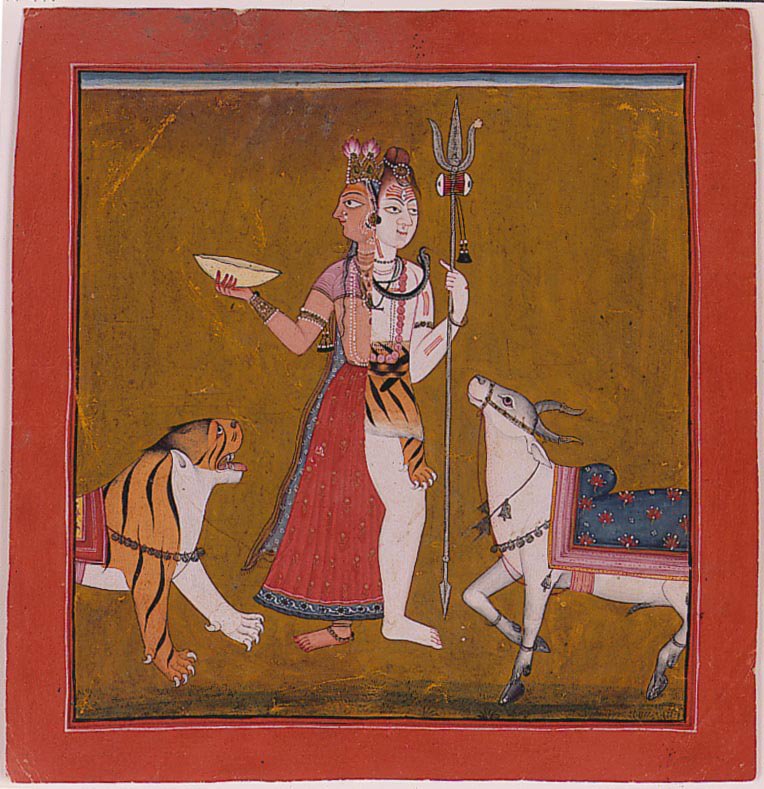
This relationship appears visually in Ardhanarishvara, the composite form of Shiva and Parvati in which one body combines male and female halves.
Historic Ardhanarishvara images make the unity visible rather than leaving it as an abstract philosophical idea. The Metropolitan Museum of Art describes such imagery as illustrating the relationship between the divine principle and its Shakti as a unified whole.
It would be misleading, however, to reduce Shakti to “Shiva’s wife” or to treat every Goddess tradition through a Shiva-centered framework.
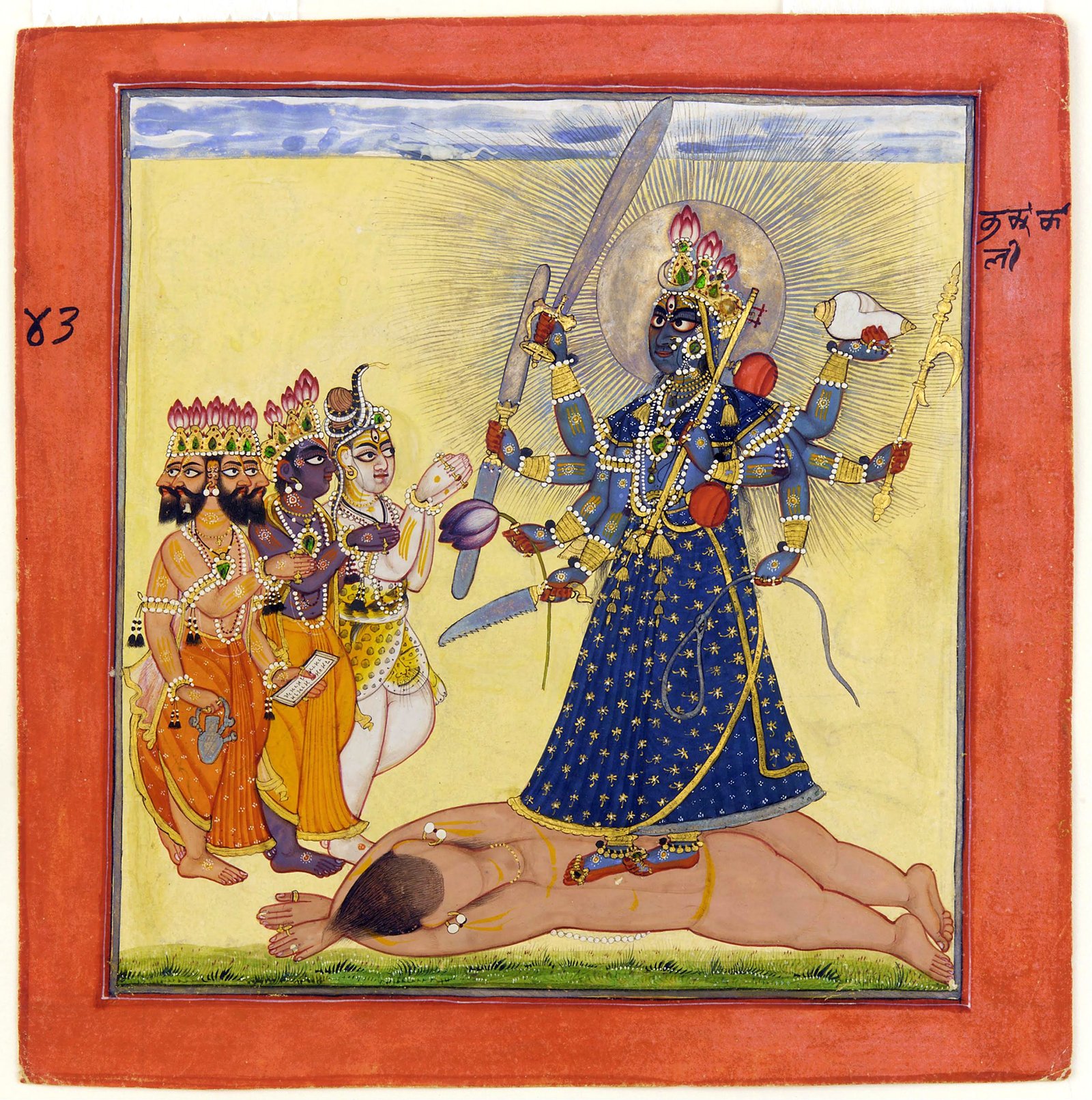
In some Shakta traditions, the theological direction is effectively reversed: the Goddess is supreme, and male deities function through her power.
The National Museum of Asian Art, for example, preserves paintings in which Goddess forms such as Bhadrakali are presented as supreme Shakti while Brahma, Vishnu and Shiva pay homage to her.
Learn about Parvati →
Read about divine relationships →
Shakti and Prakriti
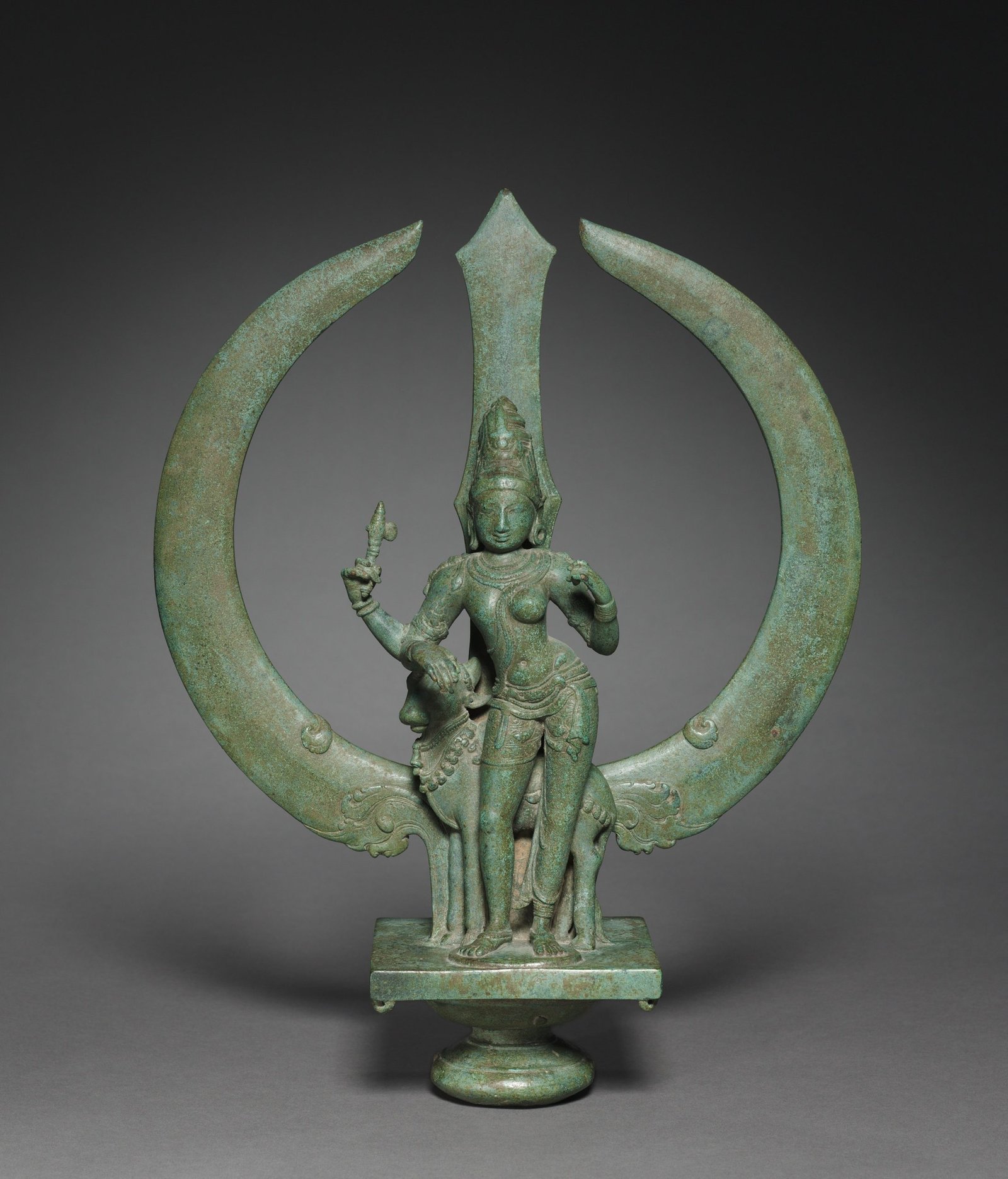
Another concept often associated with Shakti is Prakriti.
Prakriti may be translated broadly as nature, materiality or the foundational principle of manifestation, though its technical meaning changes according to philosophical system.
Some Hindu theological frameworks associate Shakti with Prakriti and Shiva or another consciousness principle with Purusha.
This comparison can be useful, but it should not be treated as a universal definition of Shakti.
Classical Samkhya philosophy, Shakta Tantra, later Vedantic interpretations and popular explanations do not necessarily use prakriti, purusha and shakti in exactly the same way.
Oxford’s overview of Shaktism notes that some Shakta systems use a cosmic dualism in which Shakti is associated with prakriti and Shiva with purusha, while other Shakta frameworks understand the Goddess in much broader or more supreme terms.
DurgaShakti therefore examines these concepts within the specific traditions that use them rather than treating one philosophical model as the definition of all Goddess theology.
Shakti and Tantra
Shakti and Tantra are closely connected, but they are not synonyms.
Tantric traditions form an important part of the history of Goddess worship, and several influential Shakta traditions are Tantric. Yet Goddess devotion also exists in household worship, temples, festival traditions, devotional poetry and other forms that cannot simply be labeled Tantra.
Likewise, Tantra itself includes Shaiva, Vaishnava, Buddhist and other traditions, not only Goddess-centered ones.
Scholars describe Shakta Tantra as a constellation of Goddess-centered Tantric traditions rather than a single uniform system. These include highly developed traditions such as Sri Vidya as well as regional forms with their own ritual histories and practices.
This complexity is important because modern popular culture often reduces Tantra either to sexuality or to a vague form of spiritual “energy work.” Neither captures the breadth of the historical traditions.
Shakta Tantra, Sri Vidya, yantra and mantra each require attention to their specific textual and ritual contexts.
Shakti in Different Forms of Devi
The idea of Shakti helps connect many forms of the Goddess without erasing their differences.
Durga
Durga expresses divine power through protection, sovereignty and her victories over forces that disturb cosmic order.
Kali
Kali may be understood through fierce forms of Goddess theology involving time, transformation, death, protection and liberation.
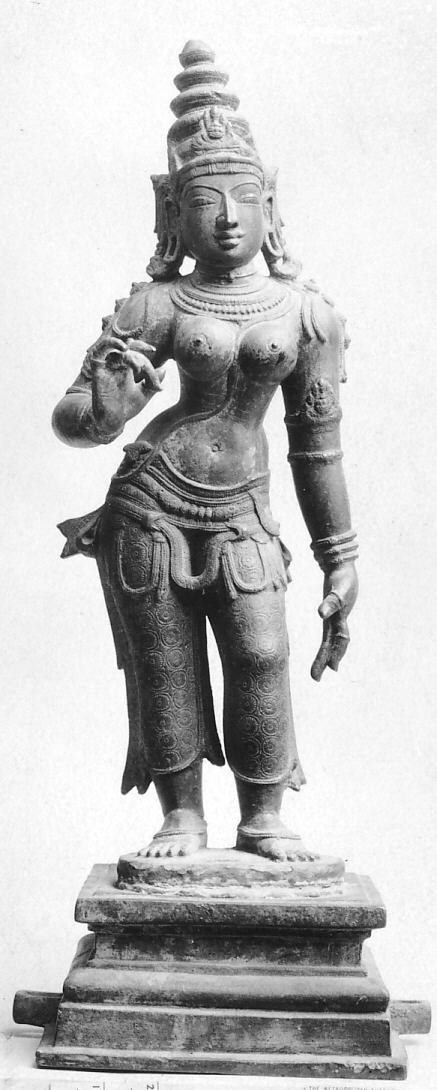
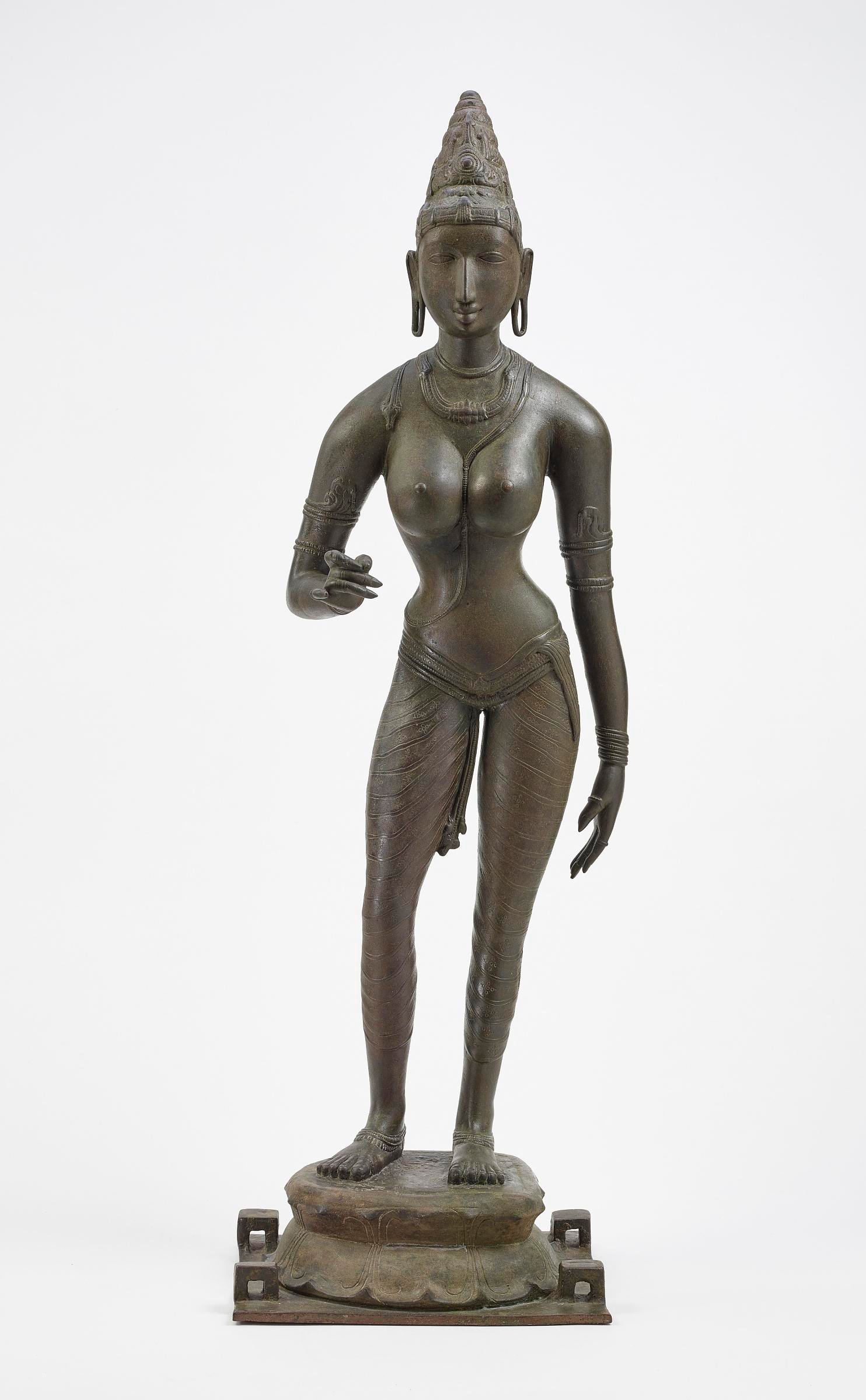
Parvati. Tamil Nadu, 16th century. The Metropolitan Museum of Art. Source · Public domain Parvati
Parvati frequently appears in relation to Shiva and is especially important for traditions exploring the unity of Shiva and Shakti.
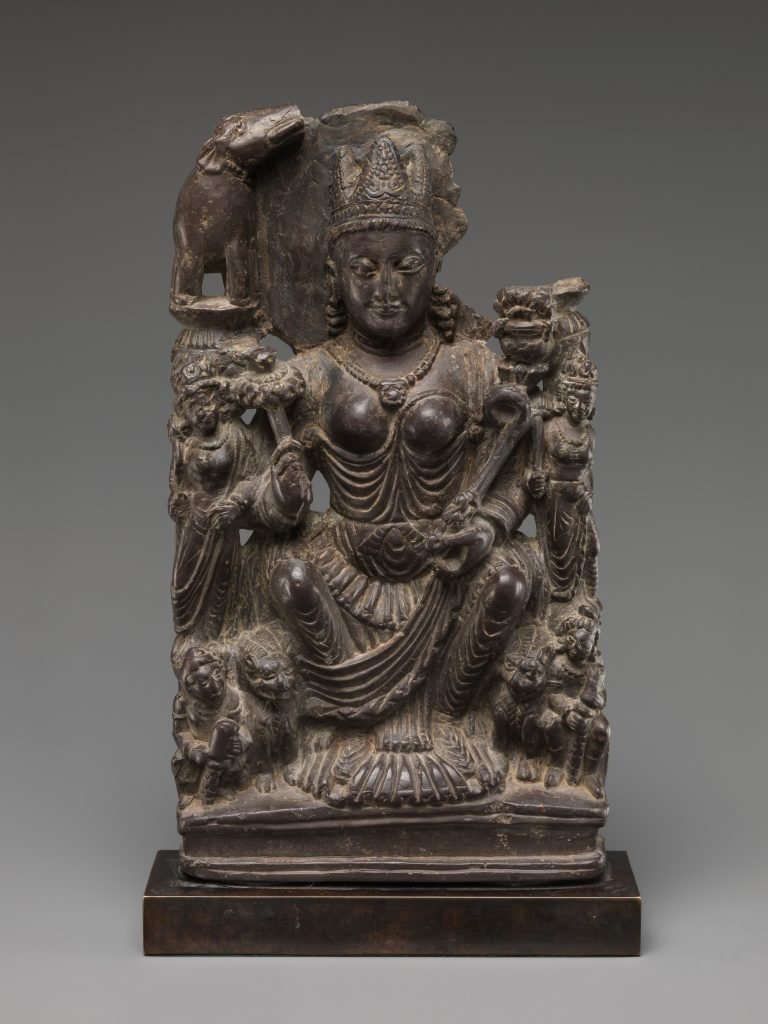
Gaja Lakshmi, Goddess of Fortune. Kashmir, 6th century. The Metropolitan Museum of Art. Source · Public domain Lakshmi
Lakshmi is associated with prosperity, auspiciousness and abundance and also participates in wider theological ideas about divine power.
Saraswati
Saraswati embodies knowledge, speech, learning, music and intellectual or creative capacity.
Lalita Tripurasundari
Lalita Tripurasundari occupies a central position in Sri Vidya, one of the major Goddess-centered Tantric traditions.
Each Goddess should be understood through her own textual, ritual and historical contexts before broader connections are made.
Is Shakti Simply “Feminine Energy”?
The phrase feminine energy can be useful as an introductory shorthand, but it can also create confusion.
Modern spiritual language often uses “masculine energy” and “feminine energy” to describe personality types, emotional traits or psychological qualities. Those frameworks should not automatically be projected back onto Hindu theology.
Shakti is not simply a label for qualities culturally associated with women.
In Hindu traditions she may be the power of creation, the capacity of a deity, an actual Goddess worthy of worship, the activity of divine consciousness or, in Shakta theology, the supreme reality from which existence arises.
The idea therefore has theological and philosophical dimensions that are much larger than contemporary gender-language alone.
At the same time, Shakti is explicitly represented and worshipped through feminine divinity. The relationship between divine femininity, actual women, social gender and religious authority is historically complex, and it should not be simplified into claims such as “Goddess worship proves Hindu society always treated women equally.”
Scholarly studies of the Hindu Goddess specifically caution that divine feminine power and women’s social realities have not always corresponded in straightforward ways.
Shakti in Worship
Shakti is not only a philosophical idea.
The Goddess is worshipped through many forms of practice, including:
- temple worship
- household puja
- mantra and sacred recitation
- devotional hymns
- festivals
- pilgrimage
- meditation
- yantra and other ritual forms within particular traditions
- regional Goddess customs
- devotional music and poetry
The form of worship depends on community, deity, lineage and region.
A family celebrating Durga Puja in Bengal, a Sri Vidya practitioner worshipping Lalita Tripurasundari, a devotee visiting a Shakti Peetha, and a household honoring Lakshmi may all participate in traditions involving divine feminine power, yet their practices should not be assumed to be identical.
This diversity is one of the defining characteristics of Goddess worship in Hinduism.
Shakti, Power and the Living Goddess
Perhaps the most useful starting point is also the simplest:
In Hindu religious traditions, Shakti can be understood as divine power that is conscious, personal and worthy of worship.
That insight helps explain why Goddess traditions can move so naturally between philosophy and devotion.
Shakti can be discussed as the force of manifestation and addressed as Mother.
She can be explored as a theological principle and encountered through Durga, Kali, Parvati, Lakshmi, Saraswati, Lalita and countless regional forms.
She can be associated with another deity while also being understood in some traditions as the reality upon which all deities depend.
There is no need to force these ideas into a single formula. Their richness lies partly in the many ways Hindu traditions have imagined the relationship between power and divinity.
Continue Exploring Shakti
Begin with the Goddess
Explore the tradition
Explore living practice
Sources & Further Reading
Academic scholarship
June McDaniel — “Shaktism,” Oxford Bibliographies in Hinduism.
Especially useful for:
- meanings of Shakti
- definitions of Shaktism
- diversity within Shakta traditions
- relationship between Shakti and Prakriti
- Goddess-centered theology
Perundevi Srinivasan — “Goddess,” Oxford Bibliographies in Hinduism.
Especially useful for:
- diversity of Hindu Goddess traditions
- Shakti, Maya and Prakriti
- regional and pan-Indian Goddess worship
- Goddess worship in household, temple and Tantric traditions
Mandakranta Bose, ed. — The Oxford History of Hinduism: The Goddess.
Useful for:
- historical development of Hindu Goddess traditions
- the idea of Devi expressed through multiple forms
- Puranic, Tantric and Vaishnava contexts
- distinction between Goddess theology and women’s social experience
June McDaniel — Offering Flowers, Feeding Skulls: Popular Goddess Worship in West Bengal.
Useful for distinguishing:
- devotional Shaktism
- Tantric/yogic Shaktism
- regional/folk Goddess traditions
Maciej Karasiński — “Śākta Tantra,” Oxford Bibliographies in Hinduism.
Useful for:
- diversity of Shakta Tantric traditions
- Sri Vidya and other lineages
- regional Goddess traditions
- avoiding overly broad definitions of Tantra
Museum and cultural sources
National Museum of Asian Art — Wisdom of the Goddess.
Useful for:
- definition of Shakti
- Goddess iconography
- Parvati/Uma
- Kali and other manifestations of divine feminine power
National Museum of Asian Art — Devi: The Great Goddess.
Useful for:
- Devi as Shakti
- Devi Mahatmya
- Goddess theology and iconography
The Metropolitan Museum of Art — Ardhanarishvara.
Useful for:
- Shiva–Shakti unity in historical visual culture
- Shiva and Parvati represented as one body