
Kamakhya
Kamakhya · Guwahati, Assam, India
Shakti PeethaMaha Shakti Peetha
Kamakhya’s yoni sanctuary on Nilachal Hill is a major Assamese center of Shakta worship, with Koch-era rebuilding and a distinctive Ambubachi calendar.

Quick facts
- Primary deity
- Kamakhya
- Location
- Guwahati, Assam, India
- Classification
- PN 51 working list; 18 Maha hymn list
- City / regional gateway
- Guwahati
- Airport
- Lokpriya Gopinath Bordoloi International Airport, Guwahati (GAU)
- Major railway station
- Kamakhya Junction; Guwahati is another major station
- Approx. distance from Delhi
- About 1,460 km straight-line; not road distance
- Major festival periods
- Ambubachi; Pakhua Durga Puja; Deodhani / Manasa Puja
On this page
The Goddess and the Shakti Peetha tradition
Kamakhya is a major center of Goddess worship on Nilachal Hill in Guwahati, Assam. The sanctuary is known for a yoni-shaped rock formation, rather than a standing anthropomorphic image of the Goddess. Its Shakta and Tantric associations belong to a specific Assamese sacred landscape, with other shrines distributed across the hill.
Kamakhya is identified in local pilgrimage tradition as the place where Sati’s yoni fell. This is a sacred account of the site’s significance. It should be distinguished from the surviving building’s construction history or an archaeological claim about its origin.
The selected PN witness names Kāmākhyā and Umānanda. The eighteen-seat hymn names Kāmārūpā at Harikṣetra; the working identification links that seat to the same Nilachal Hill sanctuary. Both relationships lead to this canonical profile.
Assam Tourism, Kamakhya Temple.
Sacred story and textual tradition
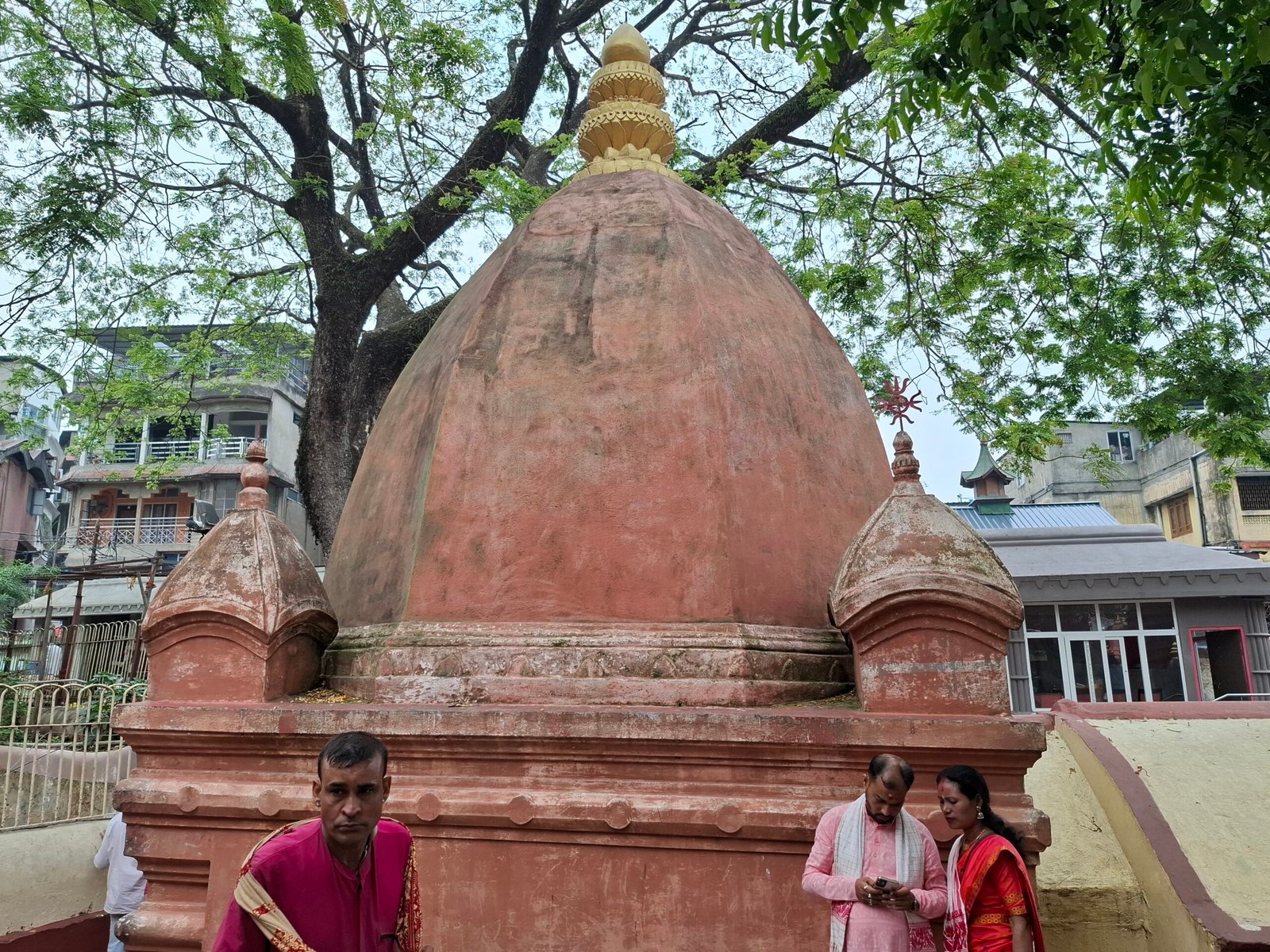
The sanctuary’s non-anthropomorphic form is central to understanding the temple. A photograph of its exterior can document the architecture without serving as a representation of the sacred form within. The Shakti guide introduces divine power in broader theological settings; Kamakhya gives that subject a distinctive regional and ritual location.
The Devalaya’s historical account preserves sacred narratives alongside the story of royal rebuilding. Keeping those categories separate allows the significance of the Goddess’s presence to remain visible without turning every narrative into an architectural date.
Maa Kamakhya Devalaya, History.
What makes this temple distinctive?
- A yoni-shaped rock sanctuary rather than a standing anthropomorphic Goddess image.
- Ambubachi’s annual closure and reopening cycle in the monsoon season.
- Nilachal architecture with earlier stonework, Koch rebuilding and later additions.
History and the present temple
Maa Kamakhya Devalaya’s architectural account dates the rebuilding of the present temple to 1565 under the Koch ruler Naranarayan. It also identifies earlier stonework and later additions. These phases help separate the visible structure from origin narratives that reach further into sacred time.
The rounded superstructure and the sequence of chambers are described by the institution within the temple’s Nilachal architectural tradition. Royal rebuilding and later patronage show that the complex developed through several periods. A single founding legend cannot stand in for that material history.
Maa Kamakhya Devalaya, Architecture: rebuilding and additions.
The Devi and sacred form
The yoni sanctuary is a central feature in the institutional account of Kamakhya. The temple’s sacred form must be distinguished from sculptures placed on its exterior or images of other Goddess forms around the hill.
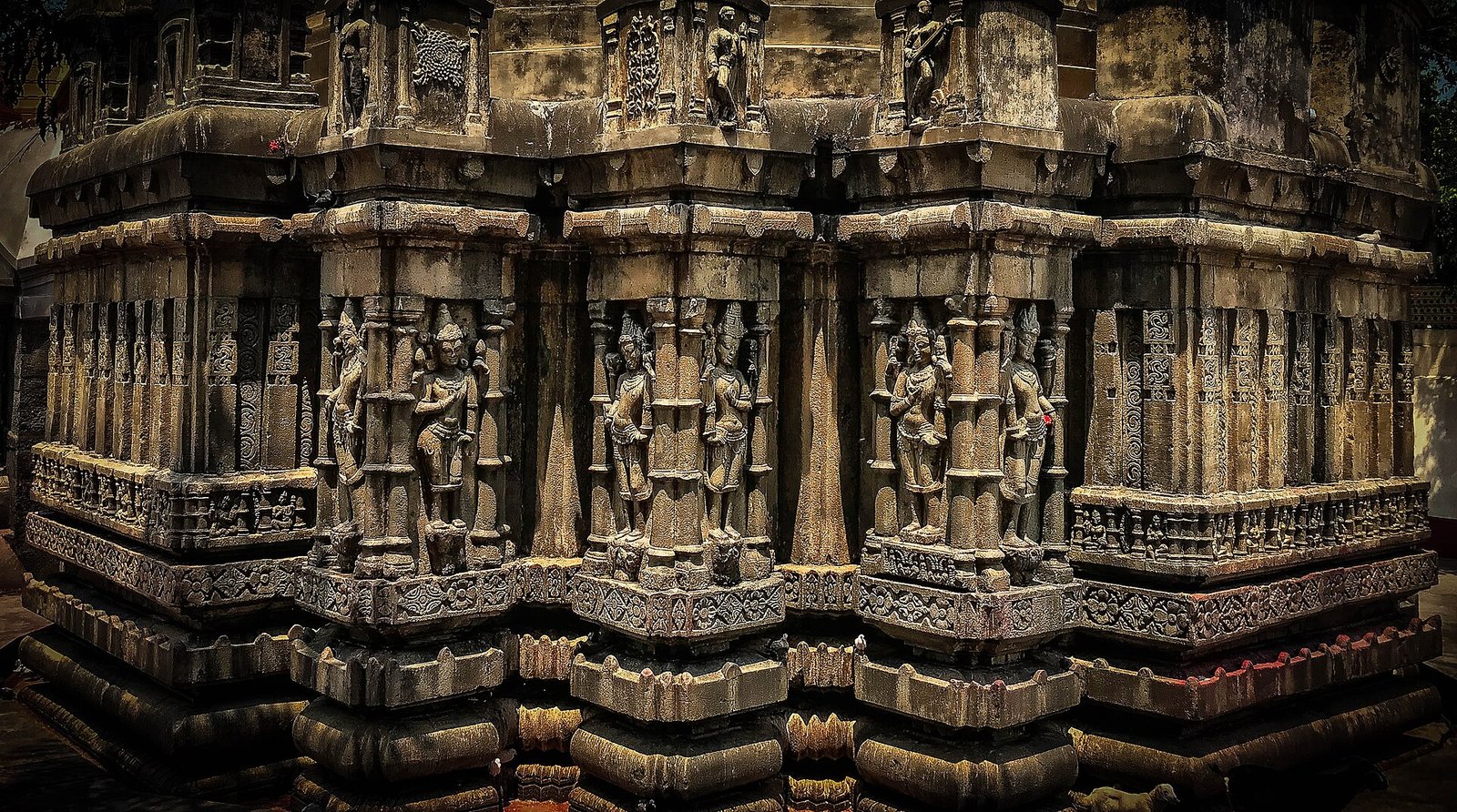
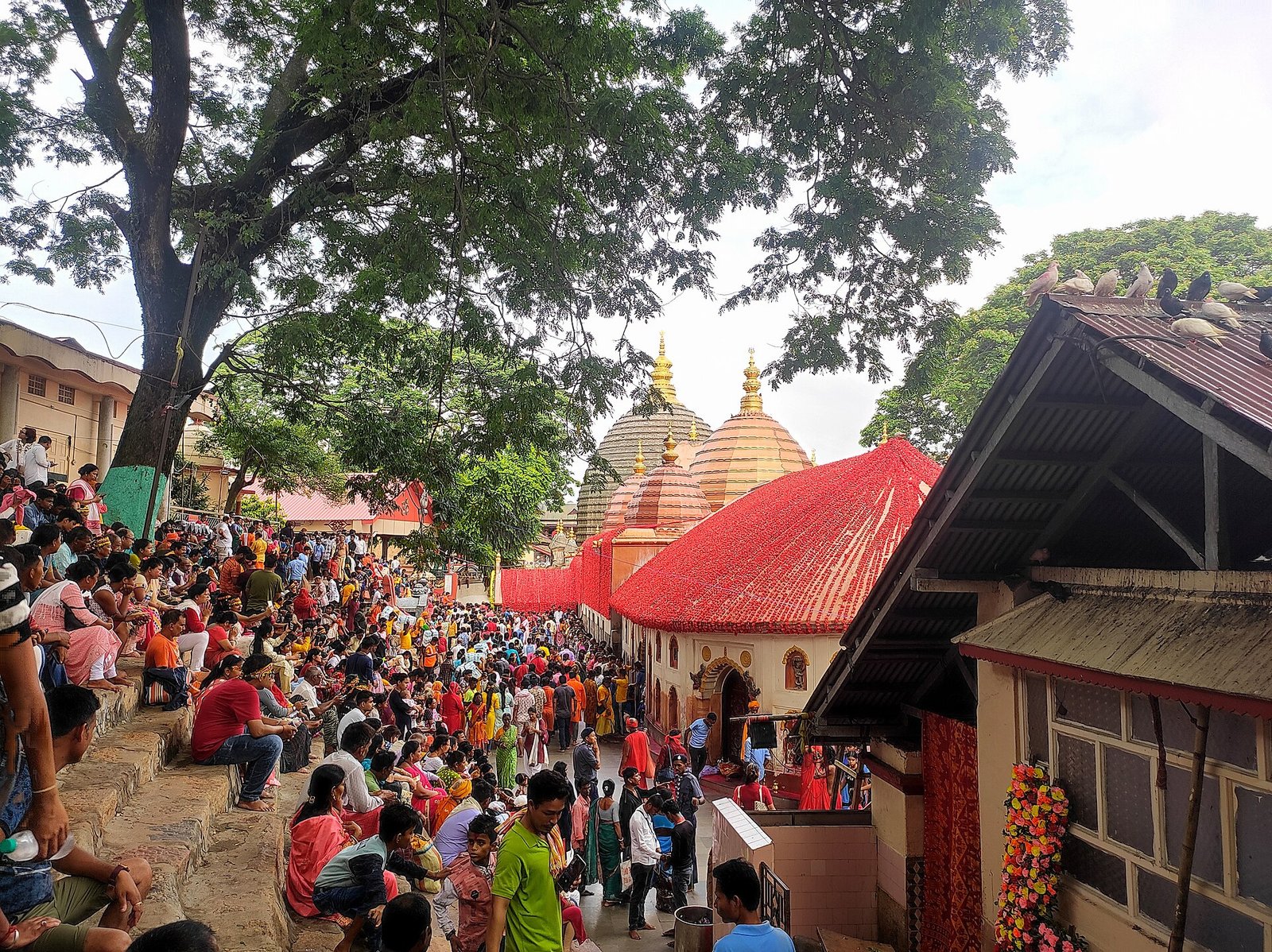
The existing exterior photograph is retained, with additional stone-carving and festival views. No unverified or unauthorized image of the inner sanctuary is substituted for the central sacred form.
Assam Tourism, Kamakhya Temple.
Architecture and temple complex
The Devalaya describes a succession of chambers leading toward the sanctuary and a Nilachal superstructure. Its account distinguishes the Koch rebuilding from earlier stonework and later additions, including the Ahom-period natmandir.
The close photograph of the adhisthana records carved stone at the temple base. It offers a material detail alongside the broad hero view, while leaving the identity of individual relief figures open where the source does not identify them.
Maa Kamakhya Devalaya, Architecture: rebuilding and additions.
Ambubachi and the regional calendar
The Devalaya describes Ambubachi as a monsoon observance associated with the annual menstruation of the Goddess understood as Mother Earth. Closure and reopening of the sanctuary belong to this ritual cycle. The account connects sacred presence with the fertility of the earth; it does not establish a medical benefit or promise a personal outcome.
The temple’s Durga Puja is also distinctive. The institution describes a fortnight-long Pakhua Puja, which should not be collapsed into the public festival sequence familiar from Kolkata. Its festival list records other Goddess observances across the year. Exact schedules require the current temple announcement.
Maa Kamakhya Devalaya, Festival: Ambubachi, Pakhua Puja and Deodhani.
Tantric context and pilgrimage
Kamakhya’s Tantric importance is part of the history of a living institution. Public descriptions of sacred geography and festivals do not provide authorization or instructions for restricted practices. The Kali profile similarly distinguishes Tantric settings from broader devotional accounts.
For access arrangements and current information, use Maa Kamakhya Devalaya’s official website. The institution specifically warns against unauthorized online puja services using its name. A source documenting a ritual or tradition should not be read as a recommendation to purchase a service.
Maa Kamakhya Devalaya, official notices and service warning.
When to visit
Ambubachi’s closure and reopening make the intended day especially important. The Devalaya also describes the three-day Deodhani observance associated with Manasa Puja as a substantial gathering. These named periods are a stronger basis for planning than an unsupported claim about a quiet weekday.
Maa Kamakhya Devalaya, Festival: Ambubachi, Pakhua Puja and Deodhani.
- Peak / Very Busy
- Ambubachi, including the sanctuary’s closure and reopening cycle; major Goddess observances bring additional gatherings.
- Busy / Popular
- The Deodhani / Manasa Puja gathering is another popular festival period described by the Devalaya. No numerical queue forecast is supplied.
Maa Kamakhya Devalaya, Festival. Crowd patterns refer to named gatherings, not guaranteed daily attendance.
Weather and seasonal considerations
Ambubachi is specifically a monsoon observance. A desire to participate in it therefore involves a different seasonal setting from a general sightseeing visit. Check current hill access and temple notices; the map does not describe drainage, steps or road conditions.
Maa Kamakhya Devalaya, Festival: Ambubachi, Pakhua Puja and Deodhani.
Map and geographic orientation
Regional orientation, without route lines or street detail. Delhi is a geographic reference; these maps do not describe a road journey or cross-border access.
City and transport points give regional context; overlapping points can be explored with zoom or the text key.
India and surrounding region
Regional orientation
- Temple: Kamakhya, India
- Delhi reference: Delhi, India. Approximate city reference (source precision 0.1 degree); distances are rounded straight-line orientation.
- Major city: Guwahati, India. Approximate city reference, not an entrance.
- Airport: Lokpriya Gopinath Bordoloi International Airport, India. Geographic orientation point; terminal entrance and services require a current check.
- Railway station: Kamakhya Junction railway station, India. Geographic orientation point; terminal entrance and services require a current check.
Natural Earth public-domain land; DataMeet CC0 India outline following the Survey of India depiction. Other political boundaries are omitted. Points identify present-day countries; place markers are orientation points, not entrances.
Planning Your Visit
- Nearest major city
- Guwahati
- Temple location
- Guwahati
- State / province / region
- Assam
- Country
- India
- Nearest airport
- Lokpriya Gopinath Bordoloi International Airport, Guwahati (GAU)
- Nearest major railway station
- Kamakhya Junction; Guwahati is another major station
- Approx. distance from Delhi
- About 1,460 km straight-line; not road distance
- Distance source, endpoints and method
- Delhi distance: great-circle calculation (Earth radius 6,371 km) between the reviewed temple point and approximate Delhi city reference, rounded to 10 km. It is not a road, flight or cross-border itinerary.
- Typical access route
- The Devalaya identifies Kamakhya as the nearby rail gateway and Guwahati as another major station. Road transport continues toward Nilachal Hill.
- Important festival periods
- Ambubachi; Pakhua Durga Puja; Deodhani / Manasa Puja
- Terrain / altitude / stairs / accessibility
- A hilltop temple with a descending inner sanctuary. A fully step-free route to the central sacred form is not verified here.
- Official temple website
- Official temple website
- Government tourism / heritage URL
- Government tourism / heritage URL
- Visitor-information sources and checked date
- Reviewed 2026-10-21 against the institutional sources linked below. Approximate distance endpoints and methods are qualified separately; this is not a live timetable.
Practical temple information
- Current official timing source
- Current official timing source
- Practical access note
- The Devalaya warns against unauthorized online puja services. Its website and current notices are the reference; an unverified coupon or booking workflow is not recommended.
Last verified: . Check the linked institution for changed arrangements.
Nilachal Hill and the wider city
Other Goddess shrines on Nilachal Hill form part of Kamakhya’s religious landscape. Guwahati supplies the regional transport setting below. Neither the hill’s wider sacred geography nor the city’s other temples is offered here as a packaged pilgrimage circuit.
Assam Tourism, Kamakhya Temple.
Photos and gallery


Watch / Explore Further
Further reading
Related reading
Sources and method
- Maa Kamakhya Devalaya, official notices and service warning
- Maa Kamakhya Devalaya, History
- Maa Kamakhya Devalaya, Architecture: rebuilding and additions
- Maa Kamakhya Devalaya, Festival: Ambubachi, Pakhua Puja and Deodhani
- Maa Kamakhya Devalaya, Reach: airport and rail gateways
- Assam Tourism, Kamakhya Temple
Textual classifications follow the 51-entry PN working list and the eighteen-seat hymn grouping. Our source method distinguishes sacred narrative, institutional testimony and historical evidence. Image sources and reuse terms accompany each photograph.