
Kumari Amman Temple, Kanniyakumari
Kumari / Bhagavathi Amman · Kanniyakumari, Tamil Nadu, India
Shakti Peetha: local tradition; PN identification qualified
At India’s southern shore, Bhagavathi Amman is worshipped as the virgin Goddess Kumari; her connection with Kanyashrama remains a qualified Peetha identification.
Quick facts
- Primary deity
- Kumari / Bhagavathi Amman
- Location
- Kanniyakumari, Tamil Nadu, India
- Classification
- PN 51 working list: identification qualified
- City / regional gateway
- Kanniyakumari; Nagercoil is a regional gateway
- Airport
- Thiruvananthapuram International Airport (TRV)
- Major railway station
- Kanniyakumari Railway Station (CAPE)
- Major festival periods
- Annual car festival (May/June); Navratri (September/October)
On this page
Spiritual importance and significance
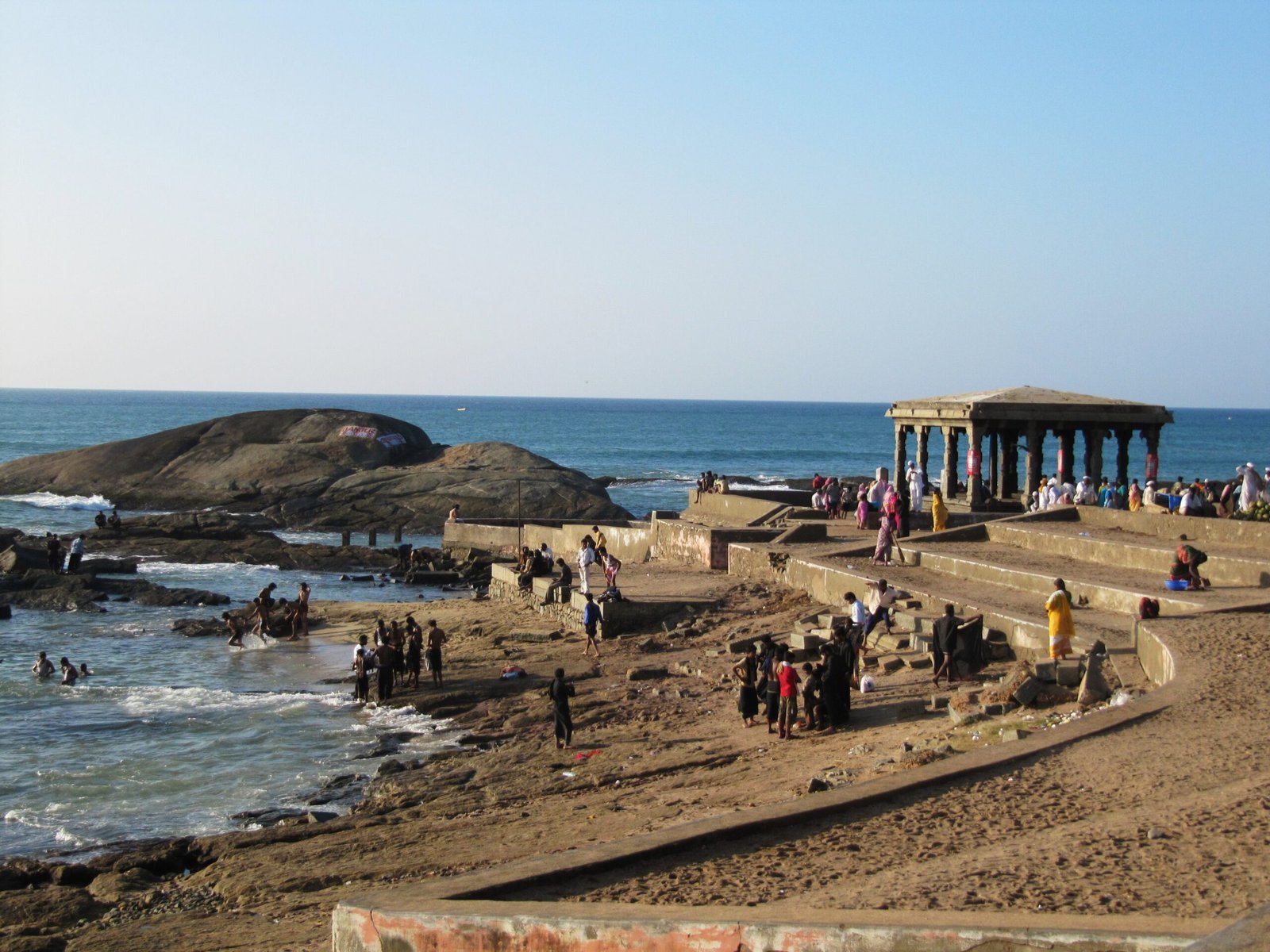
Kumari Amman’s temple stands beside the sea at Kanniyakumari. The district administration presents the presiding Goddess as Parvati in her virgin form. Her name gives the town its identity, and the story of her penance connects the shrine with Shiva at Suchindram.
The sea-facing setting belongs to the temple’s particular sacred geography. Worship centres on Bhagavathi Amman as Kumari, with a local narrative and festival life that deserve attention alongside the wider Shakti Peetha discussion.
Kanniyakumari district: Bhagavathi Amman and festival tradition.
Kumari’s story and the Kanyashrama question
In the district’s account, the Goddess takes maiden form and the planned marriage to Shiva is interrupted. Her remaining unmarried enables her victory over Banasura. The account explains her continuing presence as Kumari and belongs to the temple’s sacred tradition.
Kanyāśrama in the selected Pithanirnaya is associated with Sati’s back, Sarvāṇī and Nimiṣa. Its modern location is contested: Kumarikunda in the Chattogram region and Kanyakumari are different identifications. This profile describes the documented Tamil Nadu temple without treating the name resemblance as a settlement of that question.
Pithanirnaya: Sanskrit text and translation.
What makes Kumari Amman distinctive?
- The virgin Goddess gives Kanniyakumari its name.
- The shrine stands at the southern seafront, within a landscape associated with three seas.
- The local story of penance and Banasura gives the temple a narrative distinct from the Sati body-part tradition.
The Devi and temple complex
The 1970 study Temples in Kanyakumari District by S. Padmanabhan describes the Goddess standing eastward, with a garland in her right hand and the left hand placed at her thigh. It records three prakaras, or enclosing precincts, and shrines including Thyagasundari. These descriptions belong to that published survey; follow the temple’s current arrangements when moving through the complex.
The same study describes inscribed pillars in the mandapa before the sanctum. Such details offer a historical and architectural way of reading the site alongside the sacred accounts attached to Kumari.
S. Padmanabhan, Temples in Kanyakumari District (1970): library catalogue.
History and the surviving shrine
The district’s account attributes the foundation to Parashurama and speaks of Pandya renovation. The foundation narrative is a traditional attribution, not an archaeological construction date. The regional temple study provides a different kind of evidence through its descriptions of the precincts, sculptures and inscriptions.
These sources should be read according to their purpose: the temple’s story explains its sacred standing, while material descriptions help the visitor attend to the surviving complex.
Kanniyakumari district: Kumari Amman visitor information.
Worship, festivals and visiting
The district lists an annual car festival in May or June and Navratri in September or October. These observances belong to the local worship calendar. Verify current dates and any changed access with the Devasthanam rather than relying on a general month range.
District listings agree on morning and evening darshan separated by a midday closure but differ on exact closing minutes. Plan around the closure and confirm the day’s hours before travelling. For a coastal visit, check the local weather and sea-front advisories.
Kanniyakumari district: Bhagavathi Amman and festival tradition.
Planning Your Visit
- Nearest major city
- Kanniyakumari; Nagercoil is a regional gateway
- Temple location
- Kanniyakumari
- State / province / region
- Tamil Nadu
- Country
- India
- Nearest airport
- Thiruvananthapuram International Airport (TRV)
- Nearest major railway station
- Kanniyakumari Railway Station (CAPE)
- Typical access route
- Reach Kanniyakumari by rail or road, then continue to the temple on the seafront.
- Important festival periods
- Annual car festival (May/June); Navratri (September/October)
- Government tourism / heritage URL
- Government tourism / heritage URL
- Visitor-information sources and checked date
- Sources reviewed 2026-10-22; linked in Sources. Historical observations are dated separately from current visitor information.
Practical temple information
- Opening pattern
- Morning and evening darshan with a midday closure; confirm exact hours with the Devasthanam before travel.
- Current official timing source
- Current official timing source
- Official temple contact
- Devasthanam office: 04652-246223 (district listing)
Last verified: . Check the linked institution for changed arrangements.
Nearby sacred and cultural places
Suchindram belongs to the regional narrative of Kumari’s proposed marriage to Shiva. The Kanniyakumari seafront also has cultural memorials distinct from the Goddess temple. Keep their separate entrances and opening arrangements in mind when deciding how much walking to undertake.
Kanniyakumari district: Bhagavathi Amman and festival tradition.
Photos and gallery

Watch / Explore Further
Further reading
- Pithanirnaya: Sanskrit text and translation
- D. C. Sircar, The Sakta Pithas (1948), PN numbered table, pp.35–37
Related reading
Sources and method
- Kanniyakumari district: Bhagavathi Amman and festival tradition
- Kanniyakumari district: Kumari Amman visitor information
- Ministry of Tourism: Kumari Amman Temple
- S. Padmanabhan, Temples in Kanyakumari District (1970): library catalogue
- Pithanirnaya: Sanskrit text and translation
See the 51 Shakti Peethas and the separately sourced 18 Maha Shakti Peethas. Our source method explains how traditional, historical and institutional accounts are used.