
Kamakhya is a major center of Goddess worship on Nilachal Hill in Guwahati, Assam. The sanctuary is known for a yoni-shaped rock formation, rather than a standing anthropomorphic image of the Goddess. Its Shakta and Tantric associations belong to a specific Assamese sacred landscape, with other shrines distributed across the hill.
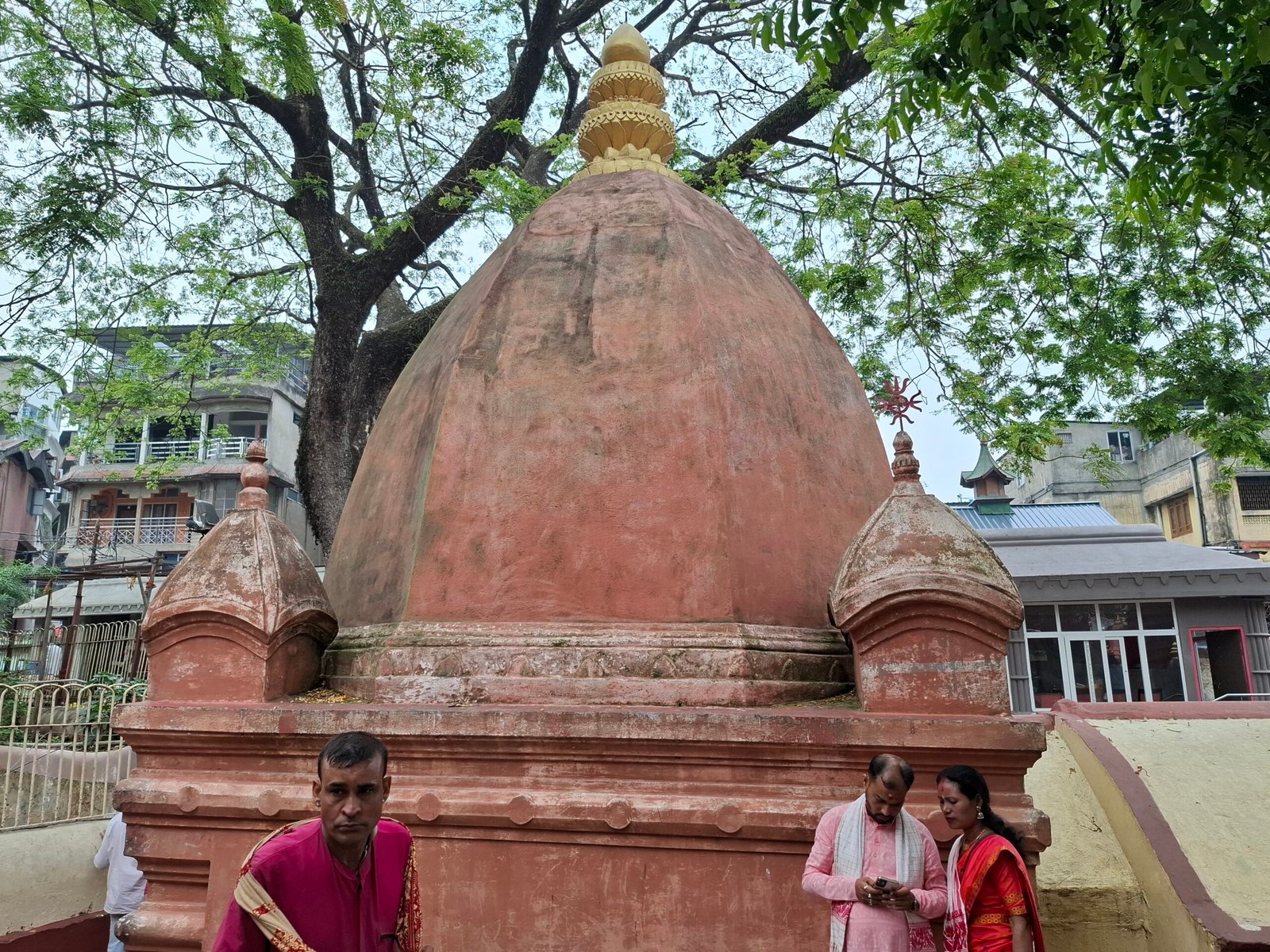

- Location: Nilachal Hill, Guwahati, Assam, India
- Deity: Kamakhya
- Sacred form: Yoni shrine in the inner sanctuary
- Historical reference: Present temple rebuilt under Koch patronage in 1565
- Festivals: Ambubachi, Durga Puja and other local observances
The Goddess and the Shakti Peetha tradition
Kamakhya is identified in local pilgrimage tradition as the place where Sati’s yoni fell. This is a sacred account of the site’s significance. It should be distinguished from the surviving building’s construction history or an archaeological claim about its origin.
The sanctuary’s non-anthropomorphic form is central to understanding the temple. A photograph of its exterior can document the architecture without serving as a representation of the sacred form within. The Shakti guide introduces divine power in broader theological settings; Kamakhya gives that subject a distinctive regional and ritual location.
History and the present temple
Maa Kamakhya Devalaya’s architectural account dates the rebuilding of the present temple to 1565 under the Koch ruler Naranarayan. It also identifies earlier stonework and later additions. These phases help separate the visible structure from origin narratives that reach further into sacred time.
The rounded superstructure and the sequence of chambers are described by the institution within the temple’s Nilachal architectural tradition. Royal rebuilding and later patronage show that the complex developed through several periods. A single founding legend cannot stand in for that material history.
Ambubachi and the regional calendar
The Devalaya describes Ambubachi as a monsoon observance associated with the annual menstruation of the Goddess understood as Mother Earth. Closure and reopening of the sanctuary belong to this ritual cycle. The account connects sacred presence with the fertility of the earth; it does not establish a medical benefit or promise a personal outcome.
The temple’s Durga Puja is also distinctive. The institution describes a fortnight-long Pakhua Puja, which should not be collapsed into the public festival sequence familiar from Kolkata. Its festival list records other Goddess observances across the year. Exact schedules require the current temple announcement.
Tantric context and pilgrimage
Kamakhya’s Tantric importance is part of the history of a living institution. Public descriptions of sacred geography and festivals do not provide authorization or instructions for restricted practices. The Kali profile similarly distinguishes Tantric settings from broader devotional accounts.
For access arrangements and current information, use Maa Kamakhya Devalaya’s official website. The institution specifically warns against unauthorized online puja services using its name. A source documenting a ritual or tradition should not be read as a recommendation to purchase a service.