

Dussehra / Vijayadashami 2026: Date at a Glance
Dussehra falls on Tuesday, 20 October 2026 in the Government of India’s public holiday listing and the New Delhi Vijayadashami calendar. Bengal’s Vijaya Dashami falls on Wednesday, 21 October 2026 in the West Bengal government’s Puja calendar. The New Delhi calendar also explicitly distinguishes Bengal Vijayadashami on 21 October.
| Reference | 2026 civil date |
|---|---|
| Dussehra public holiday, Government of India | Tuesday, 20 October |
| Vijayadashami, New Delhi ritual-calendar reference | Tuesday, 20 October |
| Vijaya Dashami, West Bengal Puja calendar | Wednesday, 21 October |
The Dashami tithi spans parts of two civil days in the cited New Delhi calculation. A lunar tithi is not a midnight-to-midnight date, and the observance depends on the festival rule and local calendar. The difference above should not be treated as a printing error or resolved by copying one date into every regional tradition. For exact rites, follow the calendar used by the relevant temple or Puja committee.
Sources checked on 7 October 2026: Government of India public holidays, New Delhi Vijayadashami calendar, and West Bengal’s SAHAJ Puja calendar. The Navratri 2026 guide gives the preceding nine-night period and India/USA reference dates; the Durga Puja guide gives Bengal’s festival sequence. Local fairs and processions may run beyond the named religious day.
- Associated deities
- Rama / Raghunathji; Durga / Chamundeshwari; Maa Danteshwari; Saraswati in learning traditions
- Traditions
- Regional Rama-centered and Goddess-centered traditions
- Calendar basis
- Autumn lunar calendar; local festival rules determine the civil date
- Lunar month
- Ashvin / Ashwin in the cited North Indian calendar
- Paksha
- Shukla paksha
- Tithi / range
- Dashami
- Typical Gregorian period
- September–October
- Duration
- Tenth-day observance; regional celebrations range from a day to extended festival cycles
- Calendar and local-date guidance
- Civil dates depend on location and observance. Bengal Vijaya Dashami and the New Delhi Vijayadashami reference can differ. See the attributed annual section; ritual timings are local.
On this page
Dussehra and Vijayadashami are overlapping names for an autumn festival occasion associated with the tenth lunar day and the culmination of Navratri. In North Indian Ramlila traditions, Rama’s defeat of Ravana is central. Bengal’s Vijaya Dashami brings Durga Puja to its farewell, while Mysuru, Kullu and Bastar have distinctive processional and temple traditions. A shared season connects these celebrations without making their deities, stories or ritual sequences identical.
What Do Dussehra and Vijayadashami Mean?
Vijayadaśamī combines vijaya, victory, with daśamī, the tenth lunar day. Dussehra, Dasara and Dashahara are regional spellings or forms encountered in festival names. Delhi Tourism explains Dussehra through dasha, ten, and hara, defeat, relating it to the ten-headed Ravana. That familiar Rama-centered explanation belongs to one important strand of the festival’s interpretation.
The names Dussehra and Vijayadashami often identify the same calendar occasion, but their local use can encompass a longer celebration. Mysuru Dasara includes a ten-day program; Kullu’s principal gathering begins on Vijayadashami and continues for a week. Bastar Dussehra extends over a much longer ritual cycle centered on Maa Danteshwari. Calling all of these simply the day of Ravana’s defeat would conceal the practices that make each meaningful to its participants.
Dussehra and Navratri
Vijayadashami is commonly the tenth-day culmination of the autumn Navratri cycle. The nine nights emphasize Goddess worship in forms that differ across regions, followed by a day associated with victory, departure, procession or the resumption of learning. Navratri and Dussehra are therefore closely connected, while referring to different parts of the seasonal sequence.
In Goddess-centered settings, the victory may be understood through Durga’s defeat of Mahishasura. In Rama-centered performance traditions, it is narrated through Rama and Ravana. These are distinct sacred narratives. The wider language of Shakti helps explain the prominence of Goddess worship in this season, but does not replace the local identities of Chamundeshwari, Danteshwari or the deities gathering in Kullu.
North India: Ramlila and Ravana Effigies
Ramlila brings the Ramayana into public performance through dialogue, recitation, music and enacted scenes. UNESCO’s account emphasizes the importance of Tulsidas’s sixteenth-century Ramacharitmanas to these North Indian performances. It identifies traditions at places including Ayodhya, Ramnagar, Varanasi and Almora, with different performance lengths and settings. Ramnagar’s cycle can continue for a month, so its dramatic calendar should not be reduced to a single evening.
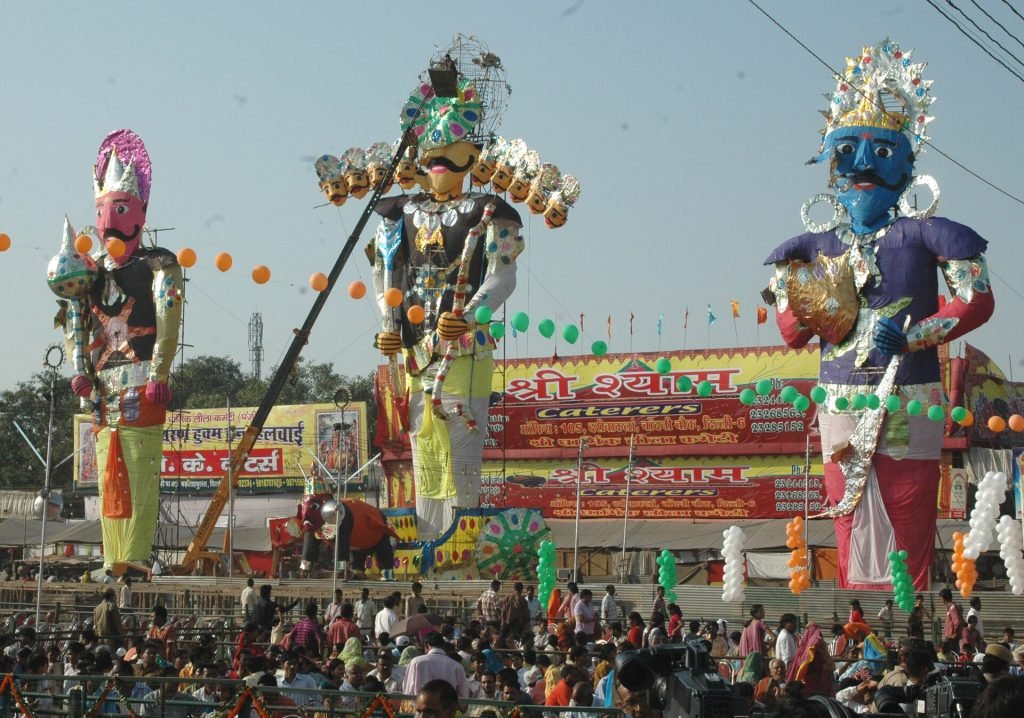
In Delhi and other North Indian celebrations, large effigies of Ravana, often accompanied by Kumbhakarna and Meghanada, are prepared for burning. Their scale, the assembled audience and the enacted confrontation make the Rama narrative publicly visible. The work also involves costume makers, performers, musicians and the people who construct and illuminate the effigies. UNESCO’s Ramlila record documents this collaborative performance culture; Delhi Tourism describes the city’s effigy traditions.

Mysuru Dasara
Mysuru Dasara in Karnataka combines worship of Chamundeshwari with palace ceremony, processions and a contemporary public cultural program. Karnataka Tourism describes the ten-day observance beginning with Navratri and culminating on Vijayadashami. Chamundi Hill and the palace are important settings in this regional devotional geography.
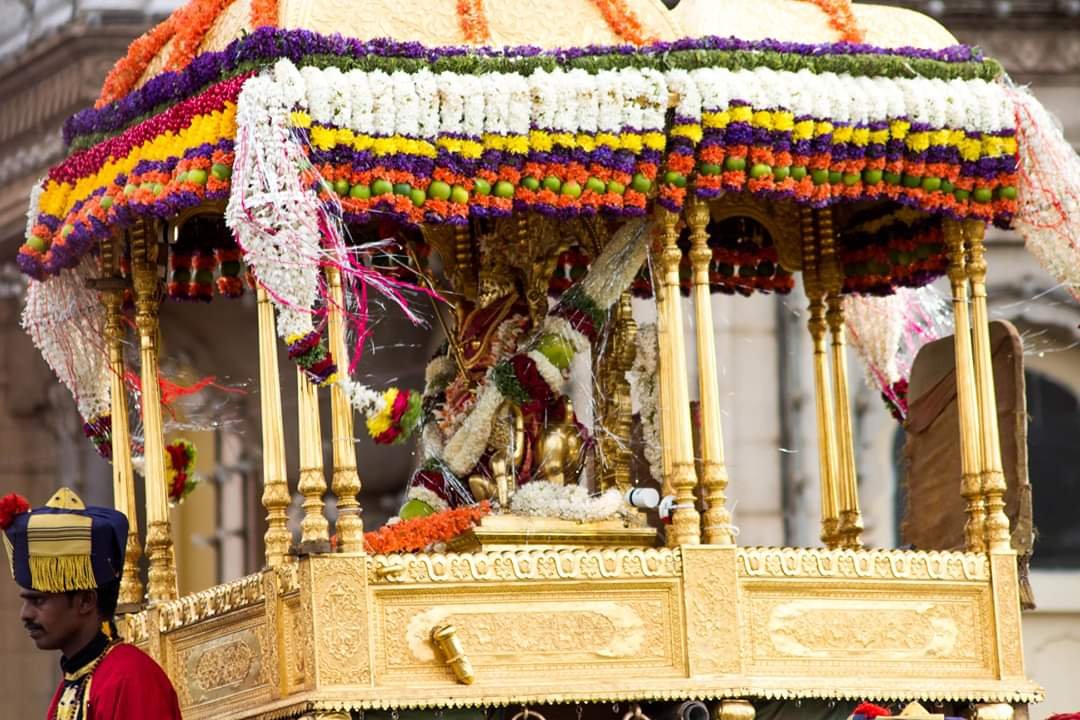
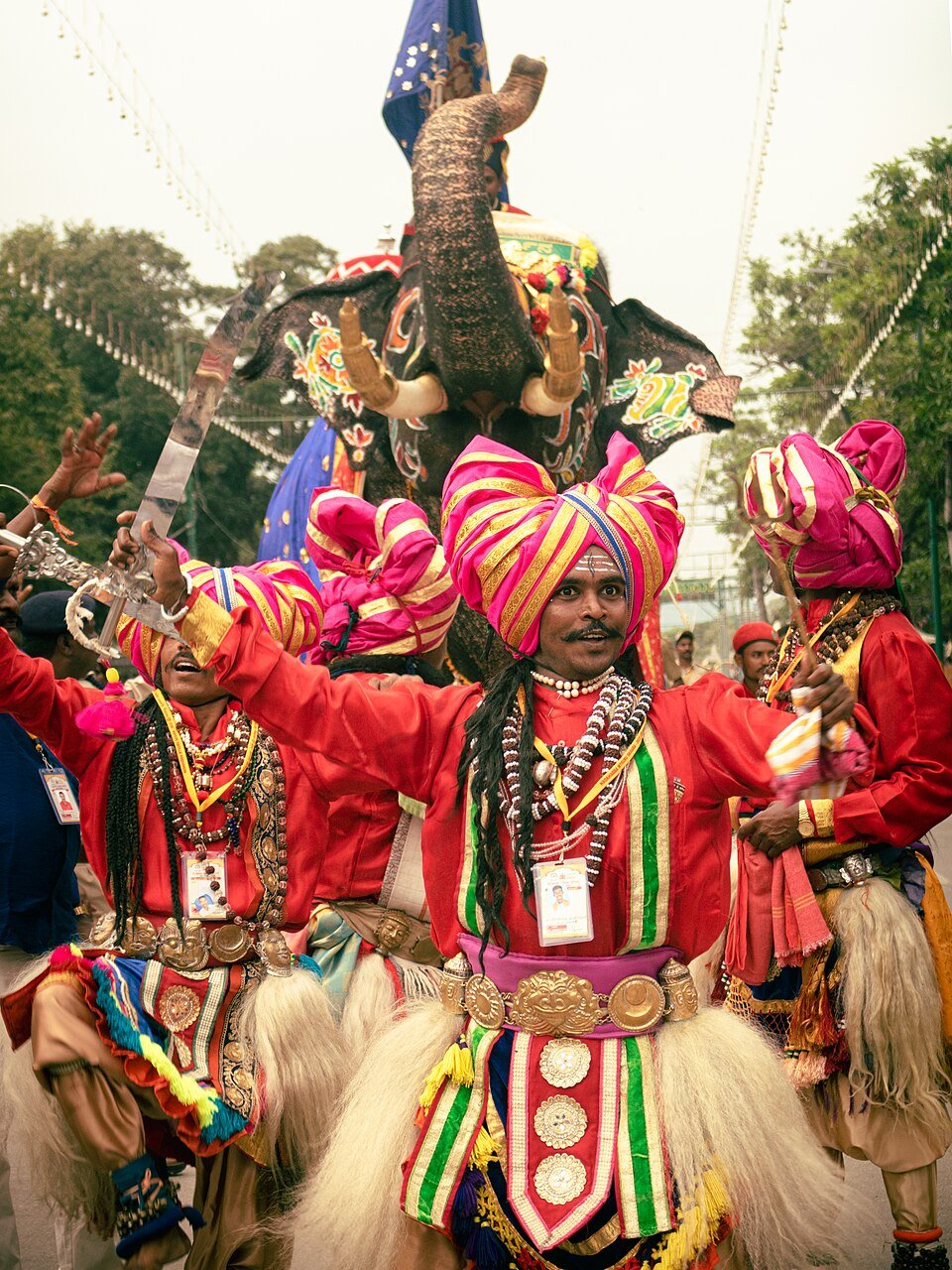
The Jambu Savari procession carries an image of Chamundeshwari in a golden howdah on a decorated elephant. Musicians, performers and other processional participants contribute to the public ceremony. The Goddess’s presence gives the procession a specific devotional focus, alongside the royal associations and civic organization of the festival. The elephant procession is not a reenactment of Ravana’s defeat.
Palace illumination, concerts and exhibitions extend the festival into different parts of the city. These public events belong to the modern celebration as well as its ceremonial inheritance; they should be distinguished from the temple rites themselves. The photographs here show the processional image and participating performers, rather than treating royal pageantry as the whole meaning of Dasara.


Kullu Dussehra
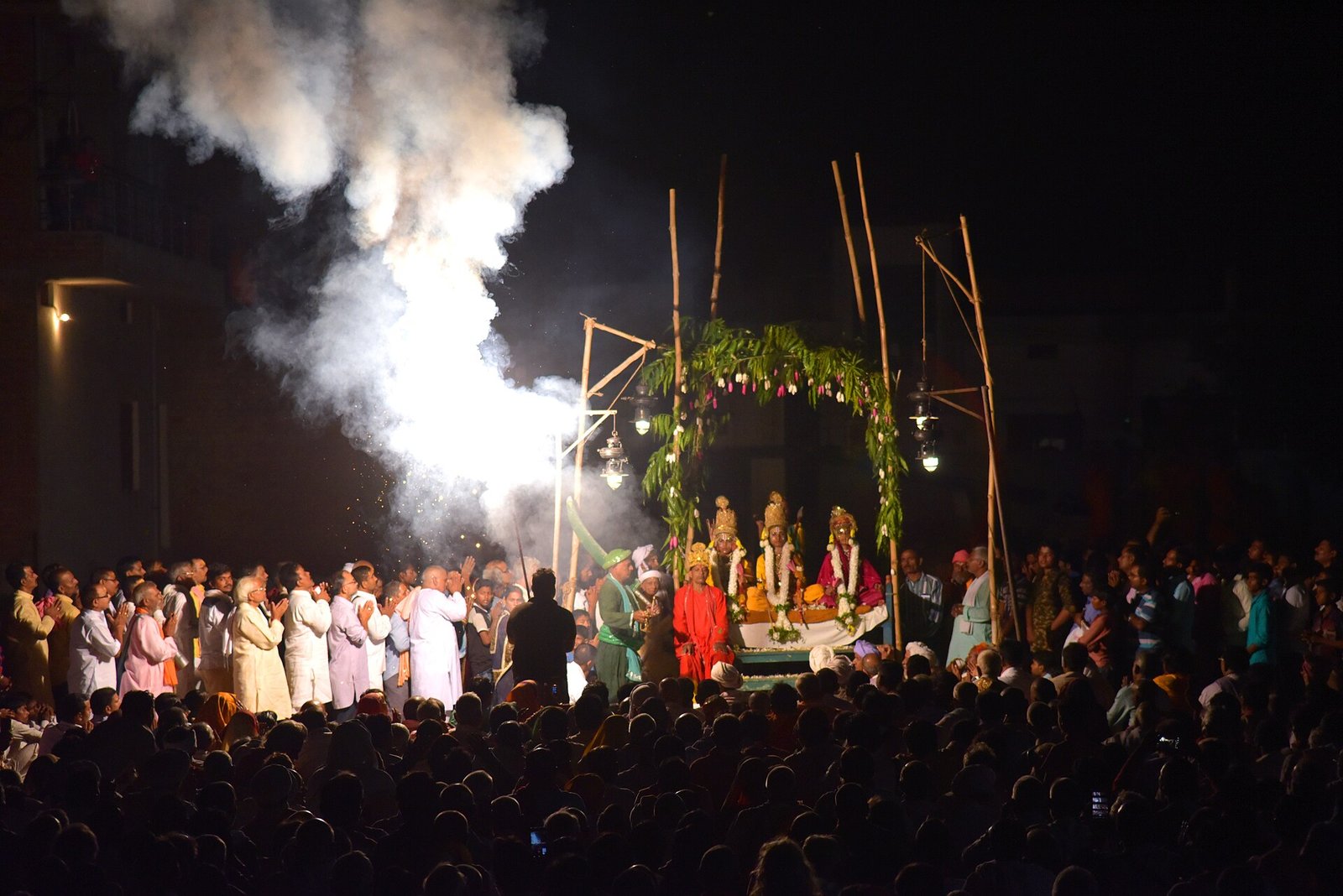
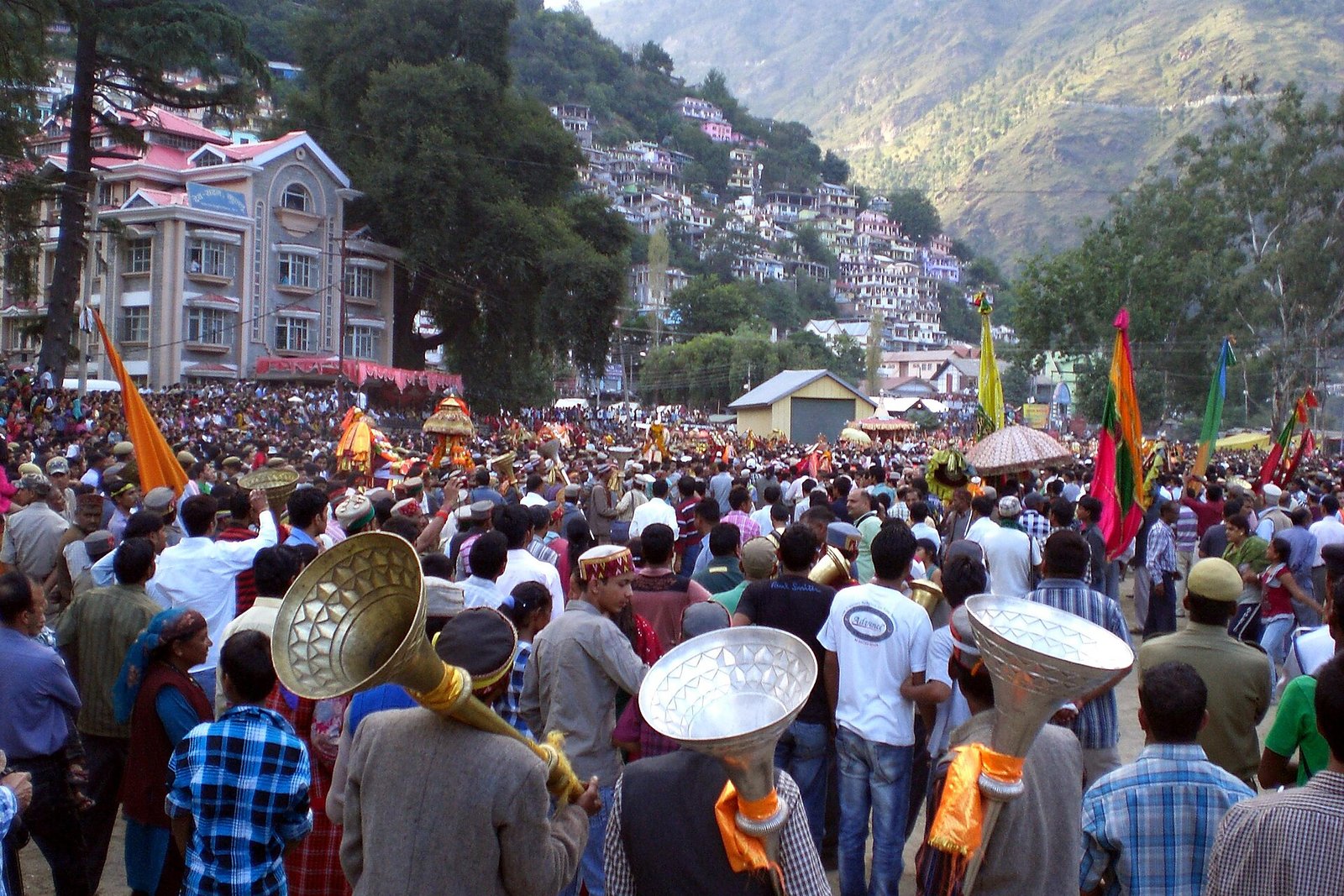
At Kullu in Himachal Pradesh, Vijayadashami opens the principal week-long gathering at Dhalpur. Raghunathji, a form of Rama, occupies a central position, and deities from the surrounding region arrive with their attendants, palanquins and musicians. The official Kullu Dussehra account describes the placement of the images of Rama and Sita in the decorated wooden chariot and its movement through the festival ground.
The gathering makes relationships among temples, village deities and their communities visible. Its processional order includes priests, deity attendants, musicians and members of the former ruling family. The Ministry of Tourism situates the celebration’s development in the seventeenth-century patronage of Raja Jagat Singh; the associated story of penance belongs to the regional account of Raghunathji’s installation.
Kullu thus retains a Rama-centered identity while organizing its festival around a congregation of deities and the rath procession. The familiar image of a burning Ravana effigy does not adequately describe what visitors and participants encounter at Dhalpur. See the Government of India overview of Kullu Dussehra for the festival’s seasonal setting.

Bastar Dussehra and Maa Danteshwari
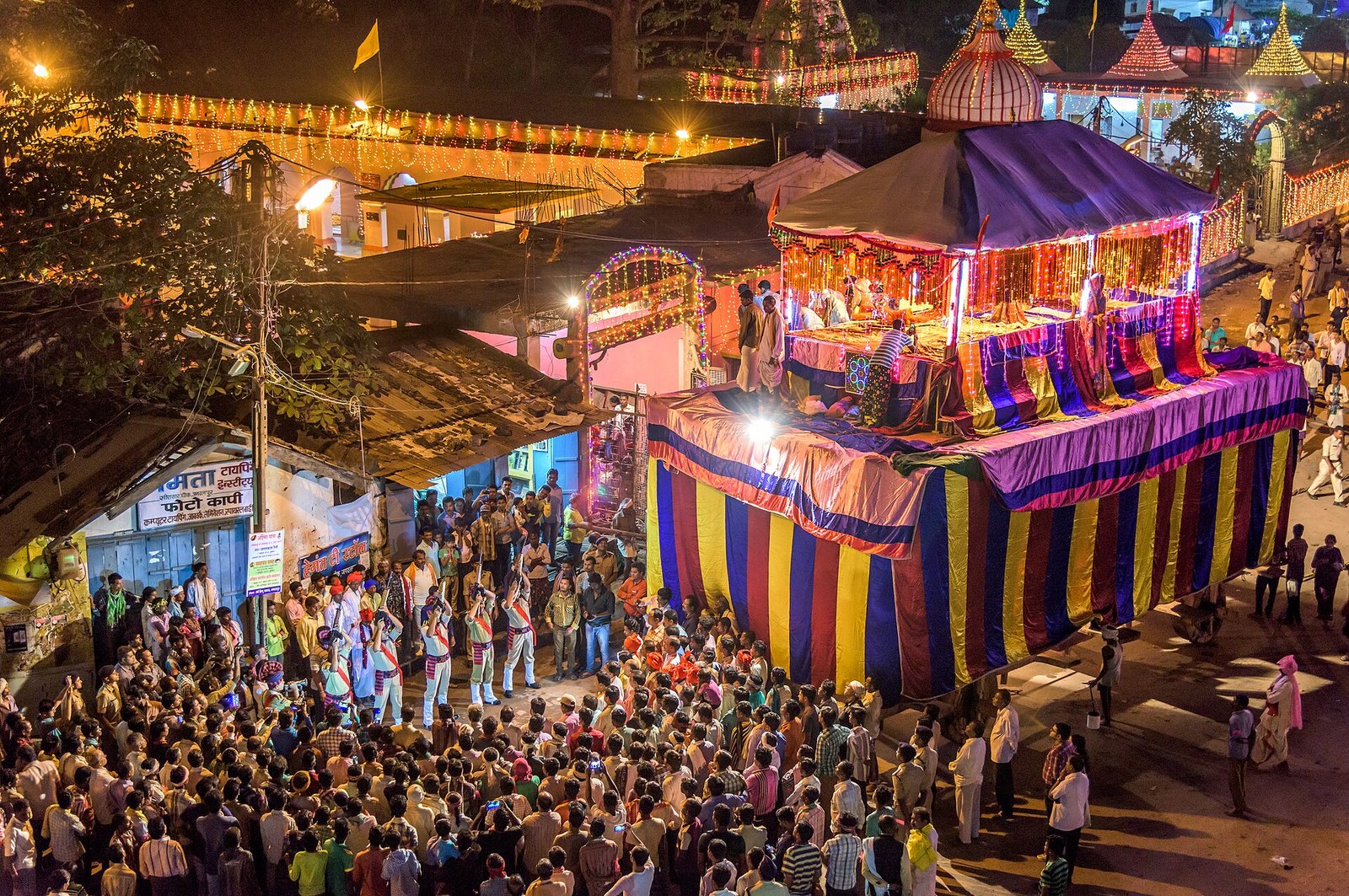
Bastar Dussehra, centered in Jagdalpur, Chhattisgarh, is dedicated to Maa Danteshwari and the region’s deity traditions. Its ritual cycle is commonly described as lasting about 75 days. The Bastar district administration and Government of India festival account distinguish it from the Rama–Ravana effigy-burning tradition. The long cycle includes preparation, the arrival of deities, chariot rites and their eventual farewell.
Local communities take responsibility for different parts of the observance, including chariot construction, music, ritual service and the movement of sacred symbols. These responsibilities are integral to the festival’s organization. The decorated rath and the people who accompany it belong to a living regional religious setting, not a theatrical illustration of a pan-Indian battle story.
The Census of India’s Bastar district handbook describes village deities gathering at the Danteshwari temple in Jagdalpur, the construction of wooden chariots and the concluding community assembly known as Muria Darbar. Royal institutions form part of the festival’s history, while community participation and present-day administration also shape its public life. Maa Danteshwari’s temple at Dantewada is an important related sacred center; it should not be confused with every temple or chariot visible in photographs from Jagdalpur.
The photograph shows the scale of a Bastar Dussehra chariot and the surrounding gathering. It does not establish the identity of an individual deity inside the vehicle or the ritual affiliation of each participant.

Vijayadashami in Bengal
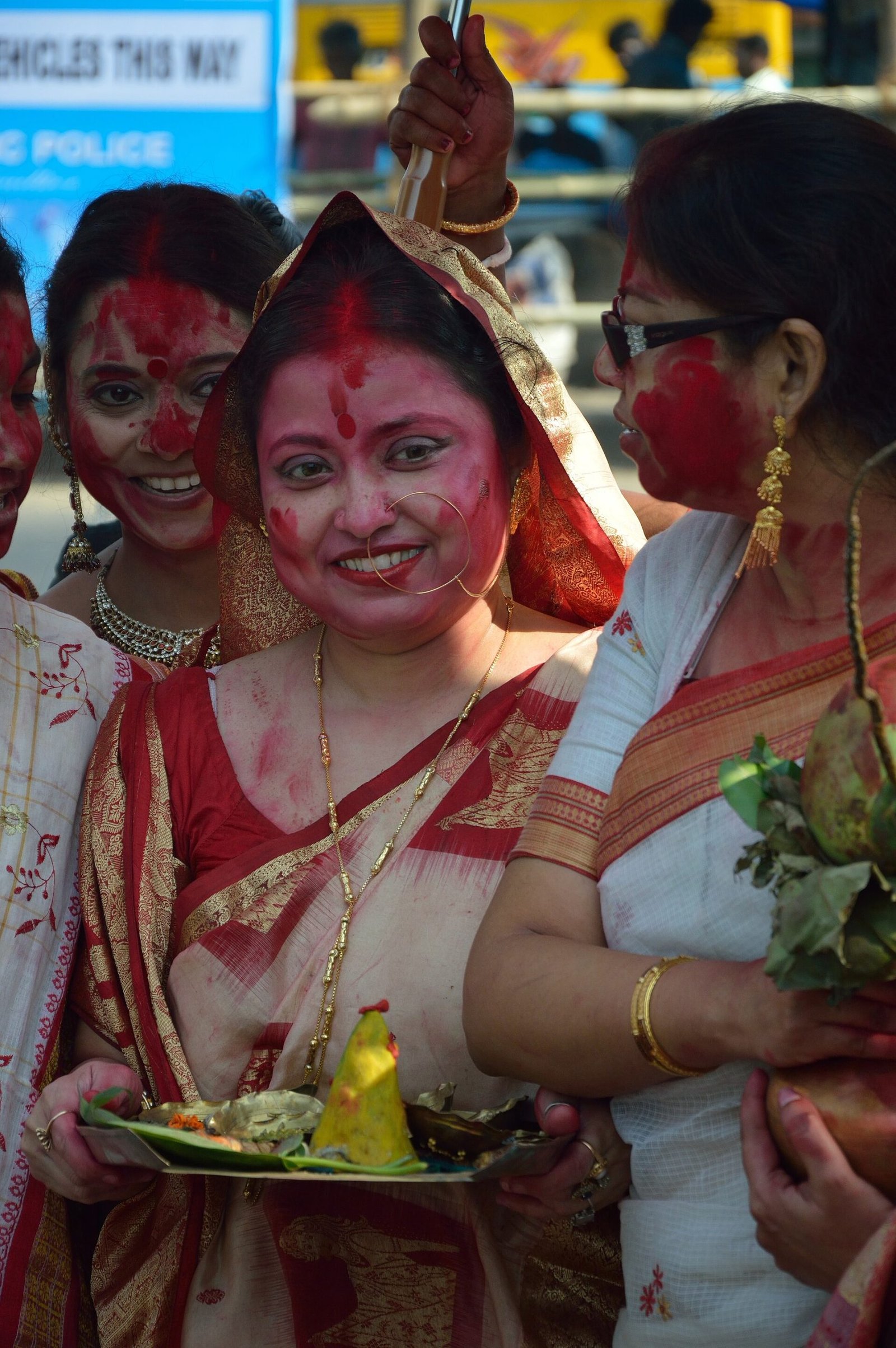
Bengal’s Vijaya Dashami marks Durga’s departure at the end of Durga Puja. The clay images that have received worship are taken in procession for immersion. Within Bengali homecoming traditions, this farewell carries the feeling of parting with a daughter who has visited her family, alongside the Goddess’s identity as Mahishasuramardini.
Sindoor Khela, associated particularly with married women’s farewell observances, is one visible part of this setting. It should not stand for every participant’s experience or every community’s practice. The photograph from Kolkata records women with vermilion at an immersion gathering; it is distinct from the image-making and pandal scenes earlier in the Puja cycle.
UNESCO’s account of Durga Puja in Kolkata places the ritual within a broader culture of artisanship, public art and collective celebration. The seasonal proximity of Durga’s farewell to North Indian Dussehra does not make immersion a version of Ravana burning. The two observances give different narrative and ritual forms to the end of the autumn festival cycle.

South India: Ayudha Puja, Saraswati and New Beginnings
Ayudha Puja honors implements of work and learning within the closing days of Navratri. Books, musical instruments, tools and vehicles can become objects of worship, with the particular arrangement depending on the household, workplace or temple. It is important to distinguish the worship of these objects from the following Vijayadashami observances rather than compressing every activity into one day.
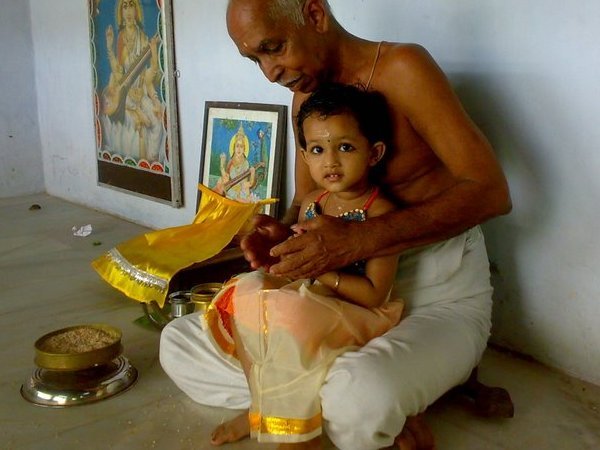
In Kerala, Kerala Tourism’s Navarathri account describes books being placed for worship and taken out for reading on Vijayadashami. The day is also associated with Vidyarambham, the initiation of children into letters, often with an elder guiding the child’s first writing in rice. Sites include Panachikkadu Saraswati Temple and Thunchan Parambu. These learning traditions give Saraswati a particularly clear place in the festival’s devotional life.
The photograph illustrates Vidyarambham in Kerala; its ceremony date is not established, so it is not presented as a photograph of a particular Vijayadashami. Mysuru’s procession, Kerala’s learning ceremonies and other southern practices should be understood in their named regional settings.

Why the Festival Looks So Different Across India
The shared calendar occasion brings together traditions formed around different sacred narratives, temples, courts, performance communities and local institutions. Rama’s victory, Durga’s farewell, Chamundeshwari’s procession, Raghunathji’s gathering and Danteshwari’s ritual cycle each organize participation in a different way. Their connections are real, but a single explanation cannot account for the whole range.
Theological narrative and public practice also operate at different levels. A sacred story may explain a rite, while its present-day form depends on artisans, musicians, temple authorities, community organizers and civic arrangements. Attending to those relationships explains the regional diversity more clearly than treating every celebration as an interchangeable symbol of victory.
Related Devi profiles
Related festivals
Sources & Further Reading
- Government of India, Ministry of Tourism: public holidays. Dussehra civil-date reference, checked 7 October 2026.
- Drik Panchang: Vijayadashami 2026, New Delhi. Location-specific ritual calendar; separately identifies Bengal Vijayadashami. Checked 7 October 2026.
- Government of West Bengal: SAHAJ Puja calendar. Bengal’s Vijaya Dashami reference, checked 7 October 2026.
- Delhi Tourism: Dussehra. Local performance and effigy context, including its explanation of the festival name.
- UNESCO: Ramlila, the traditional performance of the Ramayana. North Indian performance traditions and the Ramacharitmanas.
- Karnataka Tourism: Mysuru Dasara festivities. Chamundeshwari worship and Jambu Savari.
- Official Kullu Dussehra site: Rath Procession, and Ministry of Tourism: Kullu Dussehra. Local ritual order and festival setting.
- Bastar district administration: Places of Interest, and Ministry of Tourism: Bastar Dussehra. Danteshwari-centered regional context.
- Census of India 2011: District Census Handbook, Bastar, Part A. District documentation of chariots, village-deity participation and the concluding assembly.
- UNESCO: Durga Puja in Kolkata. Ritual, artisanship and public celebration.
- Kerala Tourism: Navarathri Festival, and Thunchan Parambu. Saraswati worship and Vidyarambham.