
Vaishno Devi is a major pilgrimage shrine in the Trikuta hills above Katra, in the Reasi district of Jammu and Kashmir. The Goddess is worshipped in a cave through three natural rock formations known as pindies. Devotees approach the shrine as the dwelling of Mata Vaishno Devi, whose identity brings several forms of the Mother Goddess together.
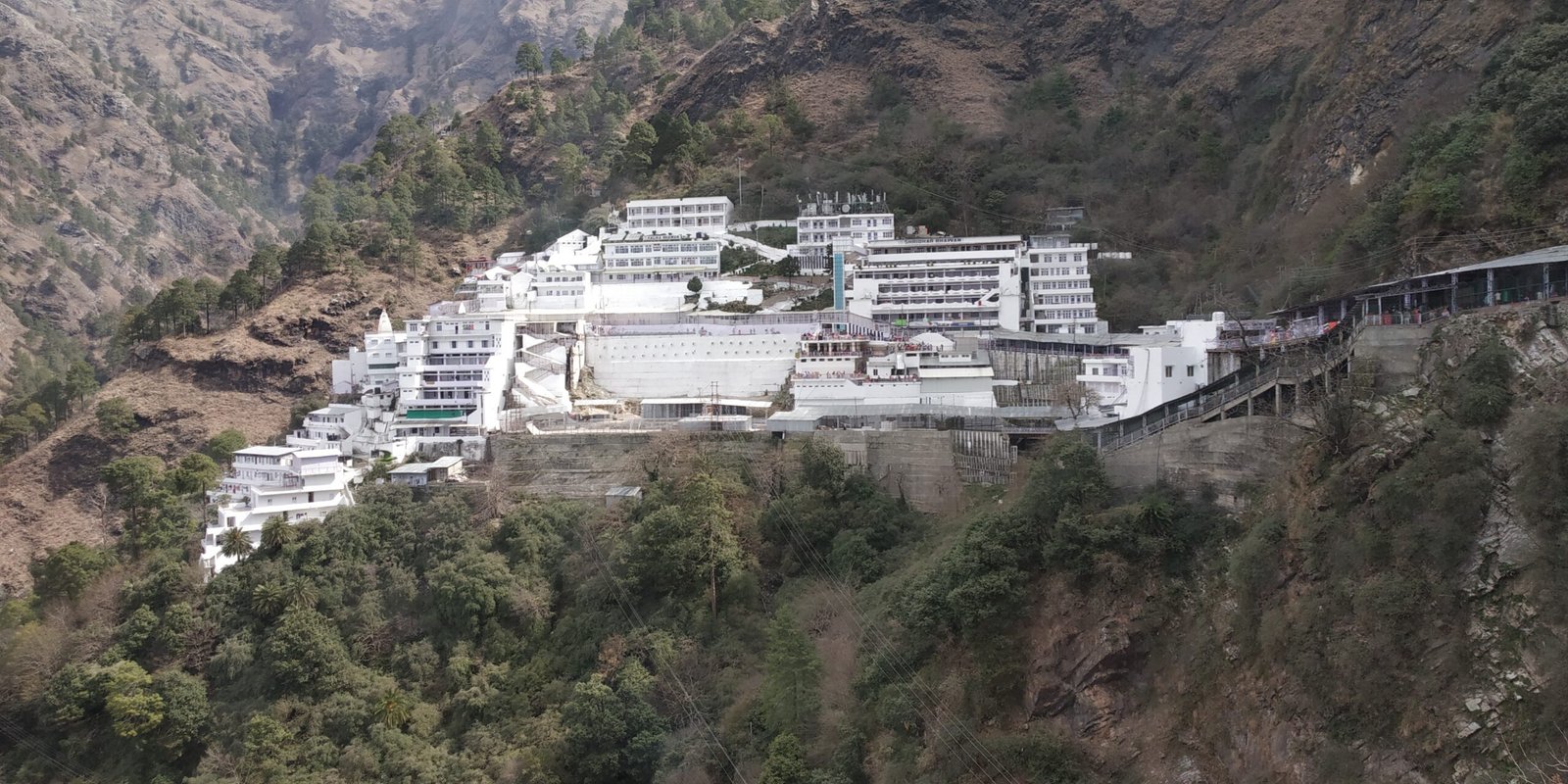

- Location: Above Katra, Reasi district, Jammu and Kashmir, India
- Deity: Mata Vaishno Devi; three pindies identified as Maha Kali, Maha Lakshmi and Mata Saraswati
- Setting: Mountain cave shrine and pilgrimage complex
- Sacred association: Shakti Peetha associations vary across accounts
- Festival context: Chaitra and Sharad Navratri
The three pindies and the Goddess
The Shrine Board’s description of the Bhawan identifies the three pindies with Maha Kali, Maha Lakshmi and Mata Saraswati. The principal sacred forms are natural formations within the cave. Images encountered on the approach or in devotional prints should therefore be distinguished from the forms worshipped in the sanctuary.
The combined presence invites comparison with the wider forms of Devi. Those connections do not erase Vaishno Devi’s own pilgrimage narrative. Her local identity and the devotee’s address to Mata belong at the center of an account of this shrine.
Sacred narrative and historical limits
The Shrine Board recounts the story of Vaishnavi, Bhairon Nath and the Goddess’s retreat into the cave. It also preserves the tradition of Pandit Shridhar’s discovery of the shrine through divine guidance. These are accounts of sacred presence and pilgrimage memory, not independently dated records of the shrine’s foundation.
The Board’s history acknowledges uncertainty about the beginnings of worship. References to epic figures or a traditional discovery date cannot by themselves establish when a cave became a pilgrimage institution. The modern Bhawan and its facilities should likewise be distinguished from the antiquity claimed for the sacred place.
Is Vaishno Devi a Shakti Peetha?
The Shrine Board discusses several Peetha traditions rather than offering a single uncontested identification. Its history mentions differing body-part associations and a competing identification in the Kashmir Valley. A statement that Vaishno Devi is a Shakti Peetha should identify the tradition being followed instead of presenting one list as universal.
The Temples introduction explains the broader sacred geography of Sati. Such accounts locate the Goddess within a devotional landscape; they do not supply archaeological proof for a particular origin date.
Navratri and the pilgrimage today
Navratri is an important setting for devotion to the Mother Goddess, including the spring and autumn observances associated with Vaishno Devi. The Durga guide provides context for the Goddess’s protective and victorious forms without treating every regional narrative as a chapter of the same text.
The Shri Mata Vaishno Devi Shrine Board provides current yatra information and institutional notices. Mountain conditions, registration arrangements and services can change, so consult the Board before planning a visit rather than relying on a fixed itinerary in an evergreen article.