
Mangalchandi Temple, Ujani
Mangalchandi (Maṅgalacaṇḍī) · Kogram, near Natunhat, West Bengal, India
Shakti Peetha: local tradition; PN identification qualified
Mangalchandi at Kogram, West Bengal, preserves the Bengali Ujani identification of a Shakti Peetha whose Ujjayini name also has other interpretations.


Quick facts
- Primary deity
- Mangalchandi (Maṅgalacaṇḍī)
- Location
- Kogram, near Natunhat, West Bengal, India
- Classification
- PN 51 working list: identification qualified
- City / regional gateway
- Bardhaman (regional gateway)
On this page
Spiritual importance and significance
Mangalchandi Temple stands at Kogram, known in the Bengali sacred and literary tradition as Ujani. The local identification connects the shrine to the Ujjayini entry in Shakti Peetha lists. The selected PN witness gives an elbow association, Maṅgalā or Maṅgalacaṇḍī as the Goddess, and Kapilāmbara as Bhairava.
Pithanirnaya: Sanskrit Documents text and translation.
Sacred story and textual tradition
The name requires care. Banglapedia distinguishes the Ujjain identification found in a Bengali almanac from Ujani at Kogram near Natunhat, associated with the mangalkavya tradition. It also connects Ujani with Behula’s marriage in Manasamangal. These literary associations belong to the region’s sacred imagination; they do not establish the foundation date of the present shrine.
Sati’s elbow association is retained here as a traditional explanation of the peetha. The article does not merge Kogram with Harsiddhi, Garh Kalika or other Ujjain shrines, or borrow their histories, images and visit information.
Asiatic Society of Bangladesh, Banglapedia: Sakta-pitha, Ujjayani/Ujani discussion.
What makes this temple distinctive?
- The Bengali Ujani identification keeps a local Goddess shrine connected to a wider Sanskrit list without suppressing geographical variants.
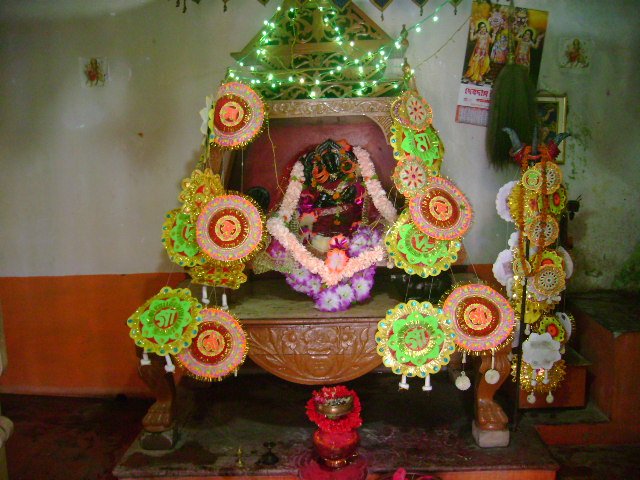
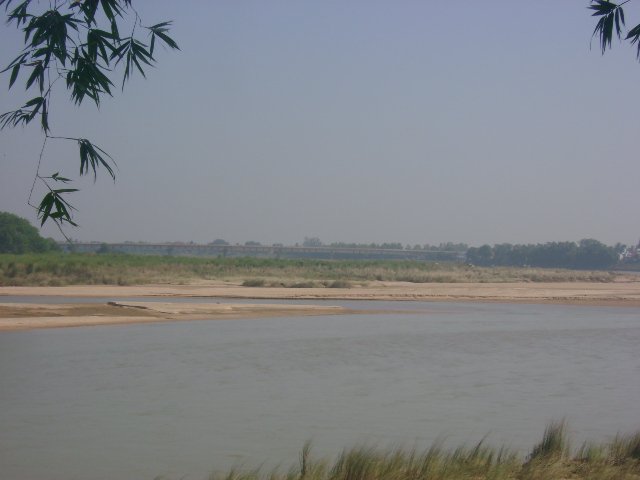
- The public photographs document both Mangalchandi’s dressed image and the river landscape beside the temple.
- Kapilambar is preserved as the associated Bhairava name in the selected textual witness.
The Devi and sacred form
Mangalchandi’s photographed image is heavily garlanded and ornamented. The visible face and crown appear within a decorated shrine setting; textiles and floral offerings cover much of the form. The photograph is identified by the contributor as the Goddess at Ujani, Kogram. It is not used to infer an ancient date or attributes that cannot be seen.
Architecture and river setting
The exterior view records a small shrine with an arched entrance, pale walls, red trim and a rounded roof ornament. A separate photograph shows the Ajay from the temple. The two views help distinguish the built shrine from its river setting; neither is evidence for a particular medieval construction date.
Worship and planning a visit
The shrine is visited as Mangalchandi’s seat in the Bengali Shakti Peetha tradition. Banglapedia identifies its village setting at Kogram near Natunhat. Confirm the final road connection to the temple locally.
No reliable current temple calendar, daily darshan timetable or measured crowd pattern has been verified. Confirm access locally, particularly around a planned observance. Ujjain’s festival and crowd patterns do not describe Kogram.
Asiatic Society of Bangladesh, Banglapedia: Sakta-pitha, Ujjayani/Ujani discussion.
Weather and seasonal considerations
Purba Bardhaman’s district climate reference describes a hot, humid summer and a June–September monsoon. For travel on local roads and walks between the temple and nearby transport, allow for heat, rain and pre-monsoon thunderstorms. Cooler winter conditions do not by themselves establish a quieter darshan period.
Purba Bardhaman district: Geography, climate.
Planning Your Visit
- Nearest major city
- Bardhaman (regional gateway)
- Temple location
- Kogram, near Natunhat
- State / province / region
- West Bengal
- Country
- India
- Typical access route
- Confirm the local road approach to Mangalchandi Temple at Kogram near Natunhat in Purba Bardhaman, rather than booking travel to Ujjain in Madhya Pradesh.
- Broad visiting season
- District climate: hot, humid summer; June–September monsoon; cooler winter. Confirm the local weather before travel.
- Government tourism / heritage URL
- Government tourism / heritage URL
- Visitor-information sources and checked date
- Sources reviewed 2026-10-21–22; linked in Sources. Historical observations are dated separately from current visitor information.
Practical temple information
- Practical access note
- No current verified step-free approach, parking policy or daily opening timetable is available. Confirm arrangements with the shrine locally.
Last verified: . Check the linked institution for changed arrangements.
Photos and gallery


Watch / Explore Further
Further reading
- Asiatic Society of Bangladesh, Banglapedia: Sakta-pitha, Ujjayani/Ujani discussion
- D. C. Sircar, The Sakta Pithas (1948), PN numbered table, pp.35–37
Related reading
Sources and method
- Asiatic Society of Bangladesh, Banglapedia: Sakta-pitha, Ujjayani/Ujani discussion
- Pithanirnaya: Sanskrit Documents text and translation
- Purba Bardhaman district: Geography, climate
The 51-entry PN working list preserves its named textual witness and geographical qualifications. Our source method distinguishes sacred tradition, institutional descriptions and historical evidence. Image sources and licenses accompany the photographs used.