
Fullara Temple, Labhpur
Fullara / Phullarā · Labhpur, West Bengal, India
Shakti Peetha: local tradition; PN identification qualified
Fullara at Labhpur is a living Goddess shrine associated with Sati’s lower lip, one of two distinct Bengal places identified with Attahasa.


Quick facts
- Primary deity
- Fullara / Phullarā
- Location
- Labhpur, West Bengal, India
- Classification
- PN 51 working list: identification qualified
- City / regional gateway
- Labhpur; Bolpur is a regional connection
- Airport
- Kazi Nazrul Islam Airport, Durgapur, district-level gateway; precise nearest usable gateway unverified
On this page
Spiritual importance and significance
Fullara is a Goddess shrine at Labhpur in Birbhum. The district police’s description connects it with Sati’s lower lip. The living worship name Phullara also appears in the selected Attahasa entry, alongside Bhairava Vishvesha.
Attahasa has more than one modern location. Togawa distinguishes Labhpur from Dakshindihi in Ketugram, and describes both as places of worship. A profile of Labhpur therefore needs to preserve its own identity without implying that the other shrine is the same physical place.
Masahiko Togawa, Banglapedia: Sakta-pitha.
Attahasa and the lip tradition
The lip association belongs to the Sati narrative and its account of sacred seats. The selected witness names Phullara and Vishvesha at Attahasa. The lower-lip formulation is specifically recorded in Birbhum’s institutional description of the Labhpur temple.
This relationship between text and locality explains the shrine’s Peetha standing. It does not establish an exclusive modern location for every occurrence of Attahasa, nor does it date the temple’s present entrance or sacred image.
Birbhum District Police: institutional descriptions of sacred places.
What makes Labhpur Fullara distinctive?
- A continuing Fullara shrine within Labhpur’s sacred landscape.
- A lower-lip association in local institutional descriptions.
- A site identity kept separate from the Attahasa temple at Dakshindihi.
Documentary references and patronage
The 1981 Census handbook records Devi Fullara at Labhpur among Birbhum’s religious places. It provides a dated district reference independent of present-day travel websites.
Togawa places the two Attahasa shrines within a history of support from local rulers and landlords. His regional discussion does not give a secure foundation date for every Labhpur building. No unverified single construction date is assigned here to the complex.
Census of India 1981, Birbhum District Handbook, religious places, printed p.19.
The Devi and the temple grounds
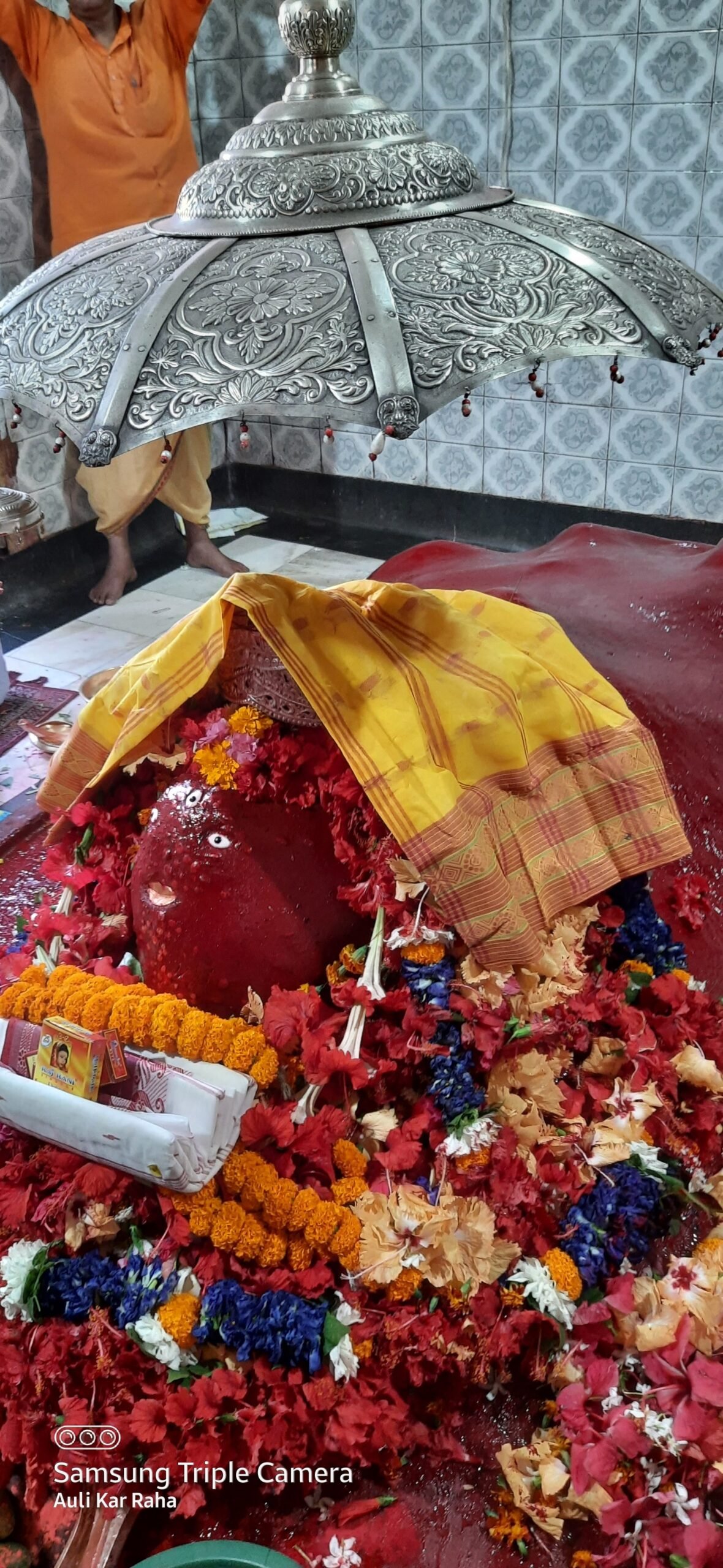
The photograph identified by its contributor as the Fullara sacred image shows the Goddess presented within a decorated worship setting. Its caption describes the visible features rather than inferring the material, age or full iconography from a dressed image.
The exterior view records the entrance and temple setting at Labhpur. Together these images document two aspects of the same shrine. They are not photographs of the separate Dakshindihi Attahasa temple.
Birbhum district: Fullara temple photographic listing.
Worship and visiting Labhpur
Fullara is documented as a living place of Goddess pilgrimage. Current worship times and special observances should be confirmed at the shrine. A dependable peak/busy/quieter classification and a current detailed temple calendar have not been established.
Reach Labhpur and check the final connection to Fullara Temple. District-level guidance identifies regional air and rail networks, but does not measure a particular airport-to-temple or station-to-temple route for this profile. Ensure that any transport booking names Labhpur in Birbhum.
Birbhum district: regional transport gateways.
Planning Your Visit
- Nearest major city
- Labhpur; Bolpur is a regional connection
- Temple location
- Labhpur
- State / province / region
- West Bengal
- Country
- India
- Nearest airport
- Kazi Nazrul Islam Airport, Durgapur, district-level gateway; precise nearest usable gateway unverified
- Typical access route
- Select Fullara Temple at Labhpur, Birbhum. The Attahasa shrine at Dakshindihi in Ketugram is a separate destination.
- Government tourism / heritage URL
- Government tourism / heritage URL
- Visitor-information sources and checked date
- Sources reviewed 2026-10-23; linked in Sources. Historical observations are dated separately from current visitor information.
Nearby sacred and cultural places
Labhpur’s cultural setting is distinct from the Ketugram area of the other Attahasa identification. Bolpur and Santiniketan form a wider regional cultural connection, but should be planned as separate destinations rather than treated as buildings within the Fullara complex.
Birbhum district: regional transport gateways.
Photos and gallery

Watch / Explore Further
Further reading
- Friederike Grenner, Sakti-Pithas: The Sacred Sites of the Goddess in India (2026)
- Pithanirnaya: Sanskrit text and translation
- D. C. Sircar, The Sakta Pithas (1948), PN numbered table, pp.35–37
Related reading
Sources and method
- Birbhum District Police: institutional descriptions of sacred places
- Masahiko Togawa, Banglapedia: Sakta-pitha
- Census of India 1981, Birbhum District Handbook, religious places, printed p.19
- Birbhum district: Fullara temple photographic listing
- Birbhum district: regional transport gateways
- Pithanirnaya: Sanskrit text and translation
- Friederike Grenner, Sakti-Pithas: The Sacred Sites of the Goddess in India (2026)
See the 51 Shakti Peethas and the separately sourced 18 Maha Shakti Peethas. Our source method explains how traditional, historical and institutional accounts are used.